
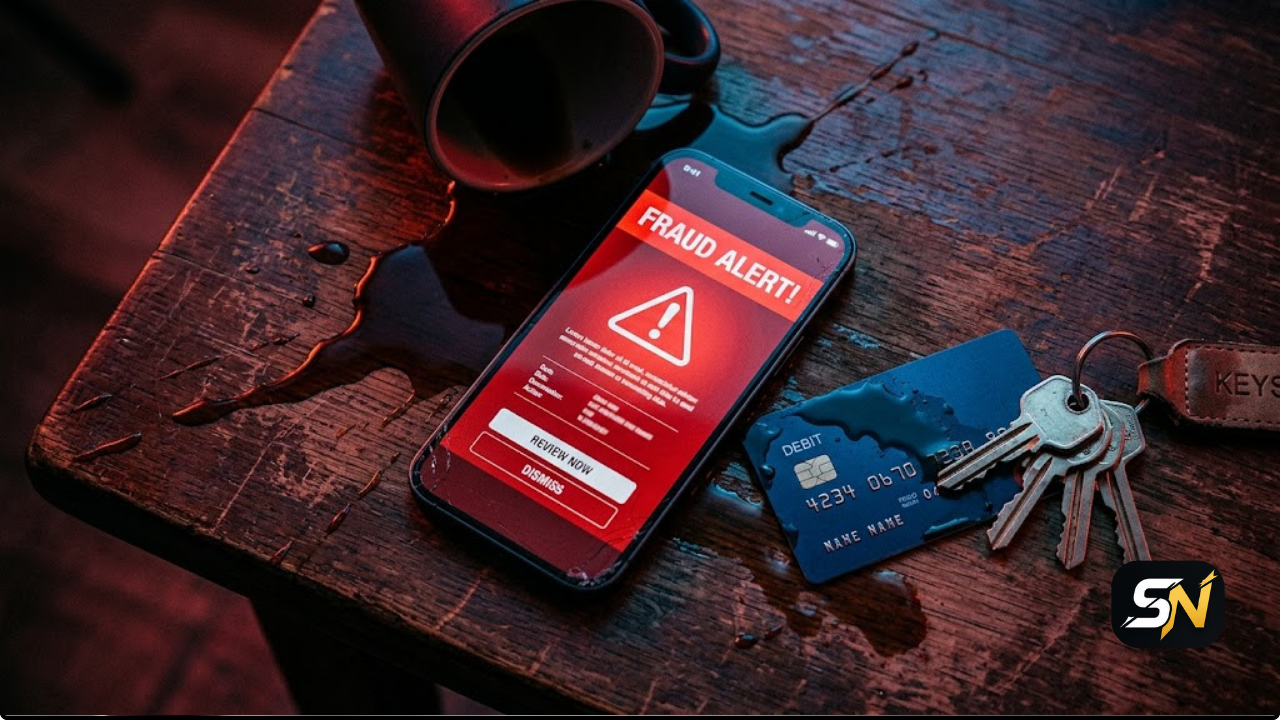
Ever gotten a text that looked exactly like it came from your bank, warning you about “suspicious activity” on your account? Your stomach probably dropped for a second before you clicked. That split-second of panic is exactly what online banking scams are built to trigger, and they’re working on more people than ever. In this article, you’ll learn why these scams have exploded, what’s really driving them, how they hit your household budget, and the practical steps you can take this week to keep your money safe.
Why Online Banking Scams Are Suddenly Everywhere in 2026
If it feels like you’re hearing about banking fraud more often lately, you’re not imagining it. The Federal Trade Commission’s 2025 Consumer Sentinel Network data showed Americans reported losing a record $15.9 billion to fraud last year, a sharp jump from the year before.
A big chunk of that came from scammers pretending to be someone they’re not — a bank, the government, or even a relative in trouble. This is called an “imposter scam,” which simply means a criminal pretends to be someone trustworthy to convince you to hand over money or personal information.
Why is this happening now? Banking has moved almost entirely online. You can open an account, move thousands of dollars, and approve a loan from your phone in under a minute. That convenience is wonderful for honest people, but it’s also a dream setup for criminals, who no longer need to rob a physical branch when they can trick you into wiring money from your couch. More convenience has meant more opportunity – for both sides.
The Real Reason This Keeps Getting Worse
Here’s the part most people miss: online banking scams aren’t getting worse because banks got sloppier with security. In many ways, bank-side security (encryption, fraud detection software, two-factor login) has actually improved. The problem has shifted to a different weak point – human trust.
Think about it this way. It’s genuinely difficult to hack into a modern bank’s servers directly. It’s far easier to convince a stressed, distracted person to voluntarily type in their own password or approve a transfer themselves. Scammers figured this out, so they stopped trying to break the lock and started tricking the person holding the key.
This is why so many of today’s scams involve a fake sense of urgency – a text claiming your account is “frozen,” a call claiming your Social Security number was “used in a crime,” or an email claiming a payment “failed” and needs immediate action. Urgency shuts down careful thinking. When you’re scared or rushed, you’re far less likely to pause and verify.
Artificial intelligence, which is technology that allows computers to perform tasks that normally require human thinking, has made this trickery more convincing than ever. Scammers can now clone a loved one’s voice from a few seconds of social media audio or generate a fake bank alert that looks pixel-perfect. The tools used to fool you have gotten dramatically better, even if the underlying trick – creating panic to bypass your judgment – hasn’t really changed at all. The weakest link isn’t your bank’s firewall. It’s the thirty seconds of panic before you think it through.
What Online Banking Scams Actually Mean for Your Wallet and Your Family
This isn’t just a headline problem – it’s a household budget problem. When a scam succeeds, the money rarely comes back. Unlike a stolen credit card, where your bank typically reverses fraudulent charges, a bank transfer or wire that you personally authorized is treated very differently, because from the bank’s point of view, you approved it.
Picture this real-world type of scenario: someone gets a call that appears to come from their bank’s fraud department, warning that a criminal has accessed their checking account. The “fraud agent” walks them through moving their savings into a “safe” temporary account to protect it. In reality, that account belongs to the scammer, and the money is gone within minutes. This exact pattern — a fake bank fraud alert convincing someone to move their own money – was one of the costliest imposter scam types reported to the FTC in 2025.
For your family, this means one weak moment on a phone call or a rushed reply to a text can wipe out money meant for rent, a car payment, or your kid’s tuition. It’s not just wealthy people losing money either – plenty of victims are regular working families who simply believed they were protecting their own account.
There’s also a quieter cost: stress, embarrassment, and the time it takes to freeze accounts, file police reports, and rebuild your credit monitoring. That’s hours you don’t get back, on top of dollars you may never see again.
Practical Steps to Protect Your Money Right Now
You don’t need to be a tech expert to protect yourself. A few consistent habits go a long way.
- Hang up and call back yourself. If your “bank” calls or texts you, don’t respond directly. Call the number on the back of your card or your bank’s official app instead.
- Slow down on anything urgent. Real banks rarely demand instant action. Urgency is one of the biggest red flags in almost every scam.
- Never move money to “protect” it. No legitimate bank or government agency will ever ask you to transfer your own funds into another account for safekeeping.
- Turn on account alerts. Most banking apps let you get a notification for every login and transaction – turn this on so you catch anything unusual immediately.
- Use multi-factor authentication. This means requiring a second step, like a code sent to your phone, to log in. It’s a small extra step that blocks the vast majority of automated hacking attempts.
- Talk to older family members directly. Older adults reported by far the largest dollar losses to fraud in 2025, so a quick conversation about common scam scripts can genuinely prevent a life-changing loss.
None of these steps cost money, and together they close most of the doors scammers try to walk through.
Common Mistakes That Make You an Easy Target
Trusting caller ID completely. Scammers can fake, or “spoof,” a phone number so it displays your real bank’s name. Seeing your bank’s name on the screen means nothing on its own.
Assuming you’d “never fall for it.” Confidence is exactly what scammers exploit. Most victims are ordinary, careful people who happened to be distracted, stressed, or caught off guard on the wrong day.
Reusing the same password everywhere. If one account gets breached, a reused password hands criminals the keys to your banking app too.
Staying quiet out of embarrassment. Many victims wait days before telling anyone, giving scammers extra time to drain accounts or open new credit lines in their name.
What the Numbers Are Telling Us
Beyond the headline number, the FTC’s 2025 data offers a clearer picture of how these scams actually unfold. Imposter scams were the single most reported fraud category for the fifth year running, and criminals posing as bank representatives accounted for the largest share of business-impersonation losses.
The FTC also found that people over age 50 reported nearly double the dollar losses of younger adults in 2025, even though scams target every age group. A separate survey from the CFP Board, which oversees standards for certified financial planners, found that roughly six in ten Americans say they’ve personally experienced fraud or know someone close to them who has.
Text messages were the single most common way scammers first made contact in 2025, edging out phone calls and email. That’s a meaningful shift worth knowing, since many people still associate scams mainly with sketchy emails rather than a text that looks like a routine bank notification.
Where This Is Likely Headed
It would be easy to assume this problem only gets worse from here, but the picture is more balanced than that. Banks are investing heavily in real-time fraud detection that can flag unusual transfers before they complete, and more institutions are adding “cooling off” delays on large, unusual transactions specifically to interrupt scam-in-progress situations.
At the same time, the tools scammers use – particularly AI-generated voices and messages – are only going to get more convincing, not less. That means the responsibility can’t rest on technology alone. The most reliable defense over the next few years will likely be a mix of smarter bank-side systems and a more skeptical, slower-to-react public.
Realistically, banking fraud probably won’t disappear, but it also doesn’t have to be inevitable for your household. The families who avoid becoming a statistic tend to be the ones who’ve simply built a habit of pausing before acting on anything urgent involving their money.
Final Thoughts
Online banking scams thrive on speed and panic, not on you being careless or unintelligent. The single biggest shift you can make is training yourself to slow down whenever a message about your money feels urgent, because that urgency is usually the scam itself, not a real emergency.
Protecting your family doesn’t require expensive software or technical expertise – it requires a habit of verifying independently before you ever click, call back, or move a dollar. The next time something about your bank account feels alarming, take a breath, hang up, and call your bank directly using the number on your card. That one habit alone stops the vast majority of these schemes cold.