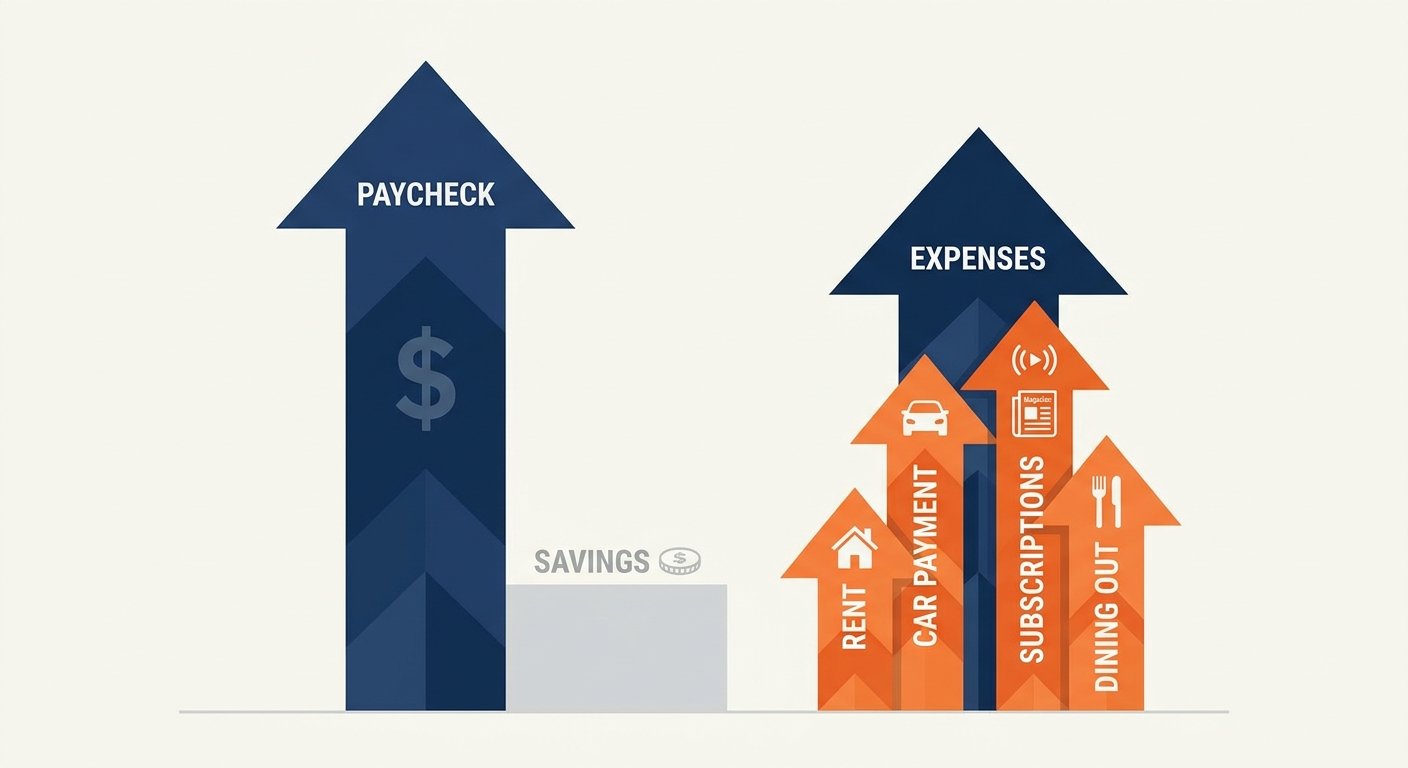

Learning how to build an emergency fund from scratch is one of the smartest financial decisions you can make. Even if you’re living paycheck to paycheck, creating an emergency savings fund is possible with the right strategy.
Have you ever had your car break down two days before payday, or gotten a medical bill that seemed to appear out of nowhere? If your stomach just dropped a little reading that, you already know why an emergency fund matters.
Why Millions of Americans Are One Bad Month Away From Financial Trouble
It’s not that people don’t want to save. Life is just expensive, and paychecks often get absorbed by rent, groceries, and bills before savings ever get a chance. Recent surveys have shown that a large share of U.S. adults would struggle to cover a sudden $400 expense using cash or savings alone.
That single number tells a bigger story. It means for a huge chunk of the population, one flat tire or one ER visit can turn into a credit card balance that lingers for months, or even years. This isn’t a personal failure – it’s a systemic gap in how most of us are taught to manage money. Nobody sits us down in school and explains how to build a safety net. We learn it the hard way, usually right when we need it most. The bottom line: an emergency fund isn’t a luxury for the wealthy it’s a basic tool everyone needs, regardless of income.
The Real Reason Most People Never Actually Start Saving
Here’s something most articles won’t tell you: the biggest obstacle to building an emergency fund usually isn’t income – it’s the all-or-nothing mindset. People think they need to save a huge amount right away, get discouraged because it feels impossible, and then never start at all.
Think about it like brushing your teeth. You don’t skip brushing because you can’t do a perfect, dentist-level clean every time. You just do it, consistently, in small steps. Saving works the same way. The families who succeed at building a cushion aren’t the ones with the highest salaries – they’re the ones who treat saving like a habit instead of a one-time event.
There’s also a psychological trap at play. Many people mentally treat their checking account balance as “spendable,” even if part of it is meant for bills or savings goals. Without a separate, clearly labeled space for emergency money, it quietly gets absorbed into everyday spending – a little here for takeout, a little there for a sale. By the end of the month, it’s gone, and nobody consciously decided to spend it. The real fix isn’t more income. It’s a system that removes decision-making from the equation.
What This Means for Your Family’s Everyday Life
Without an emergency fund, every unexpected expense becomes a mini financial crisis for your family. A car repair doesn’t just cost money — it costs peace of mind, sleep, and sometimes arguments at home about how to cover it. When you’re constantly one surprise away from debt, that stress follows you to work, into your relationships, and into how you sleep at night.
Having even a small cushion changes the entire emotional experience of money. It’s not just about the dollars – it’s about the mental shift from “how am I going to survive this” to “I’ve got this covered.” That shift alone can lower your day-to-day anxiety significantly.
For you, practically speaking, this also means fewer high-interest debt cycles. When you don’t have savings to fall back on, a $300 emergency often turns into a credit card charge, which can turn into months of interest payments that eat further into your budget. An emergency fund breaks that cycle before it starts.
It also gives your family more freedom to make decisions from a place of stability rather than panic. You’re less likely to accept a bad loan, borrow from family under pressure, or make a rushed decision just because you’re desperate for cash. Simply put: an emergency fund buys your family options, and options reduce stress.
Your Step-by-Step Plan to Build an Emergency Fund From Zero
Building this fund doesn’t require a big salary – it requires a system. Here’s a practical approach you can start today:
- Open a separate savings account. Keep it apart from your everyday checking account so you’re not tempted to dip into it for regular spending. Many online banks offer no-fee savings accounts with decent interest.
- Start with a mini-goal of $500-$1,000. Don’t aim for six months of expenses right away – that goal is too big to feel real. A small starter fund covers most minor emergencies and builds momentum.
- Automate a fixed amount every payday. Even $20 or $30 per paycheck adds up. Automation removes the temptation to “decide” whether to save each time, which is where most people fall off.
- Redirect windfalls straight to savings. Tax refunds, bonuses, cashback rewards, or gift money – send a chunk of these directly into your fund before you get used to having them.
- Cut one recurring expense and reroute it. Cancel a subscription you barely use, or renegotiate a bill, and send that exact amount to your fund every month.
- Track your progress visually. Whether it’s a spreadsheet, an app, or a simple sticky note on your fridge, seeing your number grow keeps you motivated to keep going.
Consistency beats intensity – small, steady deposits will always outperform sporadic large ones because they turn saving into a habit instead of a struggle.
Common Mistakes That Quietly Sabotage Your Savings
Keeping it too accessible. If your emergency fund sits in the same account as your debit card, you’ll dip into it for non-emergencies without even realizing it. Separation creates a mental and physical barrier.
Waiting for “extra” money that never comes. Many people plan to save “whatever is left” at the end of the month, but there’s rarely anything left. Save first, spend what remains – not the other way around.
Treating every want as an emergency. A big sale isn’t an emergency. Neither is a friend’s birthday dinner. Being honest about what actually qualifies protects the fund’s purpose.
Giving up after one withdrawal. Life happens, and you may need to dip into the fund. The mistake isn’t using it – it’s not refilling it afterward. Treat every withdrawal as a signal to restart your saving habit immediately.
What the Numbers Say About America’s Savings Gap
Beyond the earlier statistic about unexpected expenses, broader financial research consistently shows that a meaningful portion of U.S. households have little to nothing set aside in accessible savings. Financial guidance from institutions like the Federal Reserve – the U.S. central bank responsible for overseeing the economy and setting interest rate policy – has repeatedly highlighted how thin many households’ financial cushions really are.
What’s interesting is that this gap exists across income levels, not just among lower earners. Lifestyle creep – the tendency to increase spending as income rises – means even well-paid workers can end up living paycheck to paycheck if they never build the habit of saving intentionally. The takeaway from the data is simple: income alone doesn’t predict financial security – habits and systems do.
Where Personal Savings Habits Are Headed in the Coming Years
Looking ahead, more employers are beginning to offer built-in savings tools, like paycheck-linked emergency savings accounts, as part of workplace benefits. This reflects a growing recognition that financial stress affects productivity, and companies have a practical incentive to help employees build stability.
At the same time, budgeting apps and automated savings tools are becoming more common and easier to use, lowering the barrier for people who previously found saving too complicated or time-consuming to track manually.
That said, no app or employer benefit replaces the core habit of intentional saving. Tools can support the process, but the responsibility – and the reward – still belongs to you. The families who build real financial resilience in the coming years will likely be the ones who combine these new tools with consistent, personal follow-through.
Final Thoughts
Building an emergency fund isn’t about having a perfect financial plan – it’s about giving yourself a buffer so that one bad day doesn’t turn into a bad year. Start small, stay consistent, and protect that fund like it’s off-limits for anything except real emergencies.
The families who feel the most in control of their money aren’t the ones earning the most – they’re the ones who’ve built a simple system and stuck with it. If you don’t have an emergency fund yet, today is a good day to open that separate savings account and set your first automatic deposit, even if it’s just $10. Your future self, dealing with an unexpected bill, will thank you for starting now instead of waiting for the “right” time.