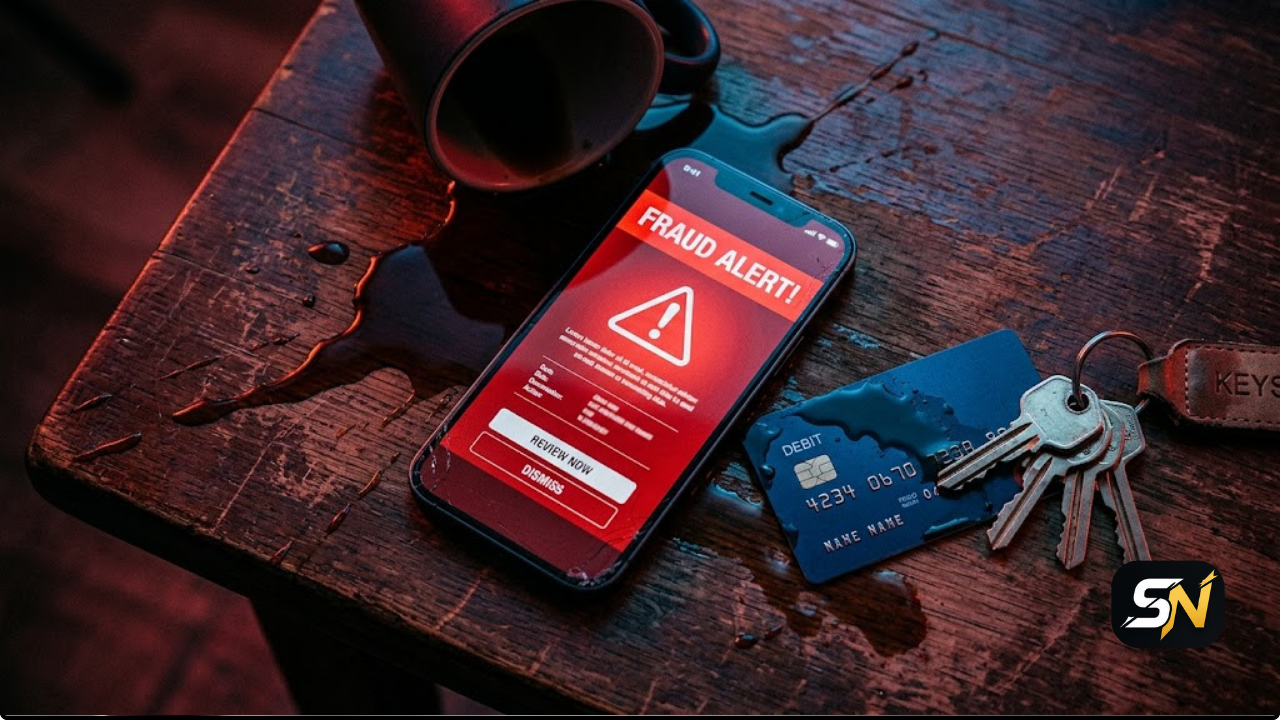

Small business cybersecurity mistakes are the reason so many companies get hit by hackers, not because criminals specifically targeted them, but because they left the door wide open without realizing it. Ever wonder why local businesses keep showing up in the news for data breaches when they don’t even seem like an obvious target? You’re about to find out. In this article, you’ll learn the most common security mistakes small business owners make, why these mistakes keep repeating year after year, and exactly what you can do this month to close the gaps before someone else finds them first.
The Mistakes That Show Up Again and Again
Using the same weak password across multiple accounts. One compromised login for a single tool can hand a hacker access to email, banking, and customer data all at once, simply because the same password unlocked every door.
Skipping software updates. That “remind me later” button on an update notification feels harmless, but many updates exist specifically to patch security holes hackers already know how to exploit.
No backup plan for business data. Losing access to customer records, invoices, or inventory systems for even a day can grind operations to a halt, yet many small businesses have no tested backup system in place.
Assuming “we’re too small to be a target.” This mindset leaves basic protections unset, even though small businesses are often chosen precisely because they tend to have weaker defenses than large corporations.
Why These Mistakes Keep Happening Year After Year
Here’s the pattern most people miss: small business owners aren’t making these mistakes because they don’t care about security. They’re making them because cybersecurity competes for attention with a dozen more urgent, visible problems every single day – payroll, customers, inventory, staffing. Security is what’s called an “invisible” investment. When it works, absolutely nothing happens, which means there’s no immediate reward for doing it right. A locked door that never gets tested feels like wasted effort, right up until the one day it actually matters.
This creates a dangerous mental trap. Business owners naturally prioritize problems they can see and feel – a slow website, a frustrated customer, a late shipment. A security gap sits quietly in the background, generating no complaints, no visible cost, and no urgency, until the moment it suddenly becomes the only thing that matters.
There’s also a scale misconception at play. Many owners assume hackers manually choose their targets the way a burglar might scope out a house. In reality, most attacks are automated – bots scanning thousands of businesses at once for the easiest, most common vulnerabilities. Size isn’t what attracts them. Weakness does.
There’s one more layer to this that rarely gets discussed: cybersecurity often feels technical and intimidating to owners who didn’t build their business around technology in the first place. A restaurant owner or a boutique retailer may feel genuinely unqualified to evaluate firewall settings or encryption standards, so the entire topic gets mentally filed under “something to deal with later, once I understand it better.” That delay, repeated month after month, is exactly how basic gaps go unaddressed for years. The businesses that get hit hardest usually aren’t the ones hackers hunted down – they’re the ones that happened to leave the easiest door unlocked.
How Widespread This Problem Actually Is
This isn’t a rare or isolated issue. The FBI’s Internet Crime Complaint Center has reported that businesses of all sizes, including small and mid-sized companies, account for a significant share of the billions of dollars lost to cybercrime and fraud each year in the United States. What that data really tells us is that cybercriminals don’t discriminate by company size the way many owners assume. A five-person accounting firm and a national retailer can both be targeted by the exact same automated attack, scanning for the exact same basic weaknesses.
For small business owners, this should reframe the entire conversation. Cybersecurity isn’t a “someday, when we’re bigger” investment – it’s a “starting now, because size was never the deciding factor” investment. The businesses least prepared tend to lose the most, regardless of how many employees are on the payroll.
What Security Experts Actually Recommend
The Cybersecurity and Infrastructure Security Agency, the federal agency responsible for protecting US critical infrastructure and businesses from cyber threats, consistently emphasizes that basic, consistent habits – not expensive enterprise software – prevent the vast majority of small business breaches.
In plain terms, this means the agency’s guidance leans heavily toward fundamentals: strong unique passwords, regular software updates, employee awareness training, and tested backups. None of these require a dedicated IT department or a massive budget to implement. This is genuinely encouraging news for small business owners who assume real cybersecurity is out of financial reach. The advice from official channels isn’t “spend tens of thousands of dollars” – it’s “consistently do the basics that most businesses currently skip.”
Your Step-by-Step Security Action Plan
- Set up a password manager for your team. This lets everyone use strong, unique passwords for every account without needing to memorize dozens of them.
- Turn on multi-factor authentication everywhere it’s offered. This means requiring a second verification step, like a code sent to a phone, before logging in – it blocks most automated attacks even if a password leaks.
- Automate your software updates. Most business software allows automatic updates, removing the temptation to click “remind me later” indefinitely.
- Test your backups, not just create them. A backup you’ve never actually tried restoring isn’t a real safety net – schedule a quarterly test to confirm it works.
- Run a 15-minute security check-in monthly. Review who has access to which accounts and remove access for anyone who no longer needs it, including former employees.
- Train your team on phishing recognition. A single well-crafted fake email is often all it takes to breach a business, so a short training session goes a long way.
None of these steps require a big budget – they require consistency more than money.
A Real Example of How Small the Trigger Can Be
Picture a small accounting firm with six employees. One staff member receives an email that looks exactly like it came from a trusted software vendor, asking them to “verify” their login by clicking a link. They click it, enter their credentials, and go back to work without thinking twice.
Within hours, that single login gives the attacker access to the firm’s client management system, containing sensitive financial documents for dozens of small business clients. No servers were hacked, no firewall was broken – one employee, one email, one moment of not double-checking, and the entire client database was exposed. For your business, this is the real lesson: the weakest point usually isn’t your technology. It’s the thirty seconds someone spends clicking a link without pausing to verify where it actually came from.
The unsettling part of this scenario is how ordinary it is. The employee wasn’t careless by any unusual standard — the fake email looked professional, arrived at a busy moment, and mimicked a request they’d genuinely received before from that vendor. This is exactly why relying on “just be careful” as your only security strategy consistently fails. Careful, competent people fall for well-made phishing attempts every single day, which is precisely why systems and habits matter more than individual vigilance alone.
Where Small Business Security Is Headed
Cybersecurity for small businesses is genuinely getting more accessible, not less. Affordable, easy-to-use security tools that once only existed for large corporations – password managers, automated backup services, basic threat monitoring – are now priced and designed specifically for small teams.
At the same time, the threats themselves are evolving. Automated scanning tools and increasingly convincing phishing attempts mean the basic mistakes of today will likely still be exploited tomorrow, just through more sophisticated-looking messages and tactics. The realistic outlook is a bit of both: tools are getting better and cheaper, but attackers are getting smarter too. Businesses that build simple, consistent security habits now will be far better positioned than those waiting for a “someday” that keeps getting pushed back.
There’s also a growing shift in how insurance and business partnerships work, with more vendors, banks, and insurers beginning to ask small businesses directly about their security practices before extending credit or coverage. That trend alone is likely to push basic cybersecurity habits from “optional extra” toward “standard cost of doing business” over the next few years.
Final Thoughts
Small business cybersecurity mistakes usually aren’t dramatic failures – they’re small, everyday oversights that quietly pile up until one of them finally gets exploited. Weak passwords, skipped updates, and an “it won’t happen to us” mindset are far more common causes of breaches than any sophisticated hacking scheme.
The encouraging part is that fixing this doesn’t require a massive budget or a dedicated security team. It requires picking a handful of consistent habits and actually sticking to them. This week, pick just one action from the list above – maybe turning on multi-factor authentication – and get it done before moving on to the next.