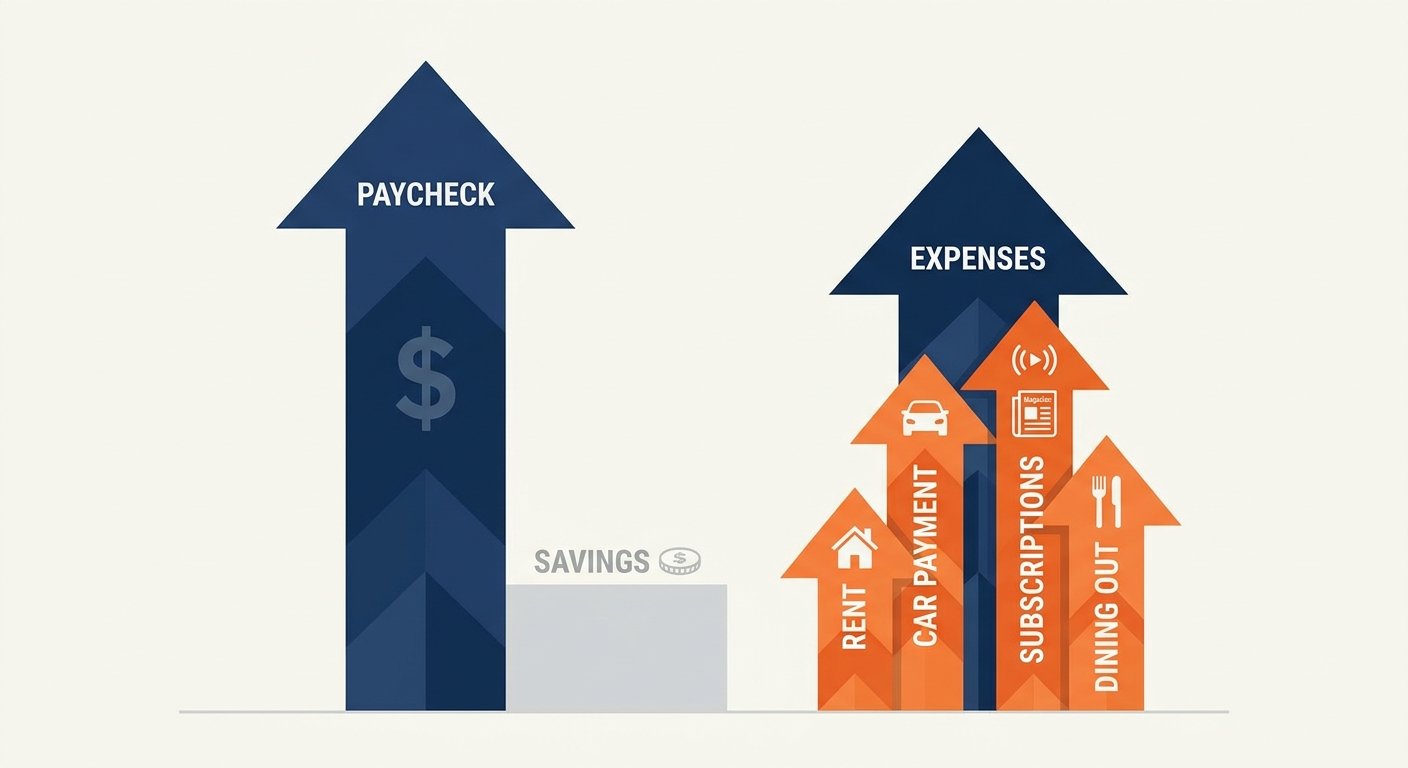

Hidden monthly expenses are one of the biggest reasons household budgets quietly fall apart, even when nobody made a single big or reckless purchase. Ever looked at your bank statement at the end of the month and thought, “Where did all that money actually go?” You didn’t buy anything huge, there was no big splurge, yet your account still feels lighter than it should. In this article, you’ll learn the sneaky recurring expenses that quietly drain household budgets, why they’re so easy to overlook, and exactly how to track them down and shut them off for good.
The Most Common Budget Leaks Nobody Notices
Forgotten subscriptions. That streaming trial you signed up for two years ago, the app you tried once and never opened again – these small charges sit quietly on your statement month after month because they’re too small to trigger real attention.
Bank and card fees. Overdraft fees, monthly maintenance fees, and out-of-network ATM charges add up fast, and most people only notice them when they happen to scroll past that specific line item.
“Convenience” spending. Grabbing takeout because you’re too tired to cook, or paying for delivery instead of picking something up yourself – each instance feels small, but the pattern rarely does.
Auto-renewing memberships. Gym memberships you stopped using, warranty plans on items you no longer own, insurance add-ons you forgot you agreed to – these renew silently unless you actively cancel them.
Why These Expenses Are So Easy to Miss
Here’s the pattern behind almost every hidden expense: none of them feel significant on their own. A $9.99 subscription doesn’t register as “real spending” the way a $200 purchase does, even though twelve of those subscriptions add up to more than a car payment over a year.
Our brains are wired to notice big, one-time expenses and largely ignore small, recurring ones. Psychologists call this “pain of paying” – the discomfort you feel when spending money. A single large purchase creates a sharp, memorable pinch. A small recurring charge barely registers at all, especially when it’s on autopay and never requires you to consciously say “yes” each time.
This is exactly why subscription-based businesses have become so profitable. The entire model relies on charges being just small enough, and just automatic enough, that customers forget they’re paying at all. It’s not that people are careless with money – it’s that these expenses are specifically designed to avoid triggering the mental alarm bells a bigger purchase would set off.
The result is a budget that feels tight for reasons you can’t quite explain, because the leaks aren’t happening in one obvious place. They’re scattered across a dozen small, automatic charges that never individually feel worth questioning. Small, silent, and repeated beats big and occasional almost every time when it comes to draining a budget.
What This Costs Your Family Over Time
Let’s make this concrete. Imagine a household paying for three streaming services at $15 each, a meal-kit subscription at $60 a month, a gym membership at $40 that hasn’t been used in months, and an average of $12 a month in bank fees. That’s $157 every month – over $1,880 a year – disappearing without a single “big” purchase involved.
For your family, that’s real money. It could be three months of car payments, a meaningful dent in credit card debt, or a genuine head start on an emergency fund. None of it required cutting anything you’d actually miss – it just required noticing what was already quietly leaving your account.
This matters even more if your household income has stayed flat while prices have risen. When every dollar needs to work harder, hidden expenses aren’t a minor annoyance – they’re actively working against your ability to build financial stability. The frustrating part is that these leaks often exist purely out of habit or forgetfulness, not because anyone in the household actually wants that spending to continue.
It’s also worth noticing how these small leaks interact with each other. One forgotten subscription rarely breaks a budget on its own, but households often carry five, six, or more of these small recurring charges at once without realizing how they stack together. The danger isn’t any single expense – it’s the cumulative blind spot created when nobody in the household is tracking the full list. The money isn’t gone because you’re bad with finances – it’s gone because nobody ever sat down and looked for it.
How to Find and Stop the Leaks in Your Budget
- Pull your last two months of bank and card statements. Print them or open them side by side, and highlight every recurring charge you see – this single step usually surfaces more leaks than people expect.
- Cancel anything you haven’t used in 60 days. If you can’t remember the last time you used a subscription or service, that’s your answer – cancel it and see if you actually miss it.
- Call your bank about recurring fees. Many monthly maintenance fees can be waived simply by asking, switching account types, or setting up direct deposit.
- Set a recurring monthly “audit” reminder. A 15-minute check-in on the same day each month keeps new hidden charges from quietly reappearing.
- Use your bank or card app’s transaction categorization. Most apps automatically group recurring charges – this feature does a lot of the detective work for you if you actually open it.
- Downgrade instead of canceling when it makes sense. If you genuinely use a service but rarely use its premium features, dropping to a cheaper tier can save money without losing what you value.
A 15-minute monthly audit habit can quietly save you more than an entire week of extreme couponing.
Common Mistakes That Let These Expenses Survive
Assuming small charges aren’t worth the effort to review. The individual amount is small, but the cumulative effect over a year is exactly why these charges survive audits people don’t bother doing.
Only checking your account balance, not your transaction history. A healthy-looking balance can still hide dozens of small recurring charges nobody has actually reviewed line by line in months.
Forgetting about annual charges. Some subscriptions bill once a year instead of monthly, which makes them even easier to forget since they don’t show up on a typical monthly scan.
Canceling in your head instead of in the account. Meaning to cancel something “eventually” isn’t the same as actually canceling it – the charge keeps processing until you take the actual action.
What the Data Says About Subscription Spending
This isn’t just a personal budgeting quirk – it’s a broader, well-documented pattern. Consumer research groups have repeatedly found that most people significantly underestimate their own monthly subscription spending when asked to guess it from memory, often by a wide margin compared to what their actual statements show.
The Bureau of Labor Statistics’ Consumer Expenditure Survey data has also shown that a meaningful share of household spending falls into miscellaneous recurring categories that don’t get the same budgeting attention as major line items like rent or groceries. That gap between what people think they’re spending and what they’re actually spending is exactly where hidden expenses thrive. The less attention a category gets, the longer unnecessary charges tend to survive inside it.
Where This Trend Is Headed
The subscription economy isn’t slowing down – if anything, more services are shifting toward recurring billing models because they’re more predictable and profitable for businesses. That means hidden expenses are likely to become a bigger part of the average household budget over time, not a smaller one.
The encouraging side of this trend is that banking apps and budgeting tools have gotten noticeably better at automatically flagging recurring charges and subscription creep, making the audit process faster than it used to be. What once required manually combing through a paper statement can now often be done in a few taps.
Realistically, hidden expenses will never fully disappear from anyone’s budget – new ones will always quietly appear over time. The goal isn’t a one-time cleanup, but building a habit of periodically checking in, so leaks get caught within a month or two instead of quietly running for years.
There’s also a shift happening in how people think about “small” spending altogether. As more households face tighter margins between income and rising costs, the old mindset of “it’s just a few dollars” is slowly giving way to a more careful, line-by-line awareness of where money actually goes. That shift alone, even without any dramatic budget overhaul, tends to plug a surprising number of leaks on its own.
Final Thoughts
Hidden monthly expenses aren’t dramatic, and that’s exactly what makes them dangerous. They don’t show up as one big mistake – they accumulate quietly, a few dollars at a time, until they’ve eaten a real chunk of your yearly income without ever feeling like a decision you made.
The good news is that fixing this doesn’t require a dramatic lifestyle overhaul. It just requires occasionally looking closely at where your money is actually going instead of assuming you already know. This week, pull up your last two bank statements and highlight every recurring charge you find – you might be surprised how much breathing room you can create without giving up a single thing you actually value.