
Danny Ruiz has spent the last eleven years running CNC machines at a small parts supplier outside Bryan, Texas. Business has been steady but never exciting – until his cousin sent him a news link about the new Tesla SpaceX Texas chip plant going up thirty minutes from his house. The headline mentioned billions of dollars, thousands of jobs, and something called an “AI chip.” Danny read it twice over his morning coffee and still wasn’t totally sure what it meant for him. Should he apply? Retrain? Or is this the kind of announcement that sounds huge on paper but changes nothing for regular families like his?
By the end of this article, you’ll understand exactly what’s being built in Texas, why it’s happening now, and what it could realistically mean for your job, your paycheck, and your town.
What’s Actually Being Built in Grimes County, Texas
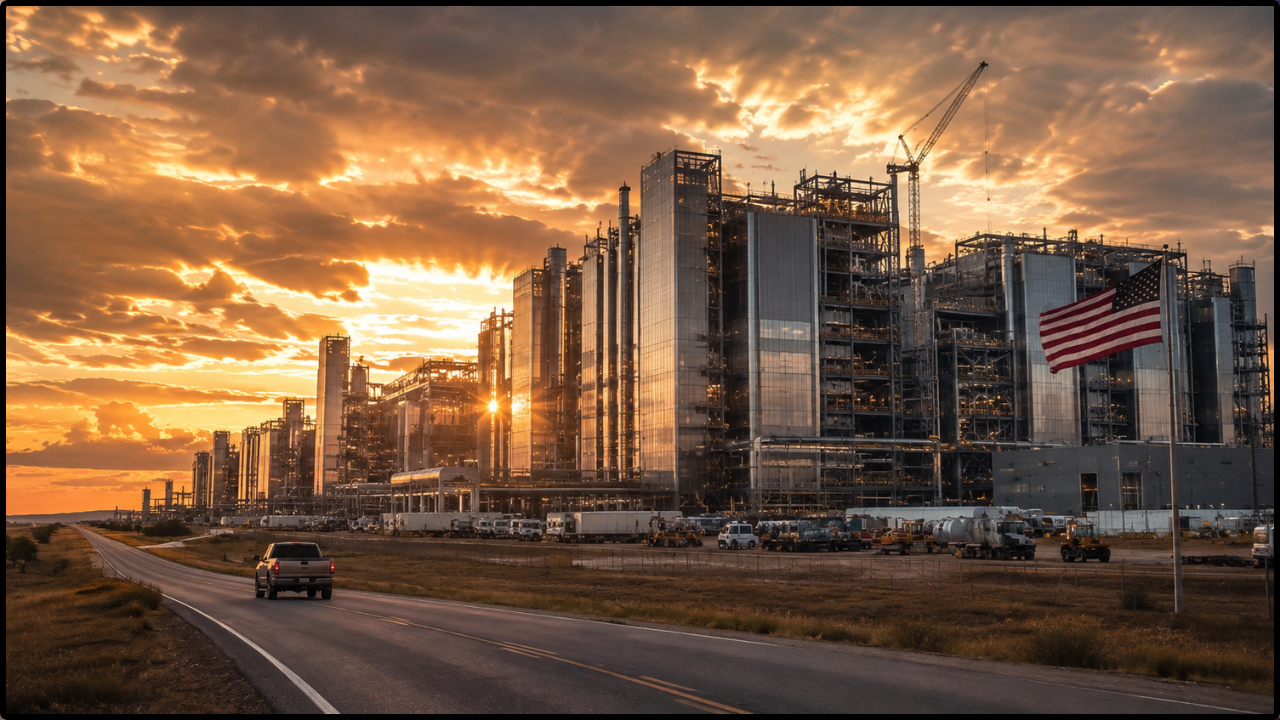
Let’s slow down and actually unpack what Danny read. The Tesla SpaceX Texas chip plant – nicknamed “Terafab” – is a massive semiconductor factory the two companies are building together in Grimes County, not far from College Station. A semiconductor, often just called a “chip,” is the small piece of electronics that acts as the brain inside computers, phones, cars, and robots.
This isn’t a small expansion of an existing plant. The companies describe it as a single, connected facility that will handle every stage of chipmaking – designing the circuits, manufacturing them, packaging them, and testing them – all under one roof. That’s unusual. Most chip factories only handle one or two of those steps and rely on other companies for the rest.
The chips coming out of Terafab are meant to power very specific products: Tesla’s Optimus robots, Tesla’s Cybercab self-driving taxis, and data centers SpaceX wants to eventually run in orbit using satellites. In other words, this factory exists to feed Musk’s other companies first, not to sell chips on the open market like a typical chipmaker would. For a town like Grimes County, that means an enormous construction project is about to reshape the local landscape, economy, and job market almost overnight.
This Kind of Mega-Investment Is Becoming the New Normal
It’s easy to assume a headline like this is a one-time curiosity, but the numbers tell a different story. According to reporting from Reuters on August 6, the initial phase of Terafab alone is valued at $16.8 billion, and a filing from May revealed the project could eventually grow to as much as $119 billion once later phases are completed.
That kind of scale isn’t isolated to Musk’s companies. TechCrunch reported the same day that the facility is planned to cover more than 100 million square feet, and SpaceX’s own statement confirmed the project is expected to employ at least 3,000 people just in its first phase.
Big tech and manufacturing announcements at this size have become almost routine over the past couple of years, as companies race to build enough computing power for artificial intelligence, or “AI” – technology that lets computers recognize patterns, make predictions, and perform tasks that used to require a human. What makes Terafab notable isn’t just the dollar figure; it’s the bet that AI chip demand will keep climbing for years, not months. The bottom line: this isn’t a one-off headline – it’s part of a much bigger, ongoing shift in how much money is flowing into American chip manufacturing.
Why This Is Happening Right Now
Here’s the part most coverage glosses over: this factory isn’t really about making chips to sell. It’s about Musk trying to guarantee his own companies never run short of them. Tesla wants to mass-produce Optimus robots and Cybercabs. SpaceX wants satellites that can run AI computing in space, where solar power is abundant and there’s no need to fight over land or water for cooling. Both of those visions require an enormous, steady supply of advanced chips – far more than the global chip industry currently produces for everyone combined.
Rather than compete with other tech giants for limited chip supply from outside manufacturers, Musk’s companies are choosing to build their own dedicated supply chain from scratch. This is sometimes called “vertical integration” – controlling every step of production yourself instead of depending on outside suppliers who might raise prices, run late, or simply run out.
There’s also a defensive angle here. Tesla already has a separate $16.5 billion agreement with Samsung to produce its next-generation AI chips in Taylor, Texas, and still relies on TSMC for additional manufacturing. Terafab doesn’t replace those deals – it’s a hedge on top of them. If AI-related products from Tesla and SpaceX take off the way Musk expects, having your own factory means you’re never left waiting in line behind competitors like Google, Amazon, or Meta for the same limited chip capacity.
In plain terms: the companies aren’t building this because chips are scarce today – they’re building it because they’re betting chips will be even scarcer tomorrow, and they don’t want to be caught without enough.
What This Actually Means for Your Family
If you live anywhere near Grimes or Brazos County, the impact is fairly direct. A project of this size typically brings a wave of construction jobs first – electricians, welders, heavy equipment operators – followed by permanent manufacturing and technical roles once the plant opens. Local housing demand, rental prices, and small business traffic usually rise right along with it.
But even if you don’t live in Texas, there’s a broader ripple effect worth understanding. Large manufacturing investments like this tend to pull in suppliers, subcontractors, and support businesses from well outside the immediate area – trucking companies, equipment makers, and specialty parts suppliers can see new contracts even from other states.
For your household budget specifically, the connection is more indirect but still real. More domestic chip manufacturing capacity can, over the long run, help stabilize prices on electronics and vehicles that depend on chip supply – though that typically takes years to show up, not months. In the shorter term, the more immediate impact for most families outside Texas will be watching how this affects Tesla’s stock, job postings in the semiconductor sector, and whether similar announcements start appearing in other states.
There’s also a local tension worth knowing about: TechCrunch reported that a county meeting held the night before the announcement drew hundreds of residents raising concerns about the tax incentives the project received and a lack of transparency around the deal. Big investment announcements rarely come without local pushback over who actually benefits.
What You Can Actually Do With This Information
- Check if the jobs are real before you get excited. Search directly on Tesla’s or SpaceX’s official careers pages rather than third-party job boards, since large announcements like this often attract scam postings pretending to hire early.
- Look into local trade programs if you’re near Grimes or Brazos County. Community colleges in the region often add fast-track certificate programs in electrical work, HVAC, or industrial maintenance when a major employer announces plans nearby.
- Don’t assume this changes chip or electronics prices anytime soon. Construction alone will likely take a few years before the plant is producing at scale, so don’t expect this to affect what you pay for your next phone or car.
- If you hold Tesla stock, separate the announcement from the execution. Big projects like this can move stock prices on announcement day, but the real financial impact depends on whether the plant is actually built on time and on budget — which isn’t guaranteed.
- Watch for copycat announcements. When one major company commits billions to U.S. chip manufacturing, competitors often follow within months to avoid falling behind, which could open opportunities in other states too.
- If you’re weighing a relocation for a manufacturing job, research the housing market first. Areas near major plant announcements often see rent and home prices rise well before the facility is finished hiring.
None of this requires panic or excitement – just a clear-eyed look at what’s confirmed versus what’s still a projection.
Quick Questions People Are Asking
Is Terafab already hiring? Not yet in large numbers. The project is in its early construction phase, so most hiring will likely ramp up gradually as the facility gets closer to operating.
Will this make Tesla cars or SpaceX launches cheaper? Not directly, and not soon. The chips produced here are mainly intended for Tesla’s robots and self-driving vehicles and SpaceX’s space-based computing, not for lowering the price of a car you’d buy today.
Does this mean chip shortages are over? No. Terafab is designed to meet Musk’s own companies’ future demand, not to solve the broader global chip shortage that affects other industries.
Final Thoughts
Danny’s instinct to look closer before getting swept up in the headline was the right one. A $16.8 billion investment sounds massive, and it is – but the real question for any family isn’t the size of the number, it’s whether the timeline, the jobs, and the ripple effects actually line up with your own plans.
Terafab represents a real bet on the future of American chip manufacturing, driven by Musk’s need to secure supply for robots, self-driving cars, and space-based computing rather than a broad fix for consumer prices or nationwide chip shortages. For families near Grimes County, it could mean real opportunity in the years ahead. For everyone else, it’s worth watching – but not worth rearranging your life around just yet.
If there’s one practical step to take today, it’s this: bookmark the official Tesla and SpaceX careers pages if you’re interested, and check back periodically rather than chasing secondhand job rumors online.