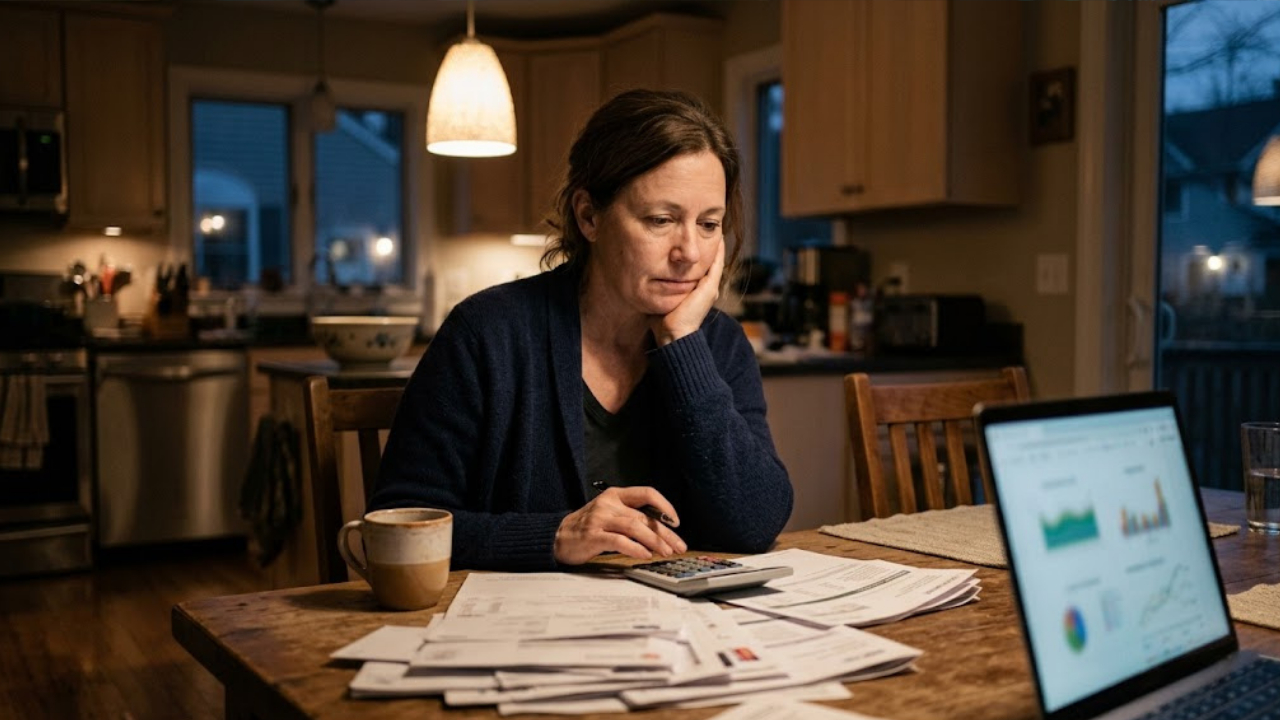

What would you actually do if your car broke down tomorrow and the repair bill came to $900? For a huge number of American households, that question isn’t hypothetical, it’s a genuine source of stress that sits in the back of the mind every single day. If you’re wondering how to build an emergency fund while inflation keeps household costs stubbornly high, you’re far from alone, and there’s a smarter way to approach this than simply telling yourself to “save more.” In this article, you’ll learn why building an emergency fund feels so much harder right now, and more importantly, a realistic, step-by-step approach that actually works even when your budget already feels stretched thin.
Why So Many Americans Are Struggling to Save Right Now
Here’s a number that puts this challenge in perspective: according to Bankrate’s 2026 Emergency Savings Report, 59% of Americans don’t currently have enough savings to cover a sudden $1,000 expense without going into debt.
That’s not a small minority struggling, that’s a clear majority of households living one unexpected bill away from financial stress. And it’s not simply a matter of people being careless with money. When grocery prices, rent, and everyday costs climb faster than paychecks, the amount of “leftover” money available for saving shrinks, sometimes to nearly nothing.
This creates a frustrating cycle. The same rising costs that make an emergency fund more necessary than ever are also the exact thing making it harder to build one. It’s not that people don’t understand the importance of saving, it’s that the math genuinely doesn’t leave much room, especially for households already living paycheck to paycheck.
Nearly six in ten Americans currently lack a basic financial cushion, which means the problem isn’t rare, it’s the norm right now.
The Real Reason Traditional Saving Advice Doesn’t Work for Most People
Most saving advice tells you to “cut expenses and put the difference into savings.” That advice isn’t wrong exactly, but it misses something important about how motivation and money actually work for most households.
The problem is psychological as much as it is financial. When you’re told to save “whatever’s left over” at the end of the month, there’s rarely anything left over, because expenses have a way of expanding to fill whatever income is available. This isn’t a character flaw, it’s a well-documented pattern in how people manage money when saving is treated as an afterthought rather than a built-in step.
The households that actually succeed at building emergency funds tend to flip this order entirely. Instead of saving what’s left after spending, they treat savings like a fixed bill that gets paid first, before anything discretionary happens. Even a modest, automatic amount pulled out immediately after payday tends to survive far longer than a vague intention to “save more” sometime later in the month.
This single shift, treating savings as a non-negotiable line item rather than a leftover, is often the actual difference between households that build a cushion over time and those that stay stuck at zero year after year, even with similar incomes. The order in which you save, first or last, matters more than the amount you’re trying to save.
What This Means for Your Family’s Financial Security
Let’s bring this back to your actual household. If your family doesn’t currently have an emergency fund, you’re not just facing inconvenience when something unexpected happens, you’re facing real financial risk. A surprise medical bill, a layoff, or a major car repair can force a choice between high-interest credit card debt and simply not paying it, both of which create lasting damage.
Consider a household earning a typical income, say around $65,000 a year, with no emergency savings. An unexpected $1,500 transmission repair for that family often means either putting it entirely on a credit card at 20%+ interest, or scrambling to borrow from family, both of which add stress on top of an already stressful situation.
Now compare that to a household with even a modest $2,000 cushion set aside. The same repair becomes an inconvenience, not a crisis. No debt, no borrowed money, no interest piling up. The dollar amount saved doesn’t need to be huge to fundamentally change how a family experiences financial shocks.
For your family, an emergency fund isn’t about achieving some perfect ideal, it’s about converting unpredictable emergencies into manageable, planned-for events instead of financial disasters. The size of your emergency fund matters less than simply having one at all, since even a partial cushion changes the entire experience of an unexpected expense.
A Practical Plan to Build Your Emergency Fund During High Inflation
You don’t need a large income or dramatic lifestyle changes to start. Here’s a realistic approach that works even on a tight budget.
- Start with a “starter” goal of $500-$1,000, not three to six months of expenses. The full recommended amount feels overwhelming and can stall progress before it starts. A smaller first target builds momentum and covers most minor emergencies.
- Automate a fixed transfer the day you get paid, before you see the money. Even $25-$50 per paycheck adds up, and automating it removes the willpower struggle entirely, since you’re not deciding whether to save each time.
- Use a high-yield savings account instead of a regular one. Many accounts currently offer between 3.85% and 4.5% APY, meaning your emergency fund actually grows a little just by sitting there, unlike a typical checking account.
- Redirect windfalls immediately, before they get absorbed into spending. Tax refunds, work bonuses, or cash gifts are ideal emergency fund boosters precisely because you weren’t counting on them as regular income.
- Separate your emergency fund from your everyday checking account. Keeping it in a different account, ideally one that’s slightly harder to access instantly, reduces the temptation to dip into it for non-emergencies.
- Revisit your goal every few months rather than setting it once and forgetting it. As your income or expenses change, your target should adjust too, this keeps the goal realistic rather than aspirational.
Focus on consistency over size, a small automatic transfer every payday will outperform an ambitious plan you abandon after two months.
Common Mistakes That Slow Down Emergency Fund Progress
Even well-intentioned savers often trip over the same few obstacles. Setting the initial goal too high. Aiming directly for six months of expenses before building any habit at all tends to feel so distant that people give up before making real progress.
Keeping emergency savings mixed in with checking. When the money is too easy to access, it often gets spent on non-emergencies, defeating the entire purpose of the fund.
Treating “extra” money as automatically available for spending. Windfalls like tax refunds are frequently spent quickly simply because they weren’t part of the regular budget to begin with.
Stopping contributions entirely after one setback. A single month of zero savings due to an unexpected expense doesn’t mean the system failed, it means life happened. The mistake is abandoning the habit rather than simply resuming it the following month. These mistakes usually come from treating emergency fund building as a single event rather than an ongoing, adjustable habit.
What the Data Tells Us About Where Americans Currently Stand
The numbers paint a fuller picture worth understanding. A U.S. News survey conducted in January 2026 found that among Americans who do have an emergency fund, the median balance sits at $5,000, notably lower than in prior years, while the amount people say they’d ideally like saved is around $10,000.
Bankrate’s research also points to a meaningful gender gap in emergency preparedness, with women reporting significantly lower average savings than men, often tied to broader income and caregiving disparities rather than differences in financial discipline. This context matters because it shows the savings gap isn’t just about individual habits, it’s shaped by real structural financial pressures that vary across households.
The typical American emergency fund, when one exists at all, currently covers far less than financial experts recommend, which underscores why even modest, steady progress matters.
Where Emergency Savings Trends Are Headed
Looking forward, there’s a reasonable case for cautious optimism, tempered by realistic expectations. As inflation gradually cools from its recent peaks, households may find slightly more breathing room in their monthly budgets to redirect toward savings, though this shift is likely to be gradual rather than sudden.
At the same time, rising interest rates on high-yield savings accounts have made saving itself somewhat more rewarding than it’s been in over a decade, giving households a modest additional incentive to prioritize building a cushion now rather than waiting for conditions to feel perfectly comfortable.
It would be unrealistic to expect a dramatic nationwide shift in savings behavior overnight. The more likely path forward is a slow, uneven improvement, with households that adopt automatic, consistent saving habits pulling ahead of those waiting for a “better” moment that may not arrive on any predictable timeline. Expect gradual, uneven progress across households rather than a sudden nationwide improvement, which makes starting now more valuable than waiting for easier conditions.
Final Thoughts
Building an emergency fund during a period of high household costs isn’t about willpower or finding some hidden pile of extra money. It’s about restructuring when and how you save, so that a small, consistent amount happens automatically before spending has the chance to absorb it. Even a modest cushion, far short of the full three-to-six-month recommendation, can meaningfully change how your family experiences financial shocks, turning a crisis into a manageable inconvenience.
This week, consider setting up just one automatic transfer, even a small one, into a separate savings account. Learning how to build an emergency fund doesn’t require a perfect plan, that single step, repeated consistently, is often the real starting point for the financial security so many households are working toward.