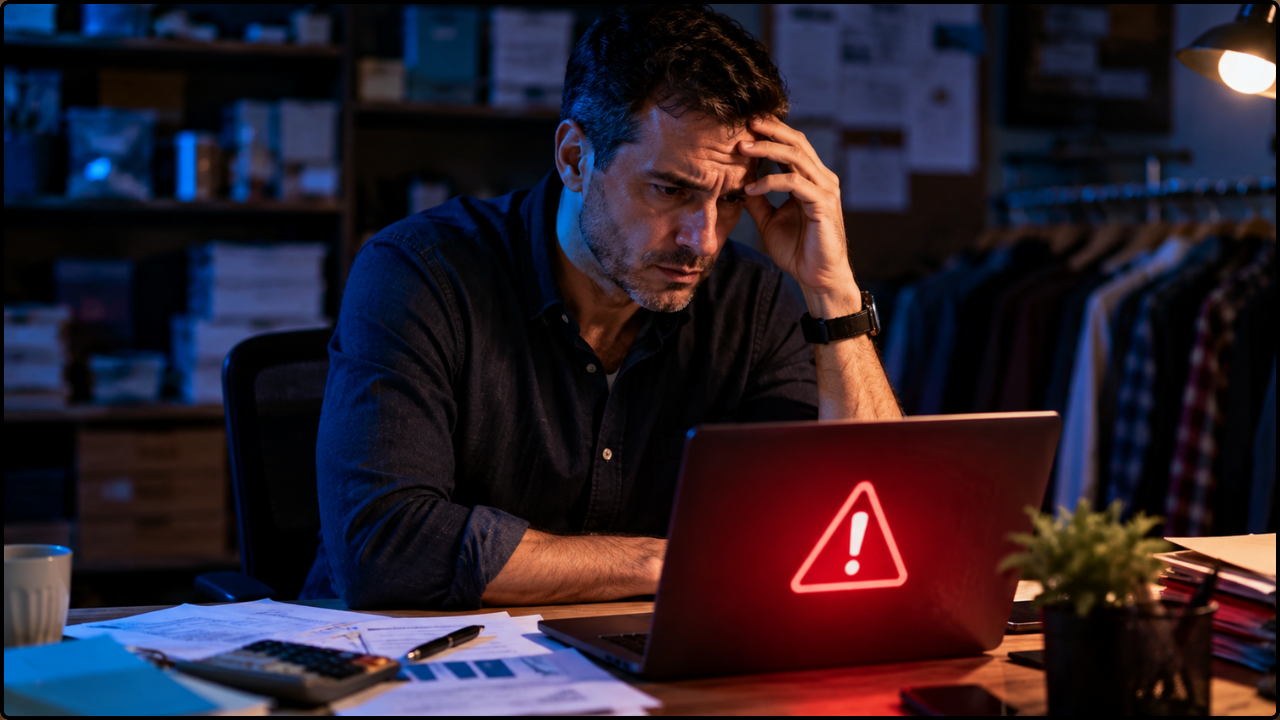
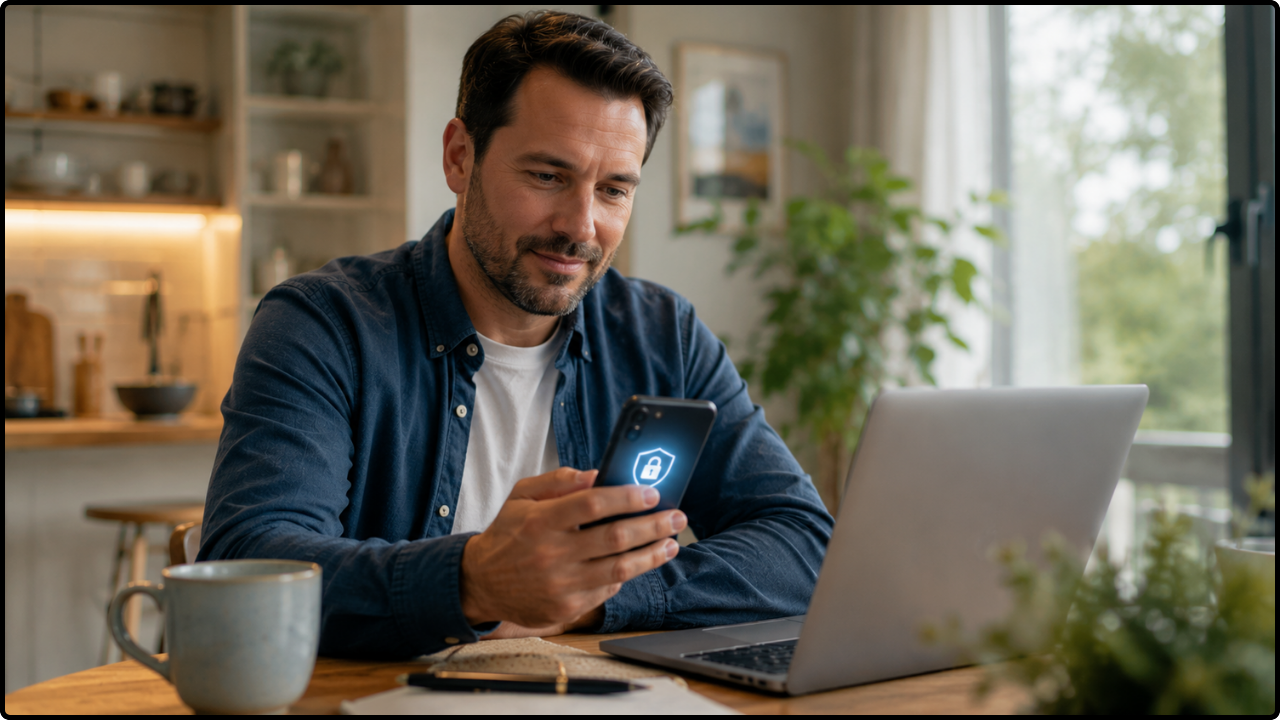
Have you ever gotten a text message claiming to be from your bank, asking you to “verify” your account right away? Your heart skips a beat, your thumb hovers over the link, and for a second, you almost click it. Moments like these happen to millions of people every single day, and most of us have come dangerously close to falling for one. In this article, you will learn seven simple, everyday cybersecurity habits (meaning the practical steps you take to keep your money, accounts, and personal information safe from hackers and scammers online) that can genuinely protect your family’s finances without requiring any technical expertise.
Why Online Scams Keep Getting Smarter (And Sneakier)
If it feels like scams have gotten harder to spot lately, that’s not just your imagination. Reports tracking consumer fraud have noted that Americans lost over $10 billion to scams in a recent year, and the number keeps climbing rather than shrinking.
The reason this keeps happening isn’t that people are getting careless. It’s that scammers have gotten remarkably good at mimicking real companies, real emergencies, and real relationships. A fake text from “your bank” looks nearly identical to a real one. A scam email about a late package looks just like the shipping notifications you get every week. Scammers aren’t relying on obvious red flags anymore, they’re relying on your routine, everyday trust.
This is really a story about volume and precision, not stupidity. Criminals send out thousands of messages knowing only a small percentage of people need to click for it to be profitable. The scams are working not because people are gullible, but because they’re designed to blend into your normal day.
The Real Reason Your Personal Information Is a Target
Here’s something most people don’t think about: your personal information isn’t just useful to you, it’s valuable to criminals in a way that has nothing to do with directly stealing your money. Your name, birthdate, and account details can be bundled together and sold, combined with other people’s leaked data, or used to open entirely new accounts in your name.
This is the “aha” moment worth sitting with. A scammer doesn’t need to hack your bank account directly if they can piece together enough details about you from smaller leaks, an old password from one site, your mother’s maiden name from a quiz you filled out on social media, your address from a delivery app. Each piece feels harmless on its own. Together, they form a profile a criminal can use to impersonate you convincingly.
This is why cybersecurity isn’t really about one big lock on one big door. It’s about recognizing that dozens of smaller doors exist around your digital life, and each one needs its own basic protection. The habits in this article exist precisely because attackers count on people protecting the big obvious things while ignoring the small routine ones.
Your personal information is valuable in pieces, not just as a whole, which is exactly why scattered small leaks matter more than people realize.
What This Means for Your Family’s Wallet and Peace of Mind
Let’s bring this closer to home. If your identity gets used to open a fraudulent credit line, or your bank account gets drained by a convincing scam, the financial damage is only part of the problem. You also lose time, sometimes weeks of it, disputing charges, freezing accounts, and proving to institutions that it wasn’t actually you.
For your family, this can mean frozen accounts right when you need to pay rent or buy groceries. It can mean a temporary hit to your credit score that affects your ability to get a car loan or refinance your mortgage (a mortgage being the loan most people use to buy a home). These aren’t abstract inconveniences, they’re the kind of disruptions that ripple through your entire month.
There’s also an emotional cost that doesn’t show up on any balance sheet. Discovering that someone has been pretending to be you, or that your savings are suddenly gone, creates a specific kind of stress that lingers even after the money is eventually recovered. Many people describe feeling like they can’t fully trust their own accounts again for months afterward.
The good news is that most successful scams rely on skipping just one or two basic precautions. Small daily habits, done consistently, create enough friction to stop the vast majority of attacks before they ever reach your wallet.
7 Cybersecurity Habits You Can Start Using Today
None of these habits require technical knowledge or expensive software. They just require a little consistency.
- Turn on two-factor authentication everywhere you can. This means requiring a second code, usually sent to your phone, in addition to your password. Even if a scammer steals your password, they still can’t get in without your phone.
- Pause before clicking any link in an unexpected message. If a text or email creates urgency, “act now” or “your account will be locked,” that urgency is often the scam itself. Go directly to the company’s official app or website instead of clicking.
- Use a different password for your most important accounts. Reusing one password means one leaked account can expose your bank, email, and social media all at once. A free password manager can handle this for you without needing to memorize anything.
- Check your bank and credit card statements weekly, not monthly. Catching a fraudulent charge within a few days makes it far easier to dispute than discovering it a month later buried among dozens of other transactions.
- Freeze your credit if you’re not actively applying for loans. This is a free step that stops most identity thieves from opening new accounts in your name, and it can be lifted temporarily whenever you actually need it.
- Be skeptical of “urgent” calls from family members or officials. Scammers increasingly use cloned voices or spoofed caller IDs. If a call feels off, hang up and call the person or organization back directly using a number you already trust.
- Update your devices regularly instead of postponing it. Those annoying software update reminders often include security patches that close doors hackers are actively trying to use.
Pick two habits from this list to start this week rather than trying to adopt all seven at once, consistency beats intensity here.
Common Mistakes That Leave People Exposed
Even security-conscious people fall into a few predictable traps. Here are the ones worth watching for.
Assuming “it won’t happen to me.” This mindset is exactly what scammers count on, since it leads people to skip basic precautions they’d otherwise take seriously.
Reusing passwords out of convenience. It feels efficient in the moment, but it turns one single leak into a much bigger disaster across multiple accounts.
Trusting caller ID or sender names blindly. Both can be faked fairly easily, so seeing a familiar name or number is no longer proof of who’s actually contacting you.
Waiting to act after noticing something suspicious. Many people notice a strange charge or email and mean to look into it later, giving scammers valuable extra time to do more damage.
These mistakes aren’t about intelligence, they’re about habits that haven’t caught up to how sophisticated scams have become.
What the Data Tells Us About Online Fraud Today
Looking at the bigger picture helps put these habits in perspective. Federal consumer protection data has shown that identity theft and impersonation scams remain among the most commonly reported categories of fraud, with older adults and younger, less experienced internet users both showing up as frequent targets, though for different reasons.
The Federal Trade Commission, the government agency responsible for tracking consumer fraud, has also noted that a significant share of reported scams begin with nothing more than a simple text message or phone call, rather than a sophisticated hacking attempt. This matters because it confirms something reassuring, most scams don’t require advanced technology to stop, they require basic awareness and a habit of pausing before reacting.
The data consistently points to the same conclusion: most fraud succeeds through simple deception, not technical sophistication, which is exactly why simple habits work so well against it.
Where Online Security Is Headed Next
Looking ahead, it’s realistic to expect scams to keep evolving alongside technology, particularly as tools that generate realistic voices and messages become more widely available. This will likely make some scams harder to spot at a glance.
At the same time, protective tools are evolving too. Banks are getting faster at flagging unusual activity, phone carriers are improving spam and scam-call filtering, and awareness around common scam tactics continues to spread through news coverage and everyday conversation. This isn’t a battle where only the attackers are getting better.
The most realistic outlook is a continued back-and-forth, scammers adapting their tactics, and everyday consumers adapting their habits in response. The families who stay safest won’t be the ones with the most advanced technology, but the ones who treat basic precautions as a normal part of their weekly routine rather than a one-time fix. Expect the arms race to continue, but don’t expect it to require you to become a tech expert to stay protected.
Final Thoughts
Protecting your money and personal information online doesn’t require becoming a cybersecurity professional. It requires building a handful of small, consistent habits that make you a much harder target than the person next to you online.
Most scams succeed because someone skipped one small step, clicked too quickly, reused a password, or trusted a caller ID at face value. Closing even a few of these gaps dramatically lowers your risk.
This week, choose just one habit from this article, whether it’s turning on two-factor authentication or finally checking your bank statement more often, and put it into practice. Small, consistent steps like this are what actually keep families safe online.