

These smart money moves matter more than ever right now. Ever open your credit card statement and wonder why the interest charge seems bigger than it used to be? Or notice your neighbor casually mention their savings account is finally paying them something worthwhile? You’re not imagining it – the cost of borrowing money has changed, and it’s affecting everything from mortgages to grocery-store credit card swipes. In this article, you’ll learn why interest rates are staying higher than many families expected, what it actually means for your household budget, and seven practical moves you can make right now to protect – and even grow – your family’s finances.
Why Borrowing Money Still Feels Expensive Right Now
If you’ve felt like loans, credit cards, and car financing all got pricier over the last couple of years, you’re not wrong. An interest rate – the cost you pay, shown as a percentage, for borrowing money – has stayed noticeably higher than the near-zero levels many households got used to in the early 2020s.
This didn’t happen by accident. The Federal Reserve, the U.S. central bank responsible for managing the country’s money supply and keeping prices stable, raised rates aggressively a while back to fight rising prices, and has been cautious about cutting them back down quickly since.
The result is a borrowing environment that feels stuck in a higher gear than most families are used to. Mortgages, auto loans, and credit cards all take their pricing cues from this broader rate environment, which is why almost every corner of your budget has felt a little tighter.
Higher rates aren’t a temporary glitch – they’re a deliberate tool, and that changes how you should plan around them.
The Real Reason Rates Aren’t Dropping as Fast as Everyone Hoped
Here’s the part that trips up a lot of families: many people assumed rates would spike briefly and then quickly return to “normal.” That’s not how this usually works, and understanding why can save you from making costly financial decisions based on wishful thinking.
The Federal Reserve’s main job when it raises rates is to slow down spending and borrowing across the entire economy. When loans are expensive, people buy fewer homes, finance fewer cars, and put fewer purchases on credit. That slowdown is supposed to cool off rising prices, known as inflation – the general increase in the cost of goods and services over time, which makes your dollar buy less than it used to.
The tricky part is that cooling inflation without also cooling the job market or the broader economy is a delicate balancing act. If the Fed cuts rates too fast, prices could climb again. If it moves too slowly, borrowing stays expensive longer than families would like. That’s the tightrope policymakers are walking, and it explains why rate cuts tend to happen gradually instead of all at once.
Think of it less like a light switch and more like a dimmer – the Fed adjusts slowly on purpose, because sudden moves in either direction can cause bigger problems than they solve. The economy doesn’t reset overnight just because everyone wants it to.
What This Actually Means for Your Family’s Budget
Let’s bring this back to your kitchen table. Elevated rates touch nearly every part of your family’s financial life, even the parts that don’t look like “loans” on the surface.
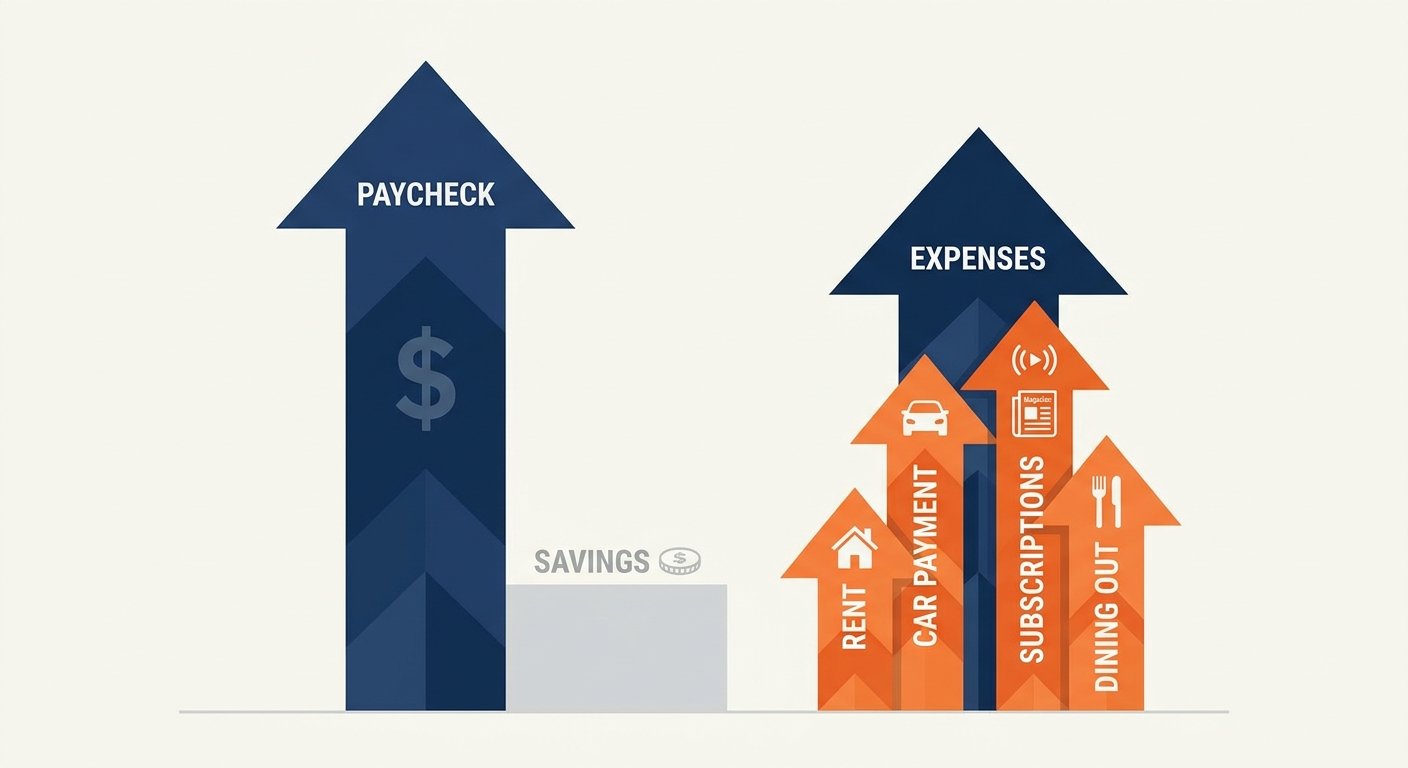
If your family carries a credit card balance, you’re likely paying more in interest charges every single month than you were a few years ago – money that isn’t going toward anything except the debt itself. That’s real money that could otherwise go toward groceries, savings, or things your family actually enjoys.
If you’re planning to buy a home or a car, your monthly payment on the same purchase price is higher than it would have been in a lower-rate environment. This has pushed some families to delay big purchases altogether, which is a completely reasonable response, not a failure on your part.
On the flip side, if your family has money sitting in a high-yield savings account, this environment is actually working in your favor – your savings can now earn a more meaningful return than they did a few years ago. For your family, elevated rates are a mixed bag: painful if you’re borrowing, helpful if you’re saving – and your strategy should reflect which side of that line you’re currently on.
7 Smart Money Moves to Make Right Now
Here are seven smart money moves you can start applying today. You don’t need to overhaul your entire financial life overnight. Start with the moves that match your current situation, and build from there.
- Attack high-interest debt first. Credit card balances are usually the most expensive debt a family carries. Paying these down before other goals saves you the most money in avoided interest charges.
- Move idle cash into a high-yield savings account. If your emergency fund is sitting in a traditional bank account earning almost nothing, you’re leaving free money on the table in this rate environment.
- Avoid taking on new variable-rate debt if you can help it. Variable rates can rise further if the environment shifts, while fixed rates lock in your cost, giving your budget more predictability.
- Refinance only when the math clearly works. Refinancing a loan makes sense when the new rate is meaningfully lower than your current one – not just slightly lower, since fees can eat up small savings.
- Call your credit card company and ask for a lower rate. This sounds too simple to work, but many issuers will negotiate, especially for customers with a solid payment history.
- Delay large financed purchases when you reasonably can. If a big purchase like a car isn’t urgent, waiting for a more favorable rate environment can meaningfully lower your total cost.
- Build a slightly larger emergency fund than usual. Elevated rates often coincide with economic uncertainty, so a bigger safety cushion gives your family more breathing room if income gets disrupted.
None of these moves require a finance degree – just consistency and a willingness to prioritize.
Common Mistakes Families Make During High-Rate Periods
Even well-meaning families fall into these traps. Here’s what to watch for.
Only making minimum credit card payments. This keeps your balance alive for years and maximizes the interest you pay – often far more than the original purchase cost.
Chasing “teaser” rates without reading the fine print. Promotional rates that jump dramatically after a few months can leave families worse off than before they switched.
Panic-selling long-term investments. Reacting emotionally to rate news and pulling money out of retirement accounts often locks in losses that patient investors avoid.
Ignoring savings accounts entirely. Many families focus only on debt and forget that idle cash in a low-interest account is a missed opportunity in this environment.
What the Data Actually Shows About Household Finances Right Now
Recent data from the Bureau of Labor Statistics (BLS) – the U.S. government office that tracks employment, wages, and the cost of living – has shown that household budgets have had to stretch further as borrowing costs and everyday prices both climbed over the past few years.
As of the Federal Reserve’s most recent policy meeting in late July 2026, the central bank kept its benchmark rate in the 3.50%-3.75% range, holding steady for a fifth consecutive meeting after a round of cuts in late 2025. That pause reflects the Fed’s own public commentary, which has repeatedly emphasized that rate decisions are guided by incoming inflation and employment data rather than a fixed timeline – meaning families shouldn’t expect a specific “rate cut date” so much as a gradual response to how the economy performs.
Surveys tracking household debt have also pointed to rising credit card balances industry-wide, a trend that underscores why prioritizing high-interest debt matters more now than it did in a lower-rate environment. The data tells a consistent story: this is a squeeze that rewards proactive families and punishes passive ones.
Where Interest Rates Are Likely Headed From Here
Looking ahead, most reasonable expectations point toward interest rates gradually easing over time rather than staying permanently elevated or dropping suddenly back to near-zero levels. The Federal Reserve has shown it prefers slow, deliberate moves over dramatic swings.
That said, it would be unrealistic to expect a quick return to the ultra-low rates many families remember from years past. A more moderate, “new normal” rate environment is a reasonable expectation for the next few years, even as specific numbers shift up or down along the way.
Families who build strong financial habits now — paying down debt, keeping healthy savings, avoiding unnecessary new borrowing – will be well-positioned no matter which direction rates move next. The safest financial strategy isn’t predicting the future; it’s building a budget that holds up regardless of what happens.
Final Thoughts
Elevated interest rates aren’t a punishment aimed at your family specifically – they’re a broad economic tool that happens to touch nearly every household differently depending on whether you’re borrowing or saving. Understanding which side of that equation you’re on is the first step toward making smarter decisions.
The families who come out ahead during periods like this aren’t the ones with the highest income – they’re the ones who pay attention, prioritize high-interest debt, and take advantage of higher savings returns while they last.
This week, take fifteen minutes to check your credit card interest rate and your savings account rate – you might be surprised how much room there is to improve both.


One thought on “7 Smart Money Moves Every Family Should Make While Interest Rates Stay Elevated”