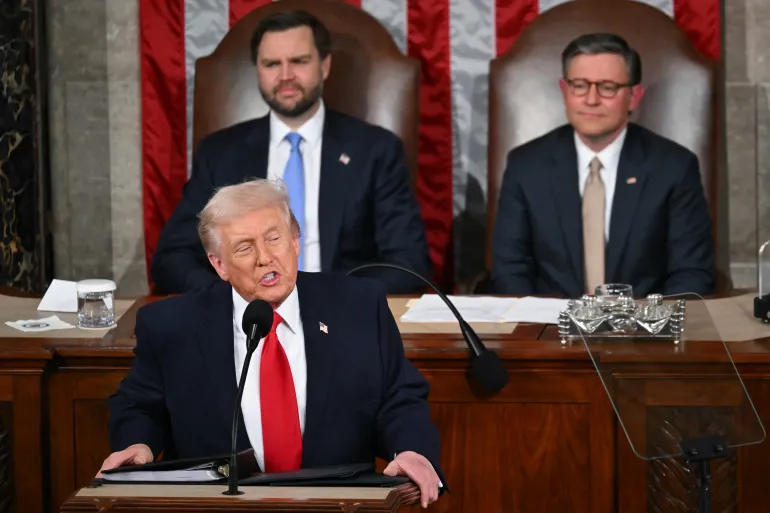
Trump makes Iran missile and protest death toll claims; Tehran fires back with “big lies” accusation, marking the latest chapter in a long‑running US‑Iran confrontation. Speaking at the White House, Donald Trump alleged that Iran’s ballistic missile programme was advancing faster than ever and that the regime had concealed a far higher death toll in the 2022 protests than any official or NGO estimate.
Iranian officials dismissed the statements as baseless fabrications and warned that any military action based on such claims would be met with a “decisive response.” The exchange fits a familiar pattern: Washington makes dramatic allegations, Tehran categorically denies them, and the gap between the two sides widens without any real diplomatic progress. What is different this time is that Iran’s nuclear capabilities are more advanced than ever, the regional landscape is unstable, and the tools that have historically managed escalations are weaker than they have been in a decade.
What Trump Actually Said and What the Evidence Shows
Trump’s missile and protest‑death‑toll claims follow a pattern seen across multiple US administrations. The US president argued that Iran’s ballistic missile programme was advancing faster than ever, hinting at systems capable of reaching targets beyond the Middle East. He did not release detailed intelligence, but administration officials told reporters that the US had observed a clear rise in Iran’s missile testing. Analysts agree Iran has been steadily improving missile range, accuracy, and survivability for decades, but the key question is whether the current pace represents a true step‑change or harsher political framing.
His more controversial claim concerned Iran’s 2022 protests. Revisiting the Woman Life Freedom movement – which erupted after the death of Mahsa Amini in morality police custody – Trump suggested that the real death toll was far higher than official or NGO estimates. Human rights groups documented more than 500 deaths during the crackdown, and they admit their numbers are likely underestimates due to government secrecy.
Yet none of these organisations found evidence backing the dramatically inflated figures Trump implied. The absence of independent verification makes it hard to judge his claim purely on facts, but it fits a pattern of US officials exaggerating intelligence in confrontational cases against adversary states.
Tehran’s Response: “Big Lies” and the Art of Counter‑Narrative
Iran’s reaction was swift and uncompromising. Foreign Ministry spokesman Esmail Baghaei dismissed the allegations as “big lies” and redirected attention to America’s own record – from police violence and mass incarceration to military interventions. Senior adviser Mohammed Mohammadi Golpayegani warned that any military action based on “false pretenses” would be met with a decisive response. Tehran clearly wanted to frame Trump’s claims as political theatrics rather than credible intelligence.
Iranian state media ran a day‑long counter‑narrative, inviting analysts and commentators to argue that Washington’s real goal was regime change, not human rights or nuclear nonproliferation. This framing helps the regime narrow the space for internal dissent by painting criticism as support for an external enemy. The forcefulness of Tehran’s response also reflects a regime under multiple pressures: war, economic crisis, and domestic unrest. For a government that has long treated “big lies” as a core part of its political narrative, this week’s reaction was both familiar and personally threatening.
The Nuclear Dimension: From Breakout Time to Breakout Reality
The timing of Trump’s claims is inseparable from Iran’s nuclear programme. Experts estimate that Iran now has enough enriched uranium – at around 60% enrichment – to move to weapons‑grade levels in weeks or months. The “breakout” window has shrunk from the roughly one‑year buffer the 2015 JCPOA was designed to maintain. With inspections limited and diplomacy weak, the world would have far less time to react.
The collapse of the JCPOA – triggered by Trump’s 2018 withdrawal and Iran’s gradual abandonment of commitments – is the core of today’s crisis. The deal linked limits on enrichment with sanctions relief; once the US reimposed harsh sanctions, Iran had no incentive to stay within those limits.
The delicate balance shattered, leaving Iran enriching uranium at higher levels and larger volumes, with no functioning diplomacy to manage the trajectory. IAEA inspectors now face tighter restrictions, reducing their ability to detect a secret breakout. The result is a dangerous information gap, exactly what intelligence agencies fear most, at a moment when Trump insists Iran will not be allowed to get a nuclear weapon.
The Missile Programme: Iran’s Non‑Negotiable Deterrent
Iran’s ballistic missile programme is one of the most sensitive parts of its security posture. The US and its allies see these missiles as a major threat to bases, cities, and regional stability. Yet Tehran treats them as a non‑negotiable deterrent. Iranian security doctrine, shaped by decades of threats from the United States, Israel, Saudi Arabia, and past Iraq, relies heavily on asymmetric capabilities like missiles, drones, and proxy forces.
Iran has shown it is ready to use these weapons. In 2020, it launched ballistic missiles at US bases in Iraq in retaliation for the killing of General Qasem Soleimani. In 2024, it struck Israeli territory directly from Iranian soil for the first time. Trump’s claim that the missile programme is advancing faster than ever arrives in a context where Iran has already demonstrated capability and willingness to strike.
From Tehran’s view, missile systems are not bargaining chips; they are core elements of national security. Senior Iranian officials have repeatedly said that no future nuclear deal will limit their missiles, directly clashing with the US and European push for a broader agreement covering both nuclear and conventional threats.
The Ghost of Mahsa Amini: Why the 2022 Protests Still Matter
Trump’s references to the 2022 Woman Life Freedom protests show how deeply Mahsa Amini’s death still shapes Iranian politics. Her arrest by the morality police over hijab rules triggered nationwide demonstrations that cut across age, class, and regions. Unlike earlier protest waves, the 2022 movement drew in students, workers, ethnic minorities like Kurds and Baloch, and communities that had rarely opposed the government before.
The government’s response was brutal: security forces opened fire, thousands were arrested, and some protesters were sentenced to death for “crimes” of dissent. Several were publicly hanged to terrorize the population into silence.
Despite the crackdown, the movement’s legacy lives on in grave‑site vigils and online mourning. The slogan “Woman, Life, Freedom” remains powerful symbolically. Trump’s claim that the death toll was far higher than documented might be partly accurate, but he provided no evidence that could verify it. Iranian human rights groups agree their numbers are underestimates, yet they cannot confirm the vastly higher figures Trump suggested.
For Iranians inside the country, the debate over the true toll is both painful and politically dangerous. Some activists welcome international attention, while others fear that US‑driven spotlight could give Tehran an excuse to justify more repression.
The European Dimension: Allies Who Have Lost Their Seat at the Table
While the US‑Iran confrontation intensifies, Europe’s usual role as a mediator has weakened. The UK, France, and Germany had long positioned themselves as diplomatic bridges, arguing that engagement beats isolation. That approach produced the 2015 JCPOA and came close to delivering a follow‑up under President Biden. But Trump’s unilateralism has repeatedly pushed European allies to the sidelines. When Washington escalates rhetoric and sanctions without coordination, it becomes harder for European diplomats to maintain credibility with Tehran.
European capitals warn that Trump’s public accusations make it tougher to keep Tehran at the negotiating table. When American officials openly claim Iran is lying or preparing for war, European envoys trying to build trust find their efforts undercut.
The E3 still have some leverage through trade, investment, and diplomacy, but that leverage is eroding as Washington’s hard‑line policies dominate. The result is a growing diplomatic vacuum. Without strong European channels, the chances of avoiding war or nuclear escalation shrink. For Brussels and Berlin, the most feared outcome is a crisis that ends in military action or a nuclear‑armed Iran. Yet the current US‑Iran dynamic is pushing the region toward that very scenario.
Regional Reverberations: The Axis of Resistance Under Stress
Iran’s regional network – Hezbollah in Lebanon, Iraqi Shia militias, the Houthis in Yemen, and allied Palestinian groups – has long been called the “Axis of Resistance.” In recent years, however, this network has come under steady pressure. The Gaza war severely weakened Hamas’s military capacity.
In Lebanon, Hezbollah faces a government ban on its military wing and an Israeli ground advance in the south, restrictions it has never before had to accept. The Houthis continue operating, but their Iranian support has declined amid increased Saudi and US pressure. Iraqi militias remain active, yet without the tight coordination once provided by the IRGC’s Quds Force.
The Axis of Resistance has not collapsed, but its peak power has clearly passed. This pressure may be pushing Iran to rely more on its own direct military capabilities – missiles and, potentially, nuclear weapons – as the last reliable deterrent.
A regime that built its security doctrine around regional proxies now sees those proxies weakened and under surveillance. Trump’s missile‑programme accusations arrive at a moment when Iran’s leaders may be recalculating their deterrence strategy. Whether those accusations deter Iran or encourage faster development is an open question. The US‑Iran escalation is therefore not just a bilateral drama; it is reshaping the balance of power across the Middle East.
Inside Iran: A Population Caught Between Two Governments
Ordinary Iranians are squeezed between their own government’s repression and American economic pressure. Many blame the clerical state for economic chaos, inflation above 40%, political crackdowns, and social restrictions.
The 2022 and 2019 protests showed that public frustration is real and widespread. Yet the US “maximum pressure” sanctions campaign has also inflicted heavy costs on the population. Access to medicines, international payments, and economic stability has deteriorated, especially for the poor. The link between sanctions and civilian suffering is not just regime propaganda; it is a lived reality for millions.
Activists inside Iran, communicating through encrypted apps, are divided over how to view Trump’s pressure. Some welcome any international attention that might expose the regime’s crimes, even from a confrontational US president. Others fear that each new round of US threats gives Tehran the gift of an “external enemy,” which it uses to justify more repression at home.
The Iranian diaspora is similarly split. Some see American pressure as the only tool strong enough to force change, while others see it as counterproductive, deepening both Iranian resentment and the regime’s nationalist narrative. The people caught in the middle rarely get a say in the decisions that shape their lives – yet they are the ones who pay the price.
The History That Explains the Present
The bitterness of the US‑Iran confrontation runs deeper than the 2022 protests or the 2015 nuclear deal. It reaches back to the 1953 coup, when the US and UK helped overthrow Iran’s democratically elected Prime Minister Mohammad Mosaddegh. This event is a key grievance in Iranian political culture, taught in schools and repeated in speeches.
For many Iranians, American claims to care about democracy and human rights are undermined by that history. The 1979 hostage crisis, when Iranian students held 52 US diplomats for 444 days, is equally central to the American side of the story. The crisis damaged President Jimmy Carter’s career and cemented Iran’s image in Washington as hostile and unpredictable.
In the decades since, the relationship has swung between brief rapprochement, sanctions, proxy wars, and near‑wars. The language of “big lies” and “big lies back” that Trump and Tehran now exchange is just the latest chapter in this long antagonism.
It is not a misunderstanding; it is mutual distrust built over generations. Breaking this cycle would require a level of political courage rarely seen in either country. Without that, accusations will continue, denials will follow, and the gap between Washington and Tehran will stay wide and dangerous.
What Happens Next: The Narrowing Window
Both sides now face a narrowing window of options. Iran’s nuclear breakout time is shrinking to weeks or months, which means any military action would have to target a more advanced, dispersed programme than before. Any diplomatic breakthrough would need to offer Iran incentives it has not had since the JCPOA, yet the US has shown little willingness to ease sanctions or make significant concessions. The Iranian government is unlikely to negotiate under the shadow of direct threats, as doing so would look like surrender and could destabilize its domestic standing.
Europe’s diminishing influence reduces the chance of a behind‑the‑scenes deal. Russia and China, which have used their UN Security Council vetoes to shield Iran, face their own US‑led pressures and cannot easily serve as honest brokers. The result, as many analysts now describe it, is a confrontation without a clear exit.
Neither side can achieve its goals, neither side wants to soften them, and the people bearing the heaviest burden are those who did not create the conflict. The Iranian families who lost loved ones in the Woman Life Freedom protests deserve transparent, documented accountability, not speculative claims that serve as political ammunition.
The Iranian people crushed by sanctions deserve a diplomacy that addresses nuclear concerns without deepening civilian suffering. Achieving that requires a new approach – one that, so far, neither Washington nor Tehran appears ready to take.