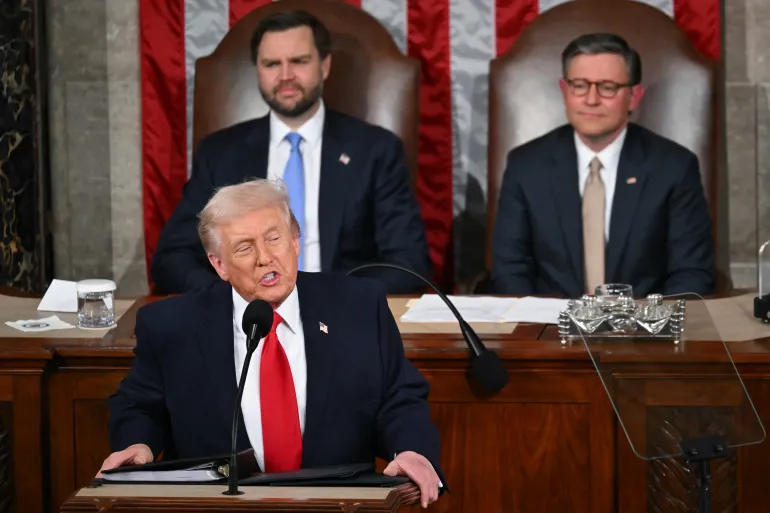
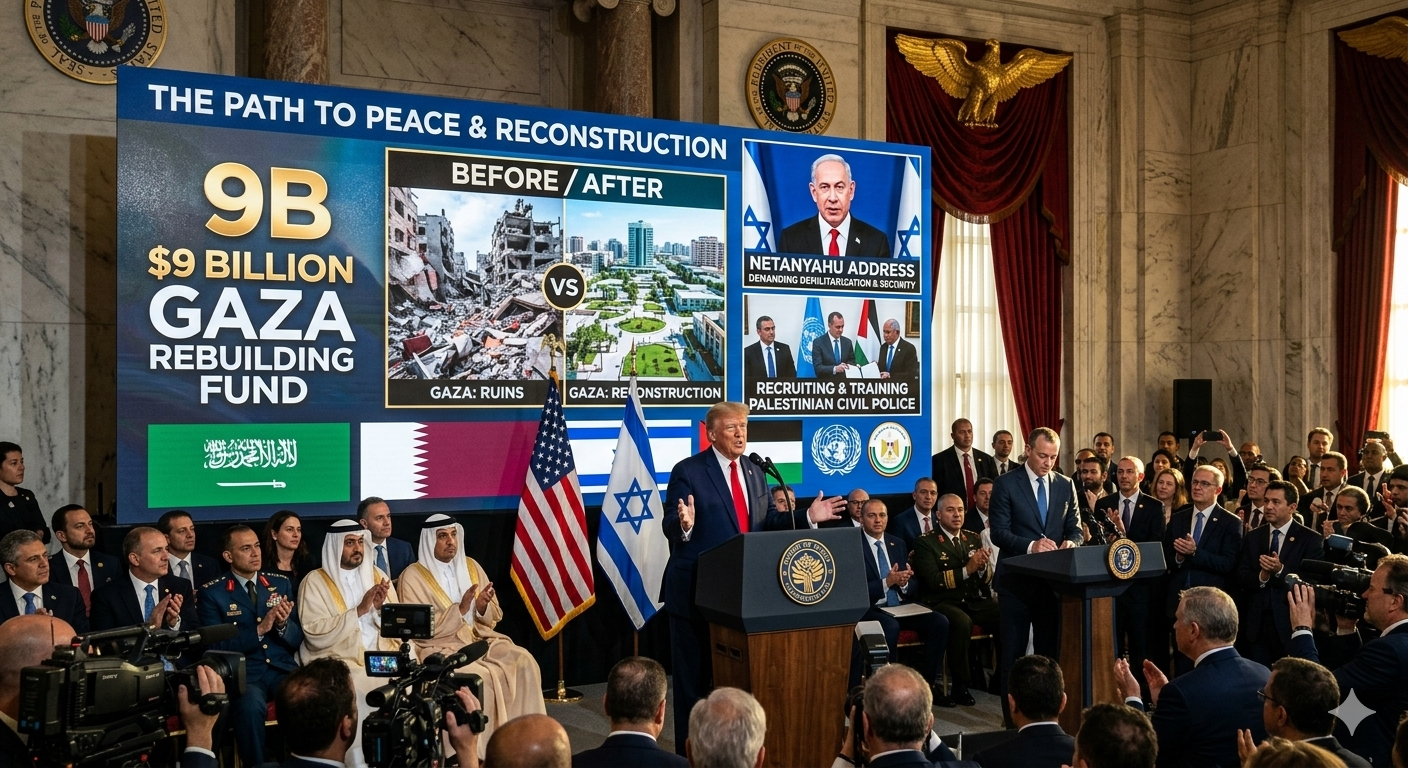
Trump’s Board of Peace pledges $7 billion for Gaza reconstruction has turned a high‑profile diplomatic summit into one of the largest international financing packages for Gaza since the war began. The White House unveiled a $9 billion total framework, combining over $7 billion in Gulf‑state pledges (Saudi Arabia, UAE, Qatar, Bahrain, Morocco, Kuwait, Kazakhstan, Azerbaijan, Uzbekistan), $2 billion from UN humanitarian funds, and $75 million from FIFA for football pitches and youth‑recreation infrastructure. The optics are polished, the numbers are real, and the intent is clear: “rebuild Gaza through money, not only through politics.”
But the gap between the announcement and the real‑world impact is the real story. Gaza’s reconstruction needs are estimated at $70 billion, meaning the current $9 billion covers about 13 percent of the total cost. The tent‑city populations in Rafah, the destroyed hospitals, and the crumbled power‑and‑water networks will not care about the dollar‑number on the press release — they care whether concrete replaces canvas, electricity returns, and children can play in safe‑spaces instead of rubble‑streets. This post unpacks what the Board of Peace can do, what it cannot do, and why the real challenge is political, not just financial.
The $9 Billion in Context: 13 Percent of the Need
The $9 billion pledge is not symbolic – it is real money that can buy:
- Basic shelters for hundreds of thousands of displaced families.
- Water‑purification and distribution systems.
- Power‑generation and distribution capacity.
- Basic hospitals, clinics, and schools enough to restart core services.
- Early‑phase debris‑removal and road‑repair to make future construction possible.
But Gaza’s total damage is pegged at $70 billion – covering housing stock, healthcare, education, ports, power‑grids, water‑networks, border‑crossings, and vital transport‑links. The $9 billion is only a down‑payment, not the full bill. Even the 13‑percent statistic is optimistic, because inflation, corruption‑risk, and security‑delays will eat into the effective spend before one brick is laid.
For the 2.1 million Gazans living in Rafah tent‑cities or half‑crumbled buildings, the difference between $9 billion and $70 billion is life and death, health and sickness, school and no‑school. The Board of Peace framework is real, but the real‑world test is whether this money can reach them fast enough — and whether security and politics allow it.
Saudi Arabia, UAE, Qatar: The Gulf‑Led Coalition
The $7 billion core of the pledge comes from a Muslim‑majority coalition led by Saudi Arabia, UAE, Qatar, Bahrain, Morocco, Kuwait, Kazakhstan, Azerbaijan, and Uzbekistan. Saudi Arabia’s regional influence, Muslim‑world legitimacy, and financial muscle turn the project from a Washington‑centered initiative into a Gulf‑driven, Muslim‑world‑owned peace‑and‑reconstruction drive. The UAE brings execution‑power – the mega‑project masters who can turn billions into roads, power‑lines, hospitals, and housing complexes.
Qatar is the most politically sensitive member – historically Hamas’s financial and political backer – so its participation in reconstruction‑finance is framed as a new phase, not a continuation of the old alliance. The Western boycott – UK, Canada, France, and Germany declined the Board of Peace meeting over UN‑sidelining concerns – shrinks the total‑dollar scale and weakens the programme’s legitimacy in international eyes, even though $9 billion is real.
Hamas Disarmament: The Real‑World Obstacle
The biggest obstacle to actual reconstruction is Hamas disarmament. Netanyahu has stated that “no reconstruction without full demilitarisation of Gaza” – Gaza must be fully demilitarised before large‑scale rebuilding begins. Hamas, in contrast, insists on full Israeli withdrawal from Gaza before any discussion of laying down weapons. Trump’s public optimism that Hamas “looks like it will agree to disarm” is not backed by public evidence or internal‑Hamas signals.
Without real‑security guarantees, the $9 billion will sit in bank accounts, not border‑crossings. The security‑loop is “no trusted security without effective police, no effective police without trust, no trust without disarmament, no disarmament without a political‑deal”. The Board of Peace has not broken this loop, and until it does, reconstruction will remain partial, fragmented, and fragile – built only in limited safe‑zones, not across Gaza as a whole.
Palestinian Police and the International Stabilisation Force
The most realistic security element of the plan is the Palestinian police force that the Board of Peace is trying to build. Initial reports mention thousands of applications in hours, showing that many Gazans want a security force that is not Hamas‑controlled. The goal is a vetted, UN‑backed, internationally‑supervised police that can work with an Egypt‑backed International Stabilisation Force (ISF) to control borders, prevent weapons‑inflow, and protect reconstruction‑workers, schools, and hospitals.
If 5,000–10,000 well‑trained police can be deployed by 2026–2027, they can create “safe‑enough” zones where hospitals, clinics, schools, and housing projects operate without constant threat. This is not a full‑peace‑deal, but it is a practical, incremental step that can allow the first concrete benefits of the $9 billion to reach ordinary people – and the tent‑cities in Rafah to start seeing tents replaced by roofs.
FIFA’s $75 Million: Football, Trauma, and Hope
The $75 million from FIFA for football pitches and youth‑recreation projects may look like a PR‑gimmick, but it is one of the most practical parts of the pledge. Gaza’s young population is huge, and post‑war trauma, unemployment, and hopelessness create a breeding ground for extremism. Safe‑spaces for sports, training, coaching, and community‑building are soft‑power infrastructure.
Football pitches can:
- Divert young men from violence and gang‑recruitment.
- Create jobs in maintenance, security, and coaching.
- Offer a symbolic image of “normal life returning” – a child playing football in a new pitch is free propaganda for the peace‑process, and hope for a war‑weary population.
While they won’t rebuild hospitals, they will help rebuild broken minds and communities – and that may be as important as bricks and concrete.
Western Boycott and the UN Sidelining Problem
The UK, Canada, France, and Germany boycotted the Board of Peace launch, officially over concern that the UN is being sidelined in the governance‑framework. For them, big‑scale reconstruction without a strong UN‑backed structure means higher corruption‑risk, weaker transparency, and less accountability. The UN brings coordination, monitoring, and international‑law legitimacy — all things that multi‑billion‑dollar programmes need.
Their absence shrinks the total‑dollar size and weakens the global‑credibility of the project. The $9 billion is real, but it is not the full‑scale deal it could be. Critics will argue that this is more about Trump‑style politics than real‑world peace‑architecture – and for Gaza’s people, every dollar that does not come is a child who stays in a tent, a hospital that stays dark, and a school that stays closed.
Pakistan’s Position: Vocal, Watchful, Not Funding
Pakistan has not pledged money to the Board of Peace, but it is watching closely. As an OIC‑member with a large Muslim‑public that cares about Gaza, Pakistan cannot look indifferent. Foreign Minister Ishaq Dar is monitoring the Saudi‑Qatari‑led reconstruction initiative, and the Kashmir‑Palestine narrative gives Pakistan a rhetorical seat at the table – condemning Israeli‑military actions while supporting Muslim‑world‑ownership of reconstruction.
But Pakistan’s economy is under pressure from Gulf‑war‑oil‑prices, Afghanistan‑border‑costs, and IMF‑austerity. So no‑money is the realistic position. The policy is: strong rhetoric, no cash – a low‑cost, high‑symbolism move that pleases home‑audience without risking real‑fiscal‑space. Gaza’s people will not feel the difference between Pakistan’s speeches and Saudi‑dinars, but the difference in donor‑impact is real.
What Gaza Will Actually Get: A Realistic 2–3 Year Outlook
The most realistic 2–3 year outlook is:
- First 6–12 months:
- UN‑humanitarian‑cash flows into food, water, medicine, and temporary shelters.
- FIFA‑pitch projects start (fast‑to‑build, visible, morale‑boosting).
- Palestinian‑police‑recruitment and training begins, including vetting and international‑supervision.
- 12–24 months:
- If security improves, small‑scale reconstruction in selected safe‑zones (north or central Gaza).
- Hospitals, clinics, power‑lines, water‑projects start, but slowly.
- ISF maintains border‑control, arms‑influx‑prevention, and police‑support.
- Beyond 2 years:
- Either a real political‑deal (Hamas disarmament + Israeli withdrawal + Palestinian‑state‑talks) opens the door to full‑scale rebuild, or the $9 billion is spent on partial‑rebuild, with large parts of Gaza still conflict‑prone.
The tent‑cities in Rafah will judge the Board of Peace not by Washington‑speeches, but by when canvas turns into roofs, dirt‑roads into paved‑streets, and rubble turns into homes. The $9 billion is real — the real challenge is not money, but the politics that will decide whether it ever reaches the people it’s meant to save.
Conclusion
Trump’s Board of Peace pledges $7 billion for Gaza reconstruction – a $9 billion total package that is real money, but far below the $70 billion need, and far from enough to fully rebuild Gaza. The real story is not the checkbook, but the security‑and‑political deadlock between Hamas, Israel, Palestinian‑governance, and Western‑donors. The $9 billion can buy hope, infrastructure, and early‑stage stability, but it cannot buy peace without a real‑deal. The people in Rafah’s tent‑cities will measure the Board of Peace by concrete, not speeches, and the true test will come in years, not months.