Introduction: The Middle East at a Geopolitical Precipice
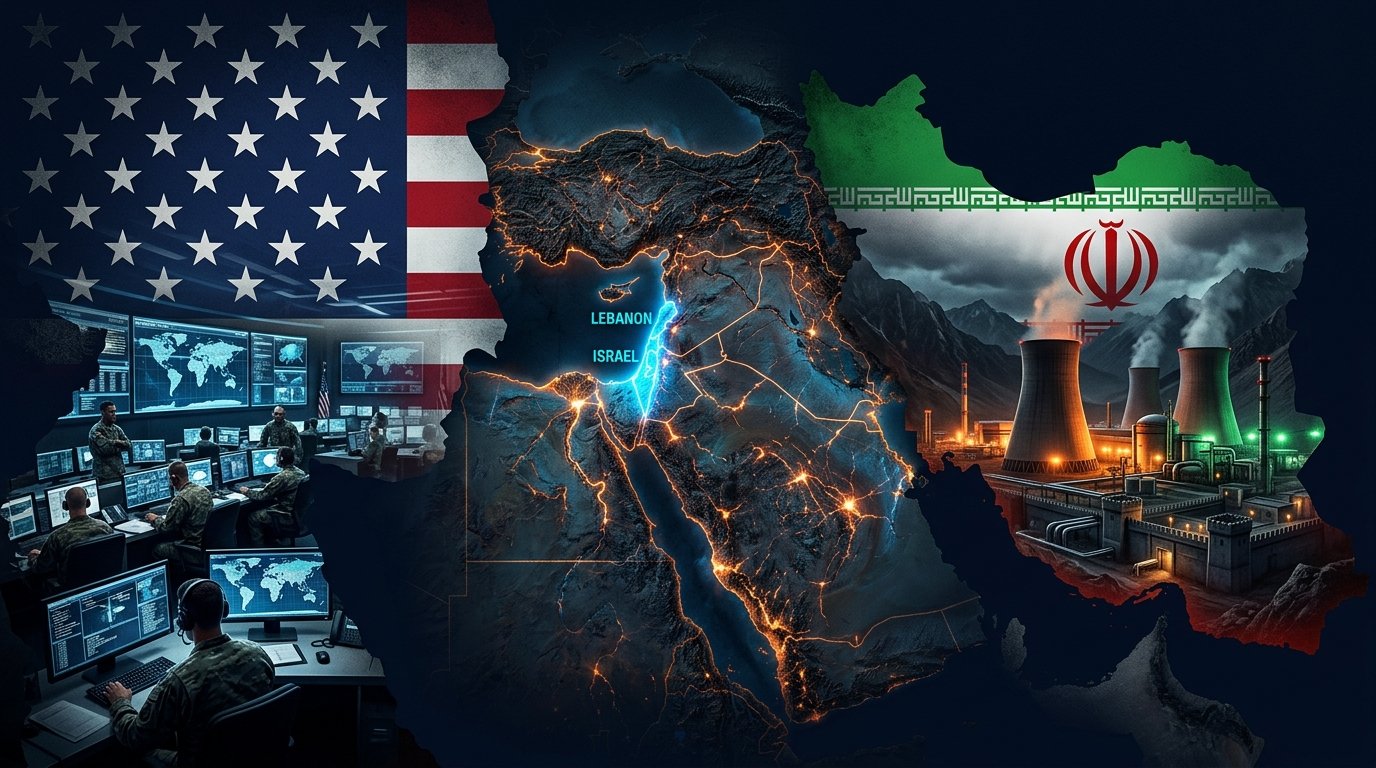
The volatile landscape of the Middle East has once again shifted from localized conflict to a theater of potential global warfare. The escalation of hostilities between Israel and Hezbollah in Lebanon has crossed a critical threshold, moving past tactical border skirmishes into a full-scale regional conflagration. While the immediate humanitarian and military toll in Beirut, Southern Lebanon, and Northern Israel dominates global headlines, a quieter, arguably more consequential diplomatic casualty is unfolding in the background: the absolute collapse of any remaining framework for a United States-Iran diplomatic accord.
For years, the relationship between Washington and Tehran has been defined by a delicate dance of covert regional proxy warfare, economic sanctions, and intermittent, backchannel diplomatic talks aimed at reviving or restructuring a nuclear framework. However, the current war in Lebanon acts as a geopolitical centrifuge, spinning the US and Iran further apart than at any point in the last two decades.
To understand why a war in Lebanon effectively seals the fate of US-Iran diplomacy, one must look beyond the immediate exchange of rocket fire and examine the structural realities of regional deterrence, domestic political constraints in both Washington and Tehran, and the shifting alliances of global superpowers.
1. Lebanon as the Ultimate Red Line: Why Hezbollah Matters to Tehran
To understand Iran’s positioning, it is essential to recognize that Hezbollah is not merely an ally or a proxy of the Islamic Republic; it is the crown jewel of Iran’s “Axis of Resistance.” Established in the early 1980s under the guidance of Iran’s Islamic Revolutionary Guard Corps (IRGC), Hezbollah serves as Iran’s primary forward deterrent against a direct military strike by Israel or the United States on Iranian soil.
+-------------------------------------------------------------+
|                  IRAN'S DETERRENCE STRATEGY                 |
+-------------------------------------------------------------+
|                                                             |
|   [Direct Threat to Iran] ------> Trigger Forward Deterrent |
|                                              |              |
|                                              v              |
|                                     [Hezbollah in Lebanon]  |
|                                              |              |
|                                              v              |
|                                 [Massive Rocket Arsenal]    |
|                                              |              |
|                                              v              |
|                             [Strategic Threat to Israel]    |
|                                                             |
+-------------------------------------------------------------+
Hezbollah’s arsenal—estimated to exceed 150,000 rockets, precision-guided missiles, and advanced drone fleets—acts as a gun held to Israel’s head. If Israel or the US were to bomb Iran’s nuclear facilities in Natanz or Fordow, Hezbollah’s role was to unleash a devastating retaliatory barrage that would overwhelm Israel’s Iron Dome and David’s Sling air defense systems.
By launching a full-scale military campaign into Lebanon to neutralize this threat, Israel is effectively attempting to dismantle Iran’s primary defense shield. For Tehran, watching Hezbollah get severely weakened or destroyed is an existential threat. Consequently, Iran cannot afford to sit on the sidelines. The moment Iran actively supplies, intelligence-shares, or directly intervenes to save Hezbollah, it enters a direct state of confrontation with the United States, which has legally and militarily committed to backing Israel’s defense. In such an environment, sitting down at a diplomatic table in Vienna or Geneva to discuss sanctions relief becomes politically and structurally impossible.
2. The US Position: The Inevitabilities of Election Years and Ironclad Alliances
In Washington, the political calculations regarding Iran have been fundamentally altered by the Lebanon war. The United States government, regardless of party affiliation, operates under an “ironclad” commitment to Israeli security.
When Hezbollah rockets displace tens of thousands of Israeli citizens and threaten major population centers like Tel Aviv and Haifa, the US administration has no choice but to provide massive logistical, intelligence, and ammunition support to the Israel Defense Forces (IDF).
Furthermore, as the US navigates highly sensitive political cycles, no administration can afford the domestic political fallout of being seen as “soft on Iran” while Iran-backed rockets rain down on a key American ally. Any attempt by American diplomats to engage in backchannel talks with Iranian officials regarding the JCPOA (Joint Comprehensive Plan of Action) or regional de-escalation would be branded as appeasement by congressional critics.
The political cost of diplomacy with Tehran has skyrocketed. The US State Department’s current focus has shifted entirely from diplomatic engagement to crisis management and deterrence containment—deploying carrier strike groups to the Eastern Mediterranean not to foster peace talks, but to send a blunt military signal to Iran to stay out of the conflict.
3. The Collapse of the Nuclear Track: From JCPOA to Rapid Enrichment
For years, the holy grail of US-Iran diplomacy was the containment of Iran’s nuclear program. Following the US exit from the JCPOA in 2018, Iran systematically dismantled its compliance, enriching uranium closer to the weapons-grade threshold of 90%.
The war in Lebanon removes the final incentives for either side to negotiate a nuclear freeze:
- Iran’s Perspective: As Iran sees its regional proxy network (Hamas in Gaza, Hezbollah in Lebanon, and the Houthis in Yemen) pressured and degraded by conventional military power, the hardline factions within Tehran will argue that regional proxies are no longer enough to guarantee the survival of the regime. The logical conclusion for Iran’s security apparatus is to accelerate toward a nuclear breakout as the ultimate deterrent. If conventional shields (Hezbollah) fail, a nuclear warhead becomes the only definitive insurance policy against regime change.
- The US Perspective: Washington cannot offer billions of dollars in sanctions relief—the core Iranian demand in any nuclear deal—when those funds are viewed by the public and intelligence agencies as capital that will directly subsidize Hezbollah’s reconstruction and rocket manufacturing.
Therefore, the Lebanon war pushes Iran toward becoming a threshold nuclear state, which in turn forces the US and Israel to consider preventive military options rather than diplomatic solutions.
4. The Global Dimension: The Russia-China-Iran Triad
A critical reason why this conflict permanently damages US-Iran diplomacy is that Iran is no longer isolated in the ways it was a decade ago. The geopolitics of 2026 show a deeply entrenched alignment between Tehran, Moscow, and Beijing.
| Country | Nature of Alliance with Iran | Impact on US Diplomacy |
| Russia | Military-technical sharing, drone technology exchange, and battlefield coordination. | Reduces Iran’s vulnerability to Western sanctions, making them less likely to compromise. |
| China | Economic lifeline through massive oil purchases via clandestine tankers. | Disables the economic leverage the US relies on to force Iran to the negotiating table. |
As the US increases its military presence in the Middle East to counter Iran and protect Israel, Tehran simply leans heavier into its eastern alliances. Moscow welcomes a prolonged Middle Eastern conflict because it diverts American military resources and political attention away from the European theater. Beijing views the conflict as an opportunity to portray the United States as a destabilizing force in the Global South. With alternative economic and military backstops, Iran feels zero pressure to beg for a diplomatic opening with Washington.
5. The Houthi Factor and Global Maritime Choke Points
The war in Lebanon does not stay in Lebanon. Under the philosophy of the “Unity of Fronts,” a major Israeli assault on Beirut triggers symmetric responses from other nodes of the Iranian resistance network. The most economically disruptive of these is the Ansar Allah movement (the Houthis) in Yemen.
As the conflict intensifies, the Houthis have escalated their drone and anti-ship ballistic missile attacks on the Red Sea and the Bab al-Mandab strait, while also threatening the Strait of Hormuz through coordination with Iranian naval forces.
When global shipping lanes are disrupted, causing insurance premiums to spike and disrupting European-Asian trade routes, the US response is forced to be purely kinetic. Operation Prosperity Guardian and subsequent military strikes in Yemen show that the US is actively engaged in a hot war against Iranian proxies. When American sailors are actively engaging Iranian-made missiles in the Red Sea daily, the political climate for diplomatic deals between Washington and Tehran becomes entirely toxic.
Conclusion: The Era of Containment, Not Diplomacy
The Israel-Hezbollah war is the definitive nail in the coffin for any grand bargain between the United States and Iran for the foreseeable future. The conflict has laid bare a fundamental reality: the issues dividing Washington and Tehran are no longer legalistic disagreements over centrifuge counts or asset freezes that can be solved by clever diplomats in a Viennese hotel. They are existential, blood-stained realities played out across the ruins of the Levant.
We are entering a dangerous new era of unmitigated containment. With diplomacy dead, the guardrails are gone. The relationship between the US and Iran will no longer be managed via the Swiss embassy or backchannels in Oman; it will be defined by electronic warfare, maritime interceptions, proxy attrition, and the constant, looming threat of a miscalculation triggering a direct, catastrophic war between Washington and Tehran. The tragedy of the war in Lebanon is not just the destruction of the present, but the complete obliteration of any peaceful diplomatic future for the wider region.