
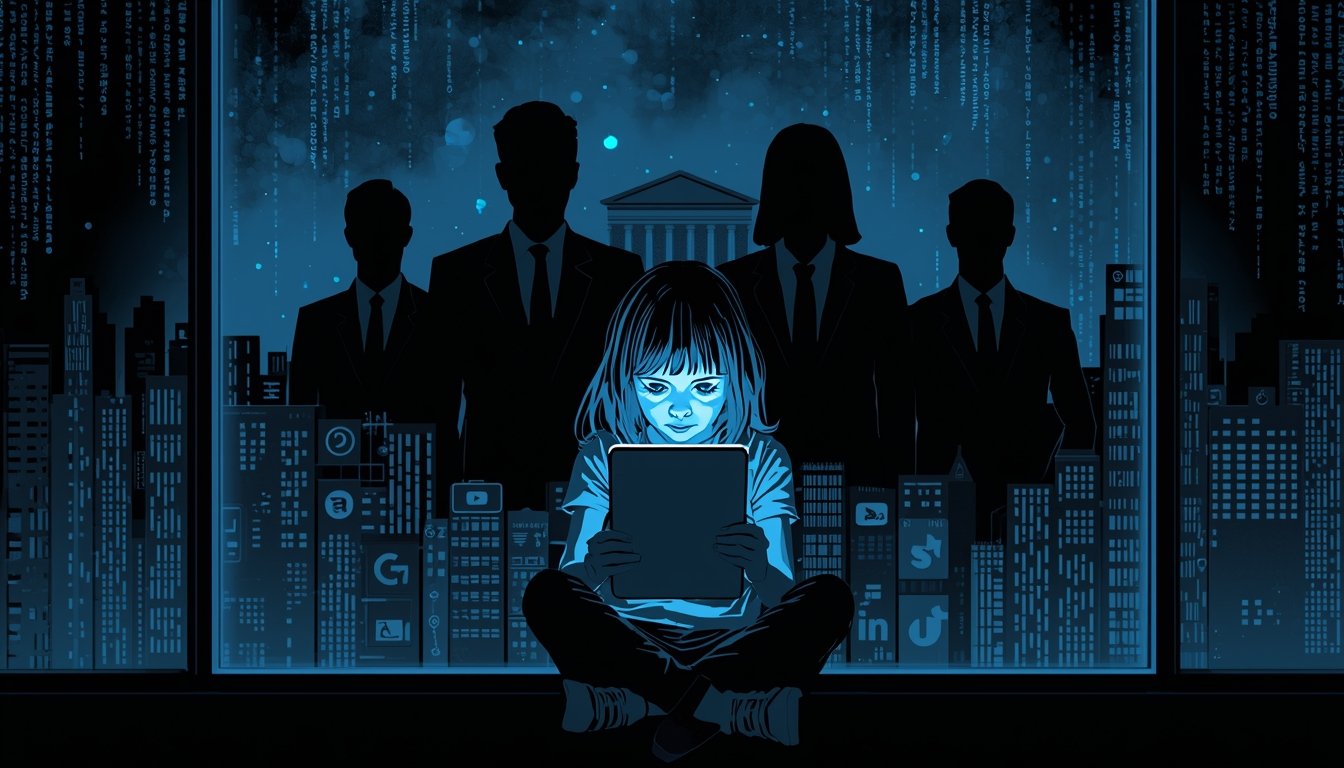
Social media addiction children 2026 has officially become a legal reality. A landmark California jury found that Meta and YouTube were responsible for fueling the youth mental health crisis that led to the dependency, depression, and suicidal thoughts of a young woman who began using Instagram and YouTube at age six.
A Los Angeles jury has just issued a historic verdict that will reshape how the world thinks about social media, children, and mental health in 2026.
The case centered on a young woman named Kaley, who began using YouTube at age six and Instagram at nine. By the time she was in her teens, she was spending up to 16 hours a day on social media. She developed severe depression, anxiety, body dysmorph followers obsession, and suicidal thoughts before turning ten years old.
After a seven‑week trial, the jury awarded $6 million in damages – $3 million in compensatory and $3 million in punitive – holding Meta (owner of Instagram/Facebook) and Google (owner of YouTube) legally responsible for the role their platforms played in her mental‑health crisis.
This is no longer a theory. It is a jury‑proven fact: social media addiction in children has real, measurable, court‑recognized consequences.
What the Jury Actually Ruled
The jury did not just decide that social media use is “bad.” They made three serious legal findings:
- Negligence in design and operation
- Meta and YouTube built features that maximize engagement, especially among children and teens, without adequate safeguards.
- Knowledge of the risk
- Internal documents show that the companies knew their platforms could harm minors but did not act to protect them.
- Punitive conduct (Malice, Oppression, Fraud)
- The jury found evidence that leaders prioritized profit over protection, leading to $3 million in punitive damages.
Jurors deliberated for 44 hours. They did not see this as a one‑off accident – they saw it as a systemic failure by companies that put billions in advertising revenue ahead of child safety.
The Internal Evidence: “We Need to Hook Them as Tweens”
The most damning evidence in the trial did not come from the plaintiff’s lawyers. It came from Meta’s own documents.
- One memo said: “If we wanna win big with teens, we must bring them in as tweens.”
- Translation: Hook children at 8–10 years old so they become lifelong users.
- Another internal study showed that 11‑year‑olds were 4 times more likely to stay addicted to Instagram than kids on other platforms – even though the platform claims age 13+.
- A 2016 email from Mark Zuckerberg about Facebook Live said the company should “not notify parents or teachers” about what teens were posting – hiding activity from adults.
When the jury saw these records, they realized:
The companies knew they were creating addiction machines – and then sold them to children.
The $375 Million Meta Loss in New Mexico
The Los Angeles verdict was not the only blow Meta took this week.
In New Mexico, a separate jury found Meta liable under consumer‑protection laws for failing to protect children from sexual predators on its platforms. The court ordered $375 million in penalties – thousands of violations at $5,000 each.
Both cases shared a core message:
Meta knowingly allowed children to be exploited – and then tried to hide it.
Together, these lawsuits signal that the era of “no rules” for social media giants may be ending.
The Science Behind the Verdict
The jury’s decision is backed by years of research on how social media harms children’s mental health.
- The American Psychological Association reports that teen depression and anxiety have more than doubled since 2010 – the same period when Instagram, YouTube Shorts, and TikTok became central to youth culture.
- A major 2024 review in PMC (NIH‑affiliated journal) found that frequent use of Instagram and YouTube is strongly linked to:
- Lower self‑esteem,
- Increased body dissatisfaction,
- Eating disorders and body dysmorphia.
- The US Surgeon General’s 2023 advisory warned that social media poses a “profound risk of harm” to children’s mental health and recommended warning labels, similar to cigarette packages.
The evidence is not just emotional. It is clinical, statistical, and now, legal.
Why This Verdict Is a “Big Tobacco Moment”
Legal experts are comparing this case to the 1990s tobacco lawsuits.
- Big Tobacco spent decades denying that cigarettes were addictive while their own research showed addiction was real.
- Lawsuits forced the industry to stop advertising to children and pay billions in damages.
Now, the Social Media Victims Law Center and parent groups say:
“Accountability has arrived.”
More than 40 state attorneys general, hundreds of school districts, and thousands of families are now suing Meta, Google, TikTok, and Snapchat, claiming designed addiction and harm to youth.
A federal trial coming this summer in California will hear consolidated claims from nationwide plaintiffs – potentially the largest social media accountability case in history.
What This Means For Your Child Today
Even if every lawsuit wins, your child’s phone is still on their desk tonight.
The legal system moves slowly. Cognitive development does not.
- Sixteen waking hours a day on social media is not a “hobby” – it is a developmental hijack.
- Kids who scroll through curated, edited, perfect bodies and lifestyles before sleep develop anxiety, depression, and obsessive comparison.
- Night‑time Instagram use is linked to poor sleep, emotional instability, and school performance drop.
The verdict did not change the platforms overnight. But it did change one thing dramatically:
The legal and moral burden has shifted from “Was it the child’s fault?” to “Was the platform designed to addict them?”
8 Concrete Steps Every Parent Must Take Now
You cannot wait for the courts. You must act today.
- Audit social media use this week
- Ask: which platforms, how many hours per day, before/after school, at night.
- Use built‑in screen‑time tools (iPhone Screen Time, Android Digital Wellbeing) to see real numbers.
- Set hard limits on time and exposure
- For children under 13, no private social media accounts is the safest rule.
- For teens, daily limits on Instagram, TikTok, and YouTube should be enforced.
- Talk honestly about body image
- Explain that filters, edits, and “perfect” photos are marketing, not reality.
- Stress that your child’s worth is not their likes, followers, or appearance.
- Make bedrooms phone‑free
- Phones charge in the kitchen or hallway, not the bedroom.
- This alone improves sleep quality, mood, and school performance.
- Contact your member of Congress
- Ask for the Kids Online Safety Act to become law — real age verification, time limits, and mental‑health safeguards.
- Tell them the Los Angeles jury has already proven the danger.
- Support the victims’ movement
- Organizations like the Social Media Victims Law Center are fighting for your children in court.
- Follow, share, and donate if you can.
- Talk in your school and community
- Ask PTA, school boards, and principals about digital‑wellness programs.
- Push for education on social‑media effects in health and tech class.
- Trust your instincts
- If your child is sad, angry, anxious, or withdrawn after scrolling, that is a warning sign, not a phase.
- If you feel your child’s life is being “hijacked” by the screen, you are probably right.
What Congress, Not Just the Court, Needs to Do
The verdict will not force real change without strong, enforceable laws.
- Kids Online Safety Act must pass, with:
- Mandatory age verification,
- Usage limits for under‑16s,
- Independent audits of “addictive” features.
- Advertising restrictions on targeted ads to minors.
- Transparency laws forcing platforms to publish how their algorithms affect children’s mental health.
Meta and Google spend hundreds of millions lobbying against such rules. Every time you engage with their ads, you’re helping fund the opposition to your own child’s safety.
Conclusion: The Warning We Can No Longer Ignore
This verdict is not just about one teenager. It is about every child who opens YouTube, Instagram, or TikTok for the first time.
Kaley was six when YouTube entered her life.
She was ten when depression entered her life.
Now she is twenty, and a jury of twelve Americans said Meta and YouTube had a role in that harm.
You cannot undo the past.
But you can protect the future:
- Audit your child’s use tonight.
- Set limits, delete dangerous apps, and create tech‑free family time.
- Demand real laws, real design changes, and real accountability.
The warning signs were there for over a decade.
A jury has now confirmed them.
The only question left:
Will you act before it is too late for your child?