Oil Breaks $100 Again as Iran’s drone boats and sea mines have set six commercial tankers ablaze in 48 hours across the Persian Gulf and the Strait of Hormuz, the world’s most critical energy choke point. Through this narrow waterway, 20 percent of global crude flows, and now it looks like a full‑blown war zone, with Iranian explosives sinking ships, drones setting cargo on fire, and missiles forcing tankers off route. This is Day 13 of the U.S.‑Israel‑Iran war, and energy markets are in full panic – the world is watching whether the Strait of Hormuz can be reopened or whether the world economy will buckle under $200‑per‑barrel shock.
Oil prices have surged past $100 per barrel again, a psychological threshold that has not held this firm since the 2022 Ukraine war. The speed of the escalation is shocking – six tankers torched in under 48 hours, 19 commercial ships hit since February 28, and 70 percent of tanker traffic through the Strait crushed. Every day now brings news of a new strike, a new explosion, and a new wave of panic in Wall Street, City of London, and the Karachi Stock Exchange. This is not a speculative spike; this is a real‑world supply‑chain shock playing out on the high seas.
The 48‑Hour Bloodbath: Six Tankers Torched
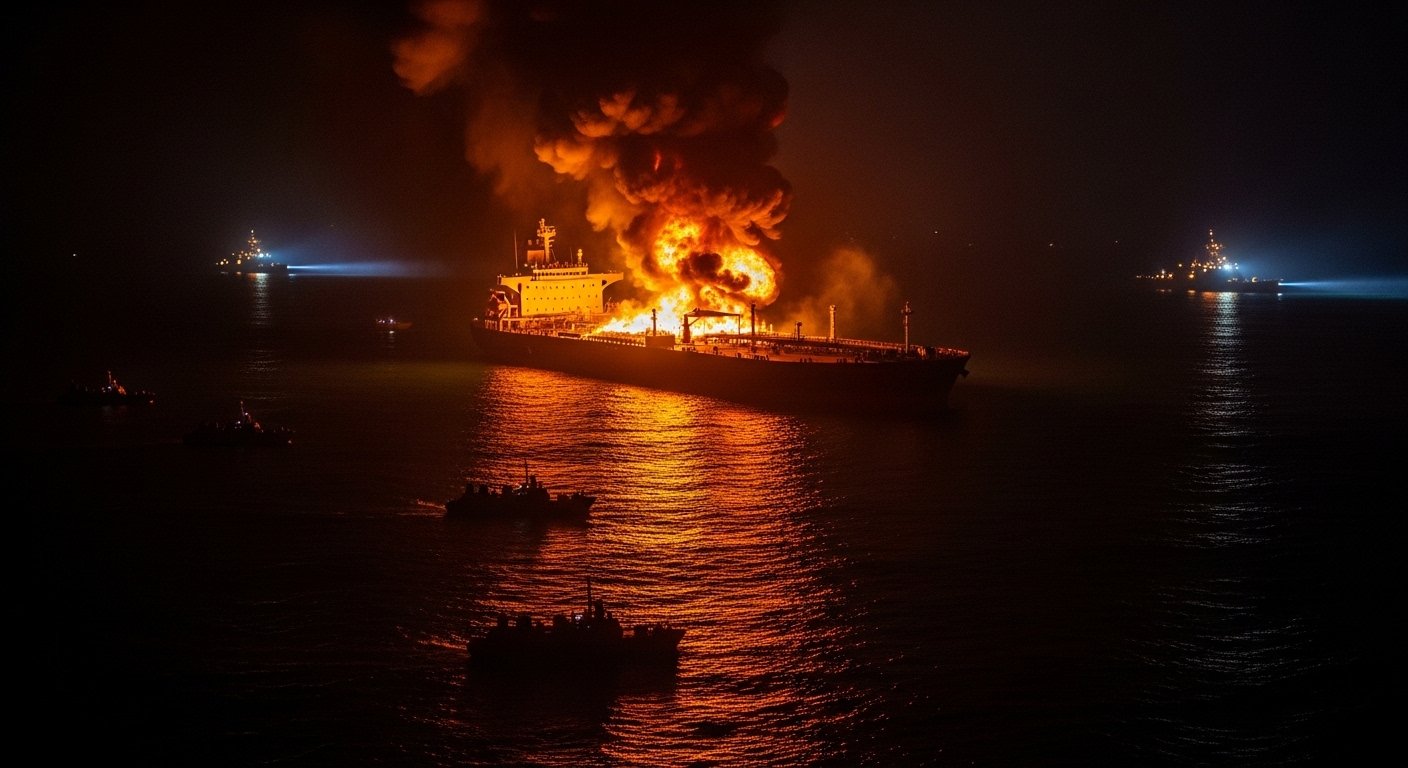
The first flames of the fresh escalation appeared in Iraqi waters on Wednesday night. The Theseanu, a Marshall Islands‑flagged fuel tanker, was fully engulfed by an Iranian explosive‑boat attack, its hull burning from stem to stern within minutes. Nearby, the Zefros, its sister vessel, was hit by a drone‑boat swarm, with one crew member killed and 38 others forced into lifeboats. By Thursday dawn, the Strait of Hormuz corridor had turned into a battlefield, with radar blips showing tankers racing for shelter and destroyers patrolling the edges.
Further east, the Mayuree Naree (Thailand‑flagged) took a projectile strike that ignited its engine room, sending a column of black smoke visible 50 miles out to sea. The SafeSea Vishnu (U.S.‑owned) was struck by a drone off the Iraqi coast, its cargo going up in flames. The Stena Imperative (U.S.‑flagged) suffered two hits while docked at Bahrain, killing one port worker on the quay. An unnamed tanker was declared “drone‑killed” by the IRGC, with its crew’s status unknown. In total, 19 commercial ships have been hit since February 28, with 12+ Iranian mines confirmed, and tanker traffic through the Strait has collapsed by roughly 70 percent.
Oil Market Carnage: Brent, WTI, OPEC+
The impact on oil prices is brutal and immediate. Brent crude has surged to $102.47 per barrel, up 8.3 percent, its highest level since the 2022 Ukraine war. WTI trades at $98.62, rising 7.9 percent. The Dubai OPEC basket has exploded to $104.12, as the Gulf‑premium soars on the back of war‑insurance and risk. The forward curve now shows $108.20 for March 2026, $112.40 for June 2026, and $98.50 for December 2026 – the market assumes the Strait of Hormuz will reopen somewhere around the end of the year, but the risk of prolonged closure keeps prices elevated.
Analysts are pricing different scenarios. The base case is $120 per barrel, with the Strait partially open and strategic reserves used to dampen the shock. The bear case is $150, if the Strait stays closed for 30 days and shipping reroutes via the Cape of Good Hope. The apocalypse case is $200+, if Saudi or Iraqi refineries like Abqaiq, Shaybah, or Ruwais are hit by missiles or drones. Iran’s leadership openly talks about $200 oil as the price of “Zionist punishment,” and the market is taking those words seriously. The Oil‑Breaks‑$100‑Again reality is that the world is now living in the gray zone between a manageable energy shock and a full‑blown global recession.
Pakistan’s Pain: Fuel, Flights, and Markets
For Pakistan, the Oil‑Breaks‑$100‑Again shock hits hard and fast. Petrol has jumped from Rs285 to Rs320 per litre, a 12 percent spike in one week. Diesel has risen from Rs290 to Rs325 per litre, and CNG from Rs180 to Rs220 per cubic metre. Domestic airfares are up 28 percent, and Daraz‑style e‑commerce shipping costs have increased by 35 percent. The KSE‑100 futures fell 4.2 percent, with energy stocks like OGDC and PPL gaining 15 percent while banks and manufacturing lost roughly 8 percent.
The government claims 90‑day strategic oil reserves, but in the streets of Karachi, Lahore, and Islamabad, people are panicking, queuing up at pumps, and rioting over fuel. The country is now facing Rs320 petrol, crushed business margins, and a looming foreign‑exchange crisis. Power plants are struggling to absorb higher fuel costs, and the IMF‑programme is under renewed pressure. The Oil‑Breaks‑$100‑Again crisis is not just a global headline; it is a real‑world pain‑point for every Pakistani filling a tank, running a factory, or running a truck.
War Timeline: From February 28 to Day 13
The war began on February 28, when U.S. and Israeli airstrikes killed Ayatollah Ali Khamenei, triggering an Iranian missile response. On March 1, the IRGC threatened to close the Strait of Hormuz, and the Skylight tanker was hit, killing two Indian crew members. By March 2, an official Hormuz blockade was declared, and eight more ships were damaged. On March 6, a rescue tug was sunk, leaving three missing. By March 11–12, the six‑ship blitz expanded into Iraqi waters, forcing Iraq to shut down all oil terminals.
President Trump’s tweet at 3:14 PM Pakistan Standard Time – “Iran mining international waters = piracy. Navy response authorized. Oil at $200? Their choice.” – has now become the world’s worst‑case scenario. The Oil‑Breaks‑$100‑Again reality is that the world is on the edge of an energy‑shock recession, with the Gulf crisis threatening not just oil prices but global trade, manufacturing, and political stability.
Iranian Tactics: Drones, Mines, Swarm Attacks
Iran’s IRGC has built a cheap, scalable, deadly arsenal. Explosive drone boats cost about $50,000 each, carry 200kg warheads, and can evade radar. The Shahed‑136 drones cost $20,000, are kamikaze‑style, and have 40km range. The EM‑52 sea mines use magnetic and acoustic triggers with 300kg TNT yield. The C‑802 missile launchers fire supersonic missiles with 120km range.
With swarm tactics, the IRGC overwhelms defenses, forcing global shipping to reroute via the Cape of Good Hope, adding 14 days to every voyage. The Oil‑Breaks‑$100‑Again message is clear: Iran can use cheap drones versus expensive carriers and still win the psychological war. Mines and drones are not just tactical tools; they are strategic weapons designed to terrorize the market and force buyers to pay whatever the price.
Shipping Collapse: From 120 to 12 Tankers a Day
The normal flow through the Strait of Hormuz is 120 tankers per day. Now, that number has plummeted to 12 per day, a 90 percent drop. India‑to‑Europe voyages now take 21 additional days, adding roughly $1 million per tanker in fuel, insurance, and lost‑time costs. War‑risk premiums on marine insurance have jumped 500 percent. Major shipping lines like Maersk have suspended all Gulf calls. Shell and 32 other nations have announced a 400‑million‑barrel strategic‑reserve release to cool the market, but the psychological shock is too strong for reserves alone to fix.
The Oil‑Breaks‑$100‑Again crisis shows that physical supply‑shock, not just futures‑trading, is driving prices. Every rerouted ship, every insurance claim, every delay at port pushes the global economy closer to stagflation. For Karachi‑based e‑commerce, the message is clear: stockpile fuel, raise shipping by 25 percent, switch to air‑freight for electronics, source from China, and use CNG vehicles to keep margins from collapsing.
U.S. Military Response: Carriers, Drones, and Mines
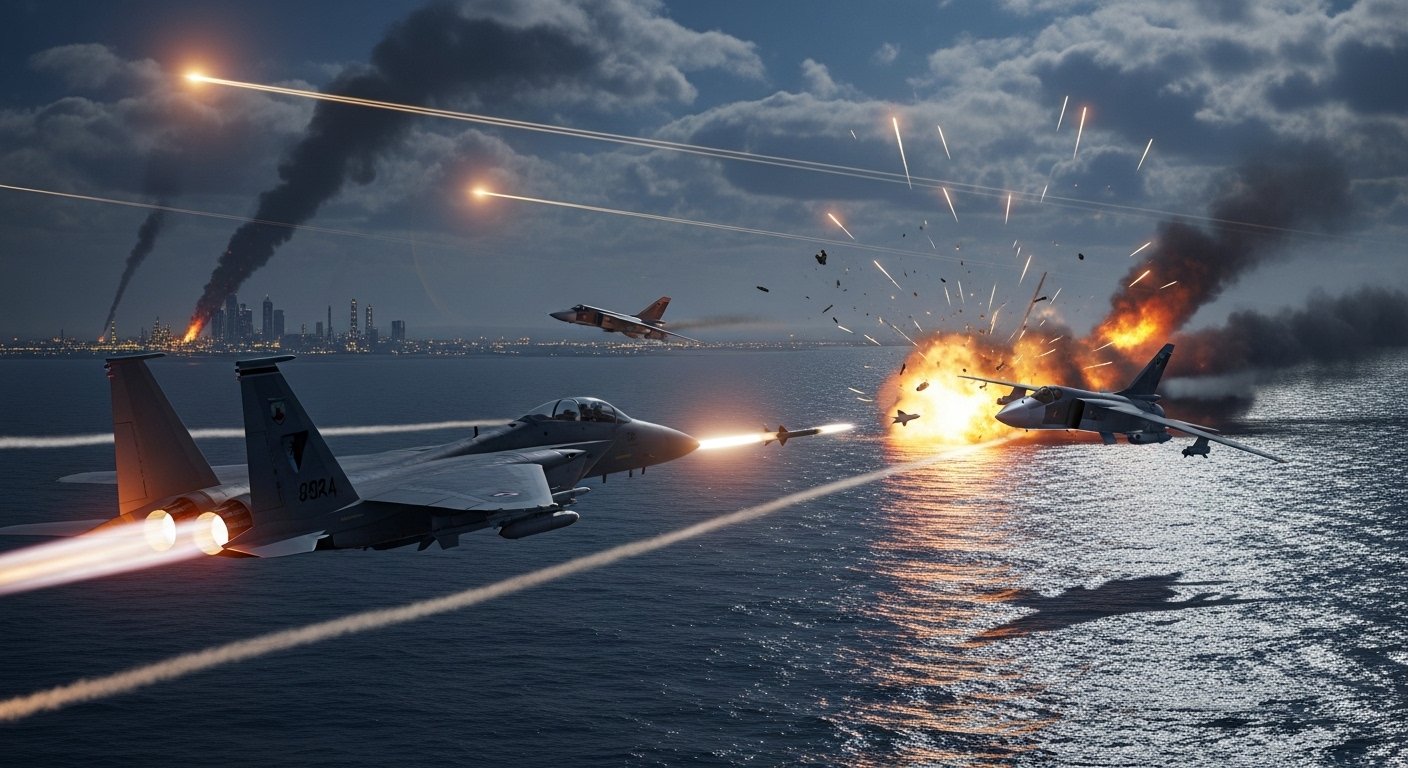
The U.S. has responded with three carrier strike groups – Eisenhower, Truman, and Lincoln – and 28 destroyers. The IRGC’s drone boats are being sunk in waves, but new ones keep emerging from camouflaged ports. B‑52 bombers have been authorized to conduct mine‑sweep operations, and Patriot air‑defence batteries are now deployed in the UAE, Saudi Arabia, and Qatar. The F‑35 stealth jets patrol the skies, ready to retaliate if Iranian missiles hit allied ships or ports.
Iran’s leadership calls U.S. mine‑clearance operations “a declaration of war.” The Oil‑Breaks‑$100‑Again war‑game is now about who controls the Strait of Hormuz: the U.S. Navy with its carriers and submarines, or the Iranian hybrid‑drone fleet with cheap drones and mines. The outcome will determine whether oil prices stabilize or spiral into the $200 range.
Global Ripples: Gas, Factories, Airlines
The Oil‑Breaks‑$100‑Again shock is global. In the United States, gasoline has jumped to $3.85 per gallon (from $3.28), and diesel to $4.62 per gallon. In Europe, German factories are shutting down to conserve energy, and the UK is considering fuel rationing. Airlines like Delta and Emirates have cut 25 percent of Gulf‑routes. UPS and FedEx have imposed $4.50 per kilogram Gulf‑surcharge on all shipments.
Winners include U.S. shale producers, Russia’s discounted Urals crude, and OPEC+ leaders. Losers include every oil‑importer, from Pakistan to India to most of Europe. The Karachi e‑commerce sector is in survival mode, forced to raise prices, delay deliveries, and rethink supply chains. The bottom‑line message is clear: 19 ships hit, two dead, the Strait is ghosted, oil is above $100, and Pakistan is staring at crushed margins. The world is praying for minesweepers, while Iran is betting on $200 oil. The Oil‑Breaks‑$100‑Again crisis is not over; it is just beginning.