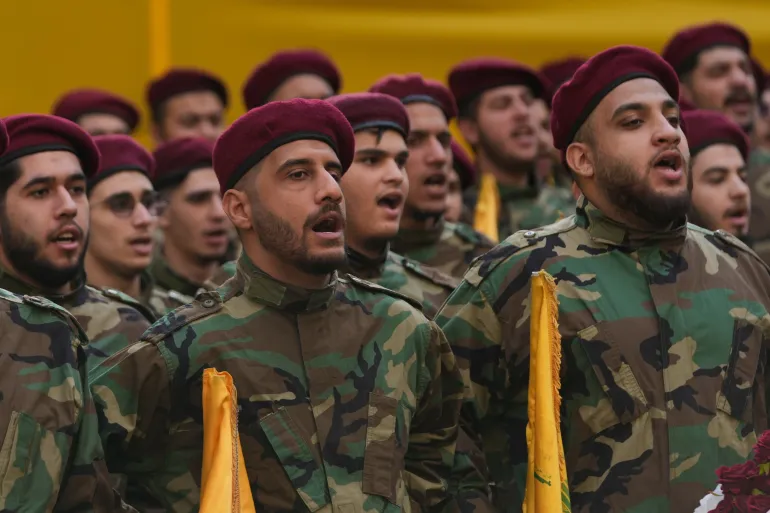
Lebanese PM bans Hezbollah’s military activities after attack on Israel – a historic decision that four decades of conflict and compromise could never achieve. On Monday, March 1, 2026, Lebanon’s Prime Minister Nawaf Salam took a step that no previous government dared: he formally banned Hezbollah’s military and security activities nationwide, declared that all armed Hezbollah operations on Lebanese soil are illegal, and announced that the Lebanese army would take over all security responsibilities.
The announcement came hours after Hezbollah launched “Khamenei revenge” rocket and drone attacks on Israel and minutes after Israeli airstrikes on south Beirut killed over 30 people and wounded nearly 150 civilians. The result is a Lebanon standing at the edge of a historic choice: disarm Hezbollah’s military wing and rebuild the state, or slide toward a new civil‑war‑style crisis.
The Historic Declaration: What Nawaf Salam Actually Said
Prime Minister Nawaf Salam did not issue a vague political statement. He delivered a clear, legal‑style decision from the Lebanese government:
“The Lebanese state declares its absolute and unequivocal rejection of any military or security actions launched from Lebanese territory outside the framework of its legitimate institutions. This necessitates the immediate prohibition of all of Hezbollah’s security and military activities, considering them to be outside the law, and obliging it to hand over its weapons.”
In simple terms:
- Hezbollah’s military operations (rocket launches, drone attacks, paramilitary checkpoints, and any armed‑security activity) are now illegal.
- Only Lebanese state institutions (army, security forces, legitimate government bodies) can conduct war‑related decisions and security operations.
- Hezbollah must surrender its weapons or at least stop using them in a way that bypasses the state.
This is the first time Lebanon has formally declared Hezbollah’s armed wing unlawful, instead of treating it as a “parallel resistance force.” For Hezbollah, this marks the end of its 40‑year‑old “state‑within‑a‑state” model and the start of a clear legal‑state‑vs‑militia framework.
The Trigger: Hezbollah’s “Khamenei Revenge” and Israeli Retaliation
The timing of Salam’s announcement was not accidental; it was a direct response to a single weekend of escalation:
- Hezbollah’s rocket and drone barrage on Israel:
On the morning of March 1, 2026, Hezbollah launched dozens of rockets and drones toward central Israel, including Tel Aviv, in retaliation for the US‑Israel killing of Iran’s Supreme Leader Ali Khamenei in the February 28 bombing. The group framed it as “Khamenei revenge,” tying Lebanon’s security directly to Iran’s regional war‑strategy. - Israeli airstrikes on south Beirut:
Israel responded with precise airstrikes on Hezbollah’s command and rocket‑launch sites in the southern suburbs of Beirut, where Hezbollah has its strongest military‑political base.- Lebanese officials reported at least 31 killed and 150 injured, mostly civilians.
- Dozens of buildings and Hezbollah‑controlled facilities were destroyed or damaged, turning part of the city into a war‑zone.
- Mass displacement in southern Beirut:
The strikes and ongoing rocket‑firing pushed tens of thousands of Shia families in the southern suburbs to flee toward the city center or northern Lebanon. The same neighborhoods that once saw Hezbollah as a “resistance protector” now became evacuation‑zones, fundamentally changing the political mood on the ground.
Faced with this crisis, Salam argued that Lebanon’s sovereignty belongs to the Lebanese state, not to Hezbollah. If the group wants to fight Iran’s battles, it must do so under state‑controlled security rules, or it will be treated as a criminal organisation.
The Legal and Security Backdrop: Why This Ban Is Possible Now
The 2026 decision did not come out of nowhere. It rests on years of slow‑motion disarmament‑preparation and existing legal frameworks:
- UN Resolution 1701 (2006) already required Hezbollah to withdraw its military presence south of the Litani River and hand over that area to the Lebanese army. For years, Hezbollah only paid lip‑service to this rule.
- From 2024–2025, the Lebanese government and the Lebanese army, under pressure from the US‑Israel‑Gulf axis, began deploying more troops in southern Lebanon, dismantling Hezbollah outposts, and taking over security checkpoints between the Litani River and the Israeli border. By late 2025, Lebanese and international sources reported that about 90% of Hezbollah’s military infrastructure in that zone was under army control.
- In 2025, Nawaf Salam’s government formed a reform‑focused cabinet, pushing anti‑money‑laundering reforms, financial‑sector‑restructuring, and plans to remove Lebanon from international “high‑risk” financial lists. These steps created a financial and political incentive to show that the state—not Hezbollah—controls Lebanon’s security and foreign policy.
The 2026 ban is simply the next, formal step: taking the de‑facto disarmament in the south and making it a national law applicable to the whole country.
Hezbollah’s Military Collapse: The Real‑Time Context
For four decades, any attempt to disarm Hezbollah looked suicidal. Today, four key factors make the ban possible, though still risky:
1. Reduced rocket arsenal and weakened infrastructure
At its peak, Hezbollah was said to hold about 150,000 rockets and missiles of various ranges. By 2026, analysts estimate that number has fallen to roughly 20,000, mostly short‑range, less accurate types. Repeated Israeli strikes on southern Lebanon and storage‑sites have destroyed much of the long‑range, precision‑guided inventory and damaged tunnel‑networks and command‑bunkers.
2. Decapitated command structure
Hezbollah’s leadership has suffered heavy losses over the last 18–24 months of Israeli‑US‑led pressure:
- Senior field commanders, rocket‑brigade leaders, and Quds‑Force‑linked advisors have been killed or injured in targeted strikes.
- The cohesive planning layer that once coordinated complex operations has been thinned, leaving the remaining forces less able to coordinate a large‑scale campaign.
3. Frozen Iranian supply‑lines
Hezbollah once depended on Iranian money, arms, and training flowing through Syria‑based networks. With Iran now under US‑Israel‑led strikes, its economy and oil exports collapsed, and its own survival‑fight heated up, that pipeline has largely dried up. Unlike before, Hezbollah cannot simply refill its stocks every time it fires a rocket.
4. Public exhaustion and displacement
The evacuation of southern Beirut, southern villages, and parts of the Bekaa Valley has broken the old “resistance = national duty” narrative. The people fleeing are Hezbollah’s own supporters, many of whom now demand peace, reconstruction, and economic stability over endless war‑cycles. Polls and local reporting show that even within the Shia community, support for Hezbollah’s military activism has declined sharply since 2024–2025.
The Five‑Phase Disarmament Roadmap
While the declaration was announced on March 1, 2026, the government has already been working on a five‑phase disarmament and security‑re‑establishment plan in southern and urban Lebanon:
Phase 1 – South of the Litani River to the Israeli Border (Mostly Completed)
- The Lebanese army has taken over security in the triangle between the Litani River and the Israeli border.
- Official statements say about 90% of Hezbollah’s military infrastructure in this area (bases, rocket‑bunkers, command‑centres) has been dismantled and transferred to state control.
- This area was the first to experience real‑time disarmament under UN‑Resolution‑1701 pressure, and the 2026 ban is now extending that model to the rest of the country.
Phase 2 – Litani River to the Awali River (Ongoing)
- The next line runs north of the Litani to the Awali River, about 40 km south of Beirut.
- This region is more urban‑mixed, with Hezbollah’s presence deeply embedded in civilian neighborhoods, schools, and social‑services.
- The army must move slowly, setting up checkpoints, clearing weapon‑bunkers, and avoiding mass‑civilian casualties that would trigger backlash.
Phase 3 – Southern Suburbs of Beirut (Hezbollah’s Urban Heartland)
- The southern suburbs of Beirut are Hezbollah’s political and emotional core: densely populated Shia neighborhoods, Hezbollah media offices, hospitals, schools, and community centres.
- After the March 1 Israeli strikes, the government has tightened security, placing Lebanese army checkpoints inside the suburbs and demanding Hezbollah to remove any visible weapons or barriers.
- The challenge is balancing security with stability: too hard‑handed an approach can trigger resistance; too soft an approach leaves Hezbollah’s structures intact.
Phase 4 – Bekaa Valley (Historical Stronghold)
- The Bekaa Valley has long been Hezbollah’s rural and logistical backbone, with training camps, storage sites, agricultural networks, and smuggling‑routes supporting the organisation.
- Disarmament here will be the most politically and militarily sensitive part of the operation, because it threatens Hezbollah’s deep sociopolitical and economic roots rather than just its front‑line‑bases.
- The government will have to negotiate, pressure, and sometimes force Hezbollah to surrender or stockpile weapons in state‑controlled facilities.
Phase 5 – Northern Lebanon (Limited Hezbollah Influence)
- Northern Lebanon has historically had less Hezbollah dominance, but the group still maintains networks, supporters, and local cells.
- A full disarmament plan would require extending the Lebanese army’s control to all regions, ensuring no “safe zones” remain for Hezbollah’s military operations.
- This phase is less about direct confrontation and more about system‑wide state‑re‑establishment.
The success of this roadmap hinges on Hezbollah’s response, Israel’s restraint in avoiding Lebanese‑army strikes, and the arrival of Gulf‑backed reconstruction funds that make the public willing to back the state‑over‑militia.
The Four‑Way Gambling Table: What Salam Is Betting On
Prime Minister Salam knows the stakes. His decision rests on four high‑risk bets, any one of which could change the outcome dramatically:
1. Israeli Restraint
- Salam assumes that Israel will keep targeting Hezbollah‑specific infrastructure, not Lebanese army units or civilian areas clearly controlled by the state.
- If Israeli strikes accidentally hit or intentionally damage Lebanese army positions, the government will lose public trust, and the army’s legitimacy will collapse.
- The government’s hope is that Israel now sees the Lebanese army as a partner, not a proxy‑enemy.
2. Hezbollah’s Limited Resistance
- Hezbollah can choose to fight the Lebanese state head‑on or accept the reality of military disarmament and remain a political‑and‑social actor.
- The belief is that Hezbollah’s rank‑and‑file—many of them traumatized by displacement and casualties—will not follow an order to open warfare against the Lebanese army, especially when the group’s Iranian patron is weakened and the population is exhausted.
3. Gulf Reconstruction Money
- Saudi Arabia, Qatar, and other Gulf states have promised billions in reconstruction funds to Lebanon, but only if Hezbollah no longer drags the country into war.
- If the funds arrive fast and in large‑scale, the Lebanese people may accept the short‑term pain of disarmament for the long‑term gain of peace and rebuilding.
- If the money stalls or comes with too many conditions, public anger might turn back toward Hezbollah as the “only force able to protect us.”
4. Army Loyalty Over Hezbollah Influence
- The Lebanese army has historically had Hezbollah‑sympathisers and even embedded Hezbollah cells in its ranks.
- The 2026 plan depends on the majority of officers and soldiers remaining loyal to the state and the government, not the militia.
- If Hezbollah infiltrators can sabotage disarmament, leak information, or stage a “mini‑coup,” the whole process could collapse into chaos.
If all four bets pay off, Lebanon will see the first real, nationwide disarmament of Hezbollah’s military wing in its history. If even one fails, the country may slide into a new civil‑style conflict.
Hezbollah’s Narrowing Options: Surrender, Resist, or Fade?
For Hezbollah’s leadership, the menu of options is now very narrow:
Option 1 – Political‑Only Survival (Surrender Weapons)
- Hezbollah could hand over its weapons to the state or store them in government‑controlled facilities.
- It would keep its political party status, MPs, media, schools, hospitals, and social‑service networks, retaining its Shia‑community base.
- This is the most realistic path if the group wants to survive without bringing Lebanon to ruin.
Option 2 – Limited Guerrilla Resistance (Retreat to Bekaa)
- Hezbollah could move some fighters and weapons into the Bekaa Valley and launch a low‑level insurgency against the army and security forces.
- This would delay disarmament and possibly trigger more Israeli strikes, but without Iranian resupply, it would be a war of attrition Hezbollah cannot win.
Option 3 – Maximum Rocket‑Barrage (Going Out Fighting)
- Hezbollah could use its remaining rockets in one final wave against Israel, then face overwhelming Israeli counter‑strikes and Lebanese‑state crackdown.
- This would destroy Hezbollah’s image among Lebanese civilians, turning it into the group that chose endless war over reconstruction.
From the outside, political‑only survival looks like the most likely outcome, even if Hezbollah’s leadership publicly resists. The real shift will be less about rhetoric and more about day‑to‑day behaviour: will Hezbollah still launch rockets from Lebanon, or will it quietly accept that the state now controls security?
Regional Domino Effect: Beyond Lebanon’s Borders
The implications of Lebanon’s move go far beyond Beirut’s southern suburbs:
- Iran’s “Axis of Resistance” is under pressure as Hezbollah’s military power fades, Hamas in Gaza loses its tunnel‑network and command‑structure, and Houthis in Yemen face blocked Iranian supply‑lines.
- Israel’s goal of securing its northern border with Hezbollah no longer dictating security conditions becomes more feasible.
- Gulf states see a weakened Iranian proxy in Lebanon, giving them more leverage in regional power‑balancing.
If Lebanon’s experiment in state‑centric security and disarmament succeeds, it could become a model for other fragile states trying to tame powerful militias. If it fails and triggers civil war, the region will face another crisis on top of the 2026 Iran‑US‑Israel war.
The Human Cost: Displacement, Fear, and Hope for Peace
Behind the politics are real people and real trauma:
- Thousands of families in southern Beirut and southern villages have fled their homes, many moving to the city center or to relatives in the north.
- Schools, shops, and hospitals in Hezbollah‑dominated areas have closed or shifted operations.
- Children who grew up under the “resistance narrative” now ask: “Why does our protector keep getting our homes bombed?”
- Hezbollah’s own supporters in the Shia community are now divided between loyalty to the group and anger at the destruction of their lives.
The 2026 ban is not just a legal and military move; it’s a deep emotional and psychological turning point for Lebanon’s Shia population. The war‑driven trauma and economic collapse are forcing many to re‑evaluate what Hezbollah actually delivers.