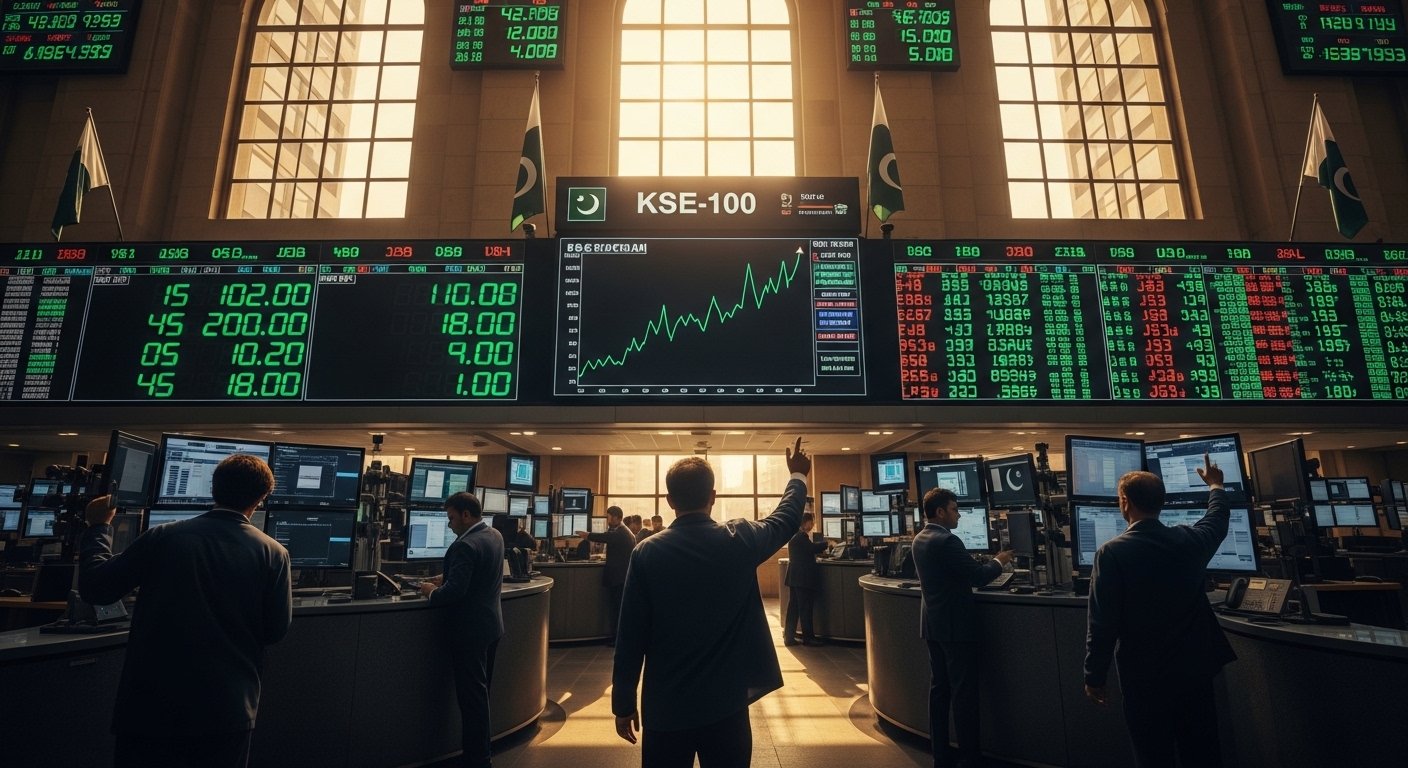
KSE‑100’s 9,700‑point comeback on Tuesday marked one of the most dramatic single‑session recoveries in Pakistan Stock Exchange history. The benchmark index jumped 9,696.98 points, or 6.62%, erasing a large chunk of Monday’s historic sell‑off and triggering the exchange’s circuit breaker within minutes of opening. By the 2:00 PM close, the KSE‑100 had settled at 156,177.12, proving that panic‑selling can be quickly reversed when buyers see value and global sentiment shifts. Understanding Tuesday’s recovery requires understanding both Monday’s collapse and the triggers that turned fear into a buying frenzy overnight.
Monday’s Bloodbath: The Backdrop to the Rebound
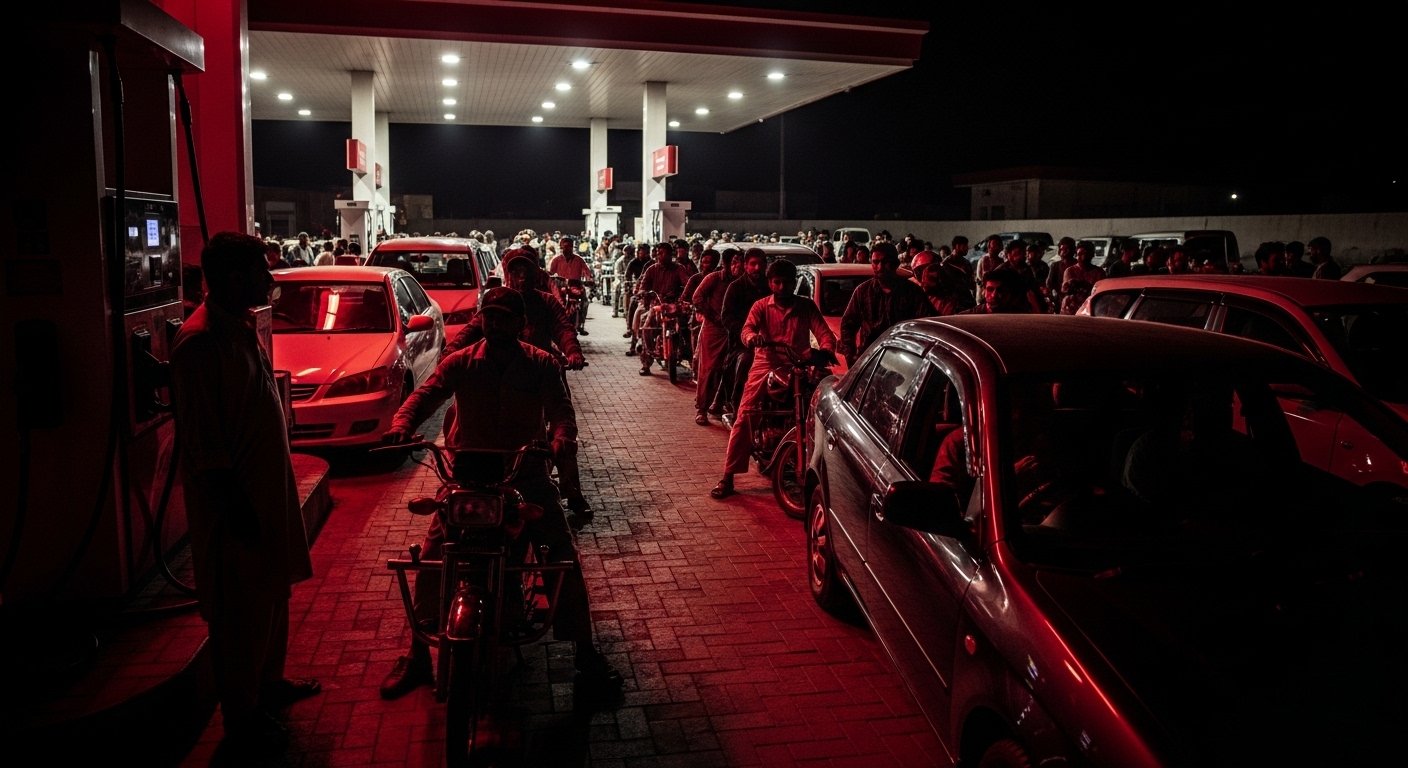
The force of Tuesday’s rebound was only possible because of the scale of Monday’s collapse. On Monday, the KSE‑100 plunged 11,015 points, or 6.99%, closing at 146,480.14 — the second‑worst single‑day loss in the index’s history. Within a few hours, more than Rs1.09 trillion in market value evaporated, leaving trading floors quiet and investors in shock.
The sell‑off came from a mix of international and domestic pressures. Oil prices had crossed $100 per barrel, and the US–Iran war in the Gulf, together with disruptions at the Strait of Hormuz, threatened Pakistan’s energy and trade flows. Global risk‑off sentiment hit emerging‑market equities at the same time, sending foreign‑exchange and commodity worries into overdrive.
With Pakistan’s market heavily driven by retail investors, every drop‑based stop‑loss and margin call generated more selling, creating a self‑feeding spiral. By Monday’s close, the index had reached a level where some investors judged the risk worth the reward, and that paved the way for Tuesday’s comeback.
The Opening Bell: Circuit Breaker Hits in Minutes
Tuesday’s rebound was not slow or cautious; it exploded from the first tick. Within minutes of opening, the KSE‑100 was already up 9,303.75 points, or 6.35%, triggering the PSX circuit breaker as the narrower KSE‑30 index jumped 5% above Monday’s close. The circuit breaker is designed to pause trading briefly when the market moves too sharply, allowing participants to reassess information rather than just follow momentum. Trading halted for about an hour before resuming at 10:27 AM.
The fact that the first trigger came on the upside, not the downside, told experienced traders that the market mood had shifted. When trading resumed, the rallies held. The index briefly touched an intraday high of 11,846 points above Monday’s close, moving toward record single‑day gains. Mid‑day, profit‑taking pared the rise to 10,085 points above Monday, but the final close at 9,696.98 points showed that buyers remained in control. The session behaved like a genuine corrective bounce, not a fragile, short‑lived spike.
The State Bank’s Steady Hand
A major source of confidence on Tuesday morning came from the State Bank of Pakistan’s Monetary Policy Committee, which announced its rate decision shortly before the market opened. The SBP held the policy rate steady at 10.5%, in line with market expectations. In calmer times, such a move would be treated as routine; in the wake of Monday’s panic‑driven collapse, it carried far more weight.
By choosing not to hike rates in reaction to the oil‑price shock, the central bank signaled that it saw the turmoil as temporary rather than a reason to tighten financial conditions further. The decision reduced one major source of uncertainty for investors who were already dealing with oil, geopolitical risk, and currency volatility.
The SBP’s stance also reinforced confidence in Pakistan’s IMF‑backed reform path, which many market participants had already started pricing into valuations. That combination of stability and continuity helped anchor Tuesday’s rebound.
Trump’s De‑escalation Signal and Oil’s Retreat
Global sentiment shifted decisively between Monday and Tuesday. US President Donald Trump suggested that the US–Israel military campaign against Iran might be approaching its end, framing the conflict as “pretty much” complete. The language was vague, but the market interpreted it as a sign that the most acute phase of the Gulf war could be winding down.
Oil prices, which had briefly touched $118 per barrel and closed around $95–99, slid below $90 on Tuesday as the “war‑risk premium” began to deflate. For Pakistan, an oil‑importing economy, every dollar‑per‑barrel decline in Brent crude reduces pressure on the current account, lowers inflationary fears, and eases the burden on the rupee. The prospect of stable shipping through the Gulf boosted the appeal of emerging‑market equities, including Pakistan’s.
Positive cues from US and Asian markets also filtered into the PSX on Tuesday, reinforcing the sense that risk‑on sentiment was returning. As global investors became more confident, Pakistani institutional and retail players followed suit, entering the market with fresh buying power.
How the Circuit Breaker Worked on Tuesday
The PSX links its circuit breaker to the KSE‑30, not the broader KSE‑100, because the 30‑member index is more liquid and sensitive to real‑time shifts. A 5% move in either direction in the KSE‑30 triggers a trading halt. Tuesday marked the first time that the mechanism paused trading due to a sharp upward move, rather than a collapse.
The one‑hour break allowed investors to reassess fundamentals and confirm that the rally was backed by broad‑based buying, not just short‑term speculation. When trading resumed, the index did not reverse; instead, it consolidated and held much of its early gains. This behavior indicates that the market had genuinely reassessed value and that the earlier panic‑selloff had overshot fair levels.
Profit‑Taking: A Healthy Sign, Not a Weakness
As the index approached its intraday peak of 11,846 points, some investors who had bought at lower levels began locking in profits. This profit‑taking brought the final gain down to 9,696.98 points, but it did not erase the day’s significance. In fact, the presence of profit‑taking is usually a healthy sign in a recovery session.
It shows that the rally attracted real investors willing to enter at the lows and then exit at higher levels, rather than just speculative momentum traders. The fact that the market closed near the top of the day’s range, above the midpoint, suggests that the bulls retained control throughout the session.
Broad‑Based Recovery Across Sectors
Tuesday’s rebound was not confined to a single theme. Banks, energy, fertilizers, and consumer stocks all participated, reflecting a broad‑based reassessment of Pakistani equities. Housing banks and large‑cap banks benefited from the SBP’s rate‑hold decision and the improved sentiment around financial stability. Oil and gas companies gained as the outlook for oil‑price‑driven inflation eased. Fertilizer, cement, and power‑sector stocks also rose, supported by expectations of stabilizing input costs and improved macro conditions.
The absence of a single runaway leader suggests that the recovery was driven by market‑wide confidence, not just sector rotation. That is typically a better sign for sustained support than a rally in one narrow group.
Macro‑Fundamentals That Supported the Move
The speed and size of Tuesday’s recovery cannot be explained by daily headlines alone. It also reflected the underlying macro‑story building through 2026. Pakistan’s IMF‑backed programme has restored a degree of fiscal discipline and external‑financing support, giving investors a clearer path toward macroeconomic stability even if the short term remains painful.
Headline inflation has been on a gradual downtrend, supported by the SBP’s tighter policy earlier and the easing of external pressures. The rupee has also stabilized somewhat, helped by the Saudi oil‑credit arrangement and IMF‑related assurances. For foreign‑exchange‑sensitive investors, this reduced the fear of rapid currency‑rate swings that had previously deterred participation.
All of these factors made Pakistani equities look more attractive after Monday’s oversold condition. On Tuesday, investors who believed in the structural reform story saw the sell‑off as a buying opportunity rather than a reason to exit.
The Two‑Day Net Picture: Not Fully Back, But Healing
Even after gaining 9,696.98 points, the KSE‑100 did not fully recover its earlier losses. Compared to Friday’s close, the index was still below its pre‑crisis level. That net negative position reflects the fact that Monday’s collapse was driven by both panic‑selling and real‑world risks from the Gulf conflict and oil‑price shock.
Tuesday’s comeback corrected the panic‑driven overshoot, but it did not erase the fundamental adjustment. The market seems to have decided that Monday overshot to the downside, while still leaving in place a small discount for the genuine risks ahead. That balance is typical of a mature rebound after a sharp shock.
What Investors Should Watch Going Forward
Tuesday’s recovery calmed the immediate panic, but the path ahead depends on a few key variables. First is oil prices: if Brent crude stays below $90, and the Strait of Hormuz remains open, the pressure on Pakistan’s current account and inflation will ease. If oil jumps back above $100, the PSX could face renewed selling pressure.
Second is the State Bank’s future guidance. If the SBP begins to signal rate cuts, it will make equities relatively more attractive versus fixed‑income assets. Any hint of renewed tightening could cool sentiment. Third is the Gulf‑conflict path: any further escalation or renewed transport disruption will hit Pakistan’s energy and trade flows directly. Finally, domestic political stability and IMF‑program continuity will remain background factors that can amplify or dampen global shocks.
For investors caught in Monday’s fall, Tuesday’s 9,697‑point surge offered a partial restoration of value and a chance to reassess positions. For those who bought at the lows, it validated the view that the market had overreacted. The KSE‑100’s 9,700‑point comeback proved that Pakistan’s stock market still has volatility and resilience – and that, in the right conditions, a single day can change the narrative overnight.