Introduction: A Turbulent New Chapter for Global Logistics
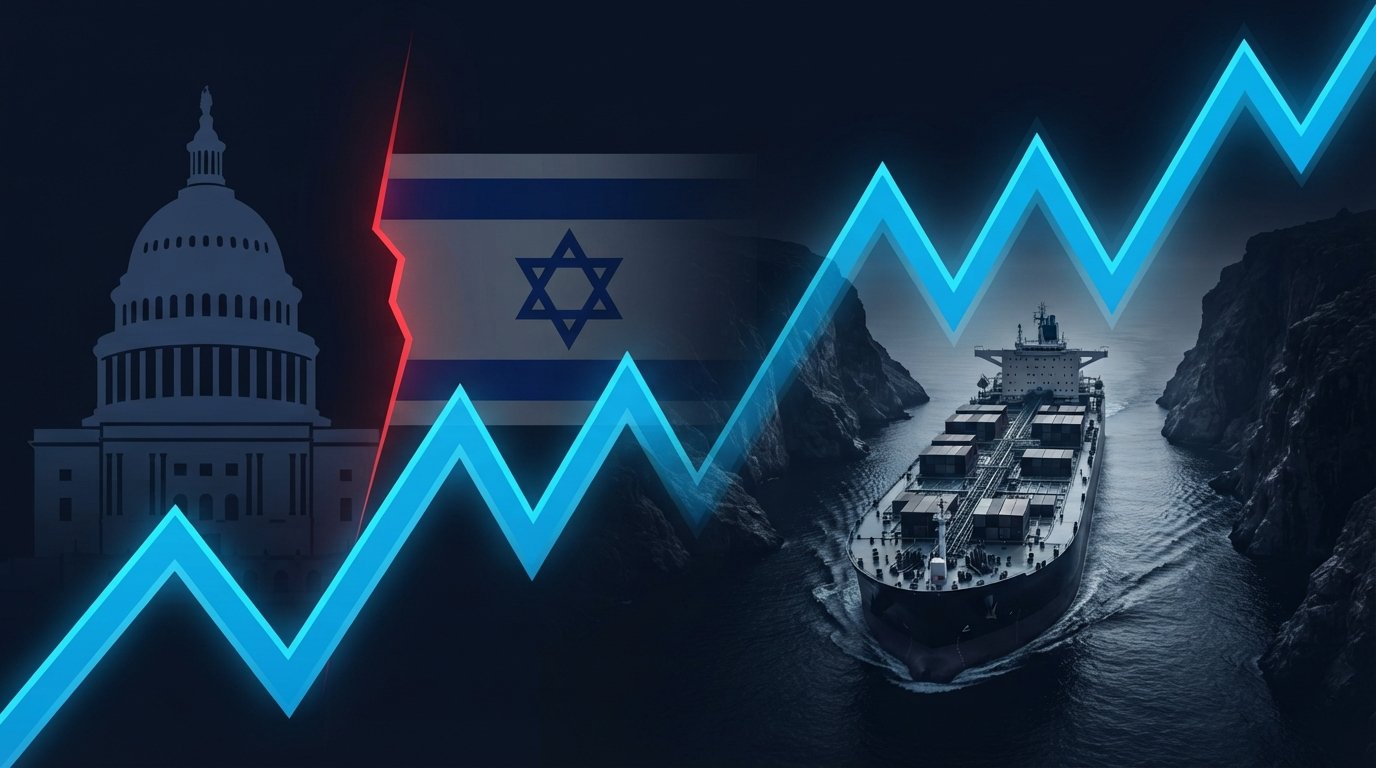
The first day of July 2026 has brought unprecedented volatility to the international financial and commodities markets. Following months of tight military friction, blockades, and intense electronic maritime standoffs, the global energy ecosystem has reached a dramatic inflection point. With the United Nations warning that a gradual, unstable opening of the Strait of Hormuz is not an immediate solution for suffering developing nations, crude markets have experienced an unexpected, aggressive 20% price surge.
Simultaneously, a rare, public diplomatic rift has emerged between Washington and its closest Middle Eastern ally, Israel, over the management of backchannel peace negotiations with Iran. As crude indices face dramatic adjustments and international shipping lines scramble to secure freight routes, the interconnected nature of global finance, resource distribution, and sovereign policy is under severe strain.
This multi-dimensional operational report provides an extensive, data-driven analysis of the July 1 oil market shock, the deteriorating state of Western diplomatic consensus, and the immediate macro-economic strategies being deployed by industrial and developing states to insulate their economies from systemic energy inflation.
1. The 20% Surge: Decoding the July 1 Oil Market Disruption
The sudden 20% leap in international crude oil benchmarks on July 1, 2026, has caught commercial analysts and algorithmic trading desks off guard. While regional bodies have hinted at an intentional, phased de-escalation along the primary maritime bottlenecks of the Persian Gulf, the practical realization of these protocols has introduces deep industrial anxiety.
+-------------------------------------------------------------+
|              THE CRUDE OIL PRICE MATRIX (JULY 2026)         |
+-------------------------------------------------------------+
|                                                             |
|   [Baseline Market Price]                                   |
|             |                                               |
|             +---> Trigger: 20% Sudden Index Spike           |
|             |                                               |
|             v                                               |
|   [Systemic Market Factors]                                 |
|        ├── 1. Insufficient War-Risk Premium Adjustments      |
|        ├── 2. Delayed Freight Cleansings in Hormuz Corridor |
|        └── 3. Exploding Strategic Reserve Re-purchasing      |
|                                                             |
+-------------------------------------------------------------+
The United Nations’ comprehensive economic brief released this week confirms that a structural backlog remains entrenched. Even if vessels are theoretically granted permission to traverse narrow transit points, the physical clearing of mines, the re-routing of commercial container lines that migrated around Africa’s Cape of Good Hope, and the astronomical inflation of insurance liabilities mean that cheap logistics are a relic of the past.
Developing countries—already grappling with severe fiscal deficits and structural currency depreciations—are bearing the direct brunt of this market shift, facing immediate drops in foreign exchange allocations dedicated entirely to processing baseline industrial fuel imports.
2. The US-Israel Diplomatic Split: The Battle for De-escalation
Beyond the trading floors of New York and London, the core driver of this structural uncertainty lies in a stark, public breakdown in strategic alignment between the United States State Department and the Israeli political leadership.
For months, the White House has quieted critics by maintaining a dual-track policy: projecting solid military support for its regional allies while systematically engineering backchannel de-escalation protocols with Iran’s diplomatic representatives in Muscat and Geneva. However, on July 1, 2026, international observers at the United Nations confirmed that these delicate negotiations have induced a profound structural rift.
| State Vector | Primary Strategic Objective (July 2026) | Operational Approach |
| United States | Stabilization of global maritime networks and reduction of consumer energy inflation before domestic election cycles. | Backchannel diplomatic compromises, structured sanctions waivers, and phased access to frozen banking assets for Tehran. |
| Israel | Total neutralization of proxy threat structures and the absolute containment of atomic infrastructures. | Aggressive military preemptions, refusal to recognize backchannel diplomatic accords, and ongoing threats of unilateral enforcement strikes. |
This public disagreement has neutralized the “ironclad” mask traditionally characterizing Western security architecture. When Israel openly criticizes American diplomatic maneuvering, and the US administration responds with unprecedented rebukes regarding the undermining of regional peace frameworks, global markets perceive that the security guardrails are failing. The lack of a unified geopolitical consensus means that a sudden, unintended military escalation remains a constant mathematical probability.
3. The Structural Illusion of the Strait of Hormuz Re-Opening
A major point of analytical confusion over the past 24 hours has been the media narrative surrounding the “gradual re-opening” of vital maritime passages. Financial markets initially anticipated that a diplomatic breakthrough would instantly restore fluid logistics. The real-world data, however, reveals a far more complex and challenging dynamic.
+---------------------------------------------------------------+
|               THE FREIGHT BOTTLE-NECK CYCLE                   |
+---------------------------------------------------------------+
|                                                               |
|   Announcement of Passage Opening ---> Ship Underwriters Refuse|
|                                         Immediate Clearances  |
|                                                   |           |
|                                                   v           |
|   Extended Cape Routes Maintained <--- War-Risk Premiums Stay|
|                                                               |
+---------------------------------------------------------------+
The process of normalizing a global maritime chokepoint that has experienced months of asymmetric warfare involves systemic checkpoints:
- Navigational Clearing & Demining: The physical waters must undergo extensive electronic scanning to verify the absence of unexploded naval munitions, floating drone arrays, and drifting military infrastructure.
- Re-establishing Insurance Underwriting: Commercial entities like Lloyd’s of London do not drop war-risk premium categories based on a political press release. They require sustained periods of zero-incident transit before reducing operational costs.
- The Industrial Backlog: Hundreds of massive crude carriers (VLCCs) are physically out of position, having been routed to alternative global routes. Re-aligning this global fleet back into standard operational cycles requires weeks of technical synchronization.
Consequently, while political figures celebrate minor openings, the economic data shows that the actual throughput of oil and natural gas entering global supply channels remains significantly below normal requirements.
4. Developing Nations Caught in the Crossfire
While wealthy Western economies can temporarily absorb high energy costs through fiscal interventions and strategic reserve distribution, the Global South is facing an acute crisis. The combination of high interest rates and a 20% spike in oil prices is threatening to trigger widespread industrial slowdowns.
In regions across South Asia and parts of Africa, governments are being forced to choices: implement rolling electrical blackouts to preserve fuel grids, or spend critical foreign currency reserves to purchase expensive spot-market LNG and oil. This lack of stability directly degrades corporate confidence, halts infrastructure programs, and increases the pricing of daily necessities like fertilizer, public transport, and basic food items. The UN’s explicit warning on Tuesday underscores that unless an international economic insulation mechanism is established, the July energy shock will morph into a severe humanitarian development crisis for vulnerable nations.
Conclusion: The New Normal of Geopolitical Fragmentation
The global structural dynamics observed on July 1, 2026, are indicative of a deeply fragmented global order. The era of a single superpower guaranteeing the total safety of global maritime trade through raw naval presence is transitioning into a multipolar reality defined by localized leverage, state-backed corporate cartels, and regional blockades.
As the United States and Israel navigate their most profound diplomatic disagreement in modern history, and as Iran utilizes its strategic positioning along global chokepoints to command an economic premium, global business models must permanently price in the reality of volatility.
The 20% market spike is not an anomaly; it is a preview of the new normal. The corporations and sovereign states that survive this era will be those that build deep domestic redundancies, abandon just-in-time logistics, and recognize that in the modern global economy, a political statement in Washington or a security decision in Jerusalem can rewrite the rules of global commerce overnight.wisk