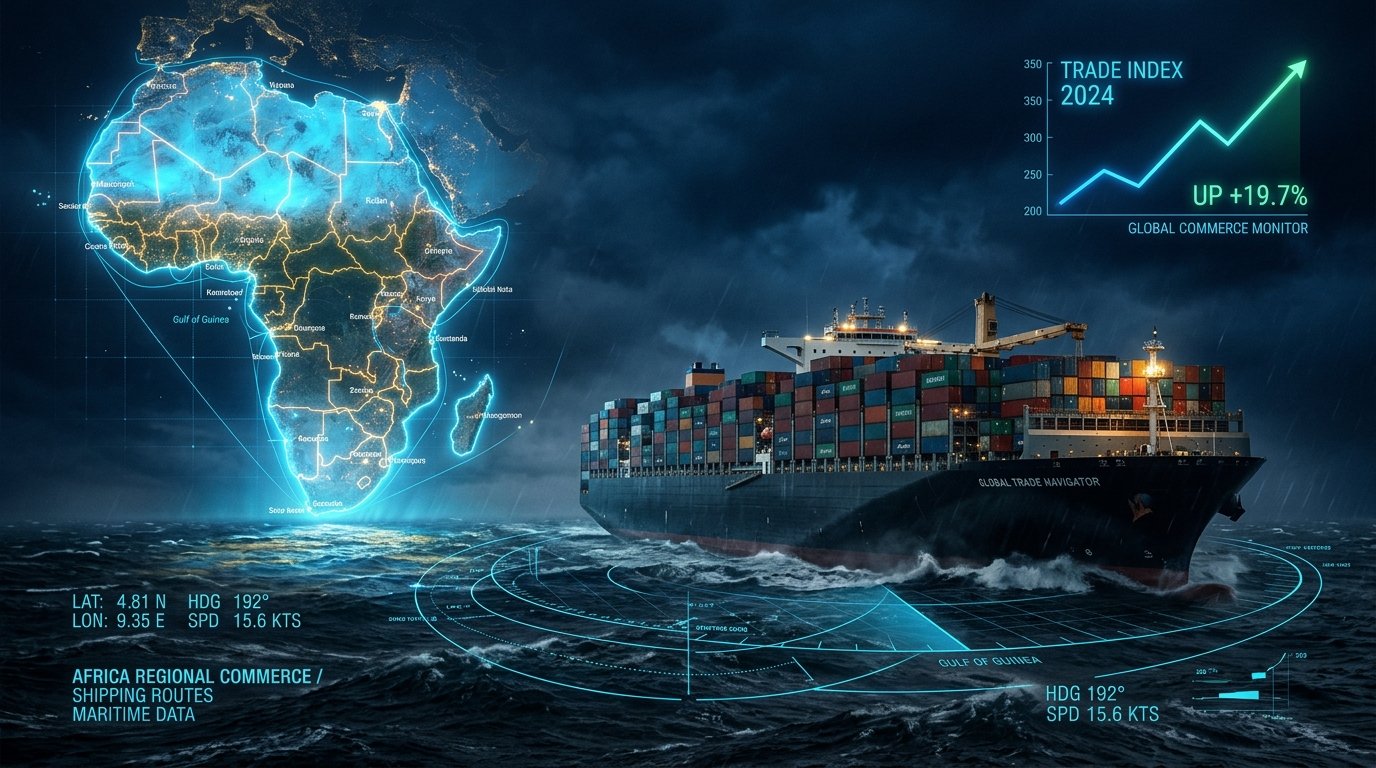
Introduction: The Vulnerability of Global Supply ChainsIn the interconnected global economy of 2026, the distance between geopolitical tension and domestic economic distress has shrunk to near zero. A localized security crisis in the maritime corridors of the Middle East no longer remains a regional headache—it immediately manifests as a soaring utility bill in Berlin, a delayed manufacturing component in Chicago, and a steep rise in consumer inflation worldwide.The maritime passage through the Red Sea, terminating at the Suez Canal, handles nearly fifteen percent of total global trade, including a vast percentage of the energy supplies keeping European industries functional. Following the recent multi-theater escalate-and-contain dynamics across the Levant and the Arabian Peninsula, this critical artery has effectively faced an unprecedented economic blockage.As insurance premiums for international commercial vessels reach astronomical highs, global shipping giants are abandoning short routes in favor of lengthy reroutings around Africa’s Cape of Good Hope. The resulting fallout is triggering what the United Nations Secretary-General has officially termed the “mother of all energy shocks.” This comprehensive investigation details the structural failure of global supply lines, the localized economic counters deployed by Asian and European states, and the multi-billion-dollar transformation of global maritime logistics.1. Anatomy of a Maritime Blockade: The Strait of Hormuz and Red Sea CrisisThe primary catalyst for the current global economic disruption stems from the shifting legal and military policies governing the world’s most critical maritime chokepoints: the Strait of Hormuz and the Bab al-Mandab strait.+—————————————————————+
| GLOBAL MARITIME ROUTE REROUTING |
+—————————————————————+
| |
| [Traditional Route via Suez] —-> BLOCKED / HIGH RISK |
| | |
| v |
| [New Alternative Route] —-> Around Cape of Good Hope |
| (Adds +10-14 Days Transit)|
| (Spikes Fuel Costs 40%) |
| |
+—————————————————————+
Following regional dynamic shifts, specific maritime regulatory policies announced by coastal regimes have disrupted standard navigation procedures. The implementation of sudden “maritime service fees” and structural operational levies on international commercial vessels passing through the Strait of Hormuz has forced global commerce into a defensive crouch.While certain international administrations report massive oil outputs continuously testing historic records—such as recent single-day flows hitting millions of barrels—the operational friction of transporting this volume has multiplied exponentially. For major logistics corporations like Maersk, MSC, and Hapag-Lloyd, navigating these waters is no longer a matter of standard cost calculations. It involves facing unpredictable drone hazards, electronic jamming arrays, and sudden regulatory detentions. The risk profile has become unsustainable for corporate risk underwriters, fundamentally breaking the predictability that modern global trade depends upon.2. The European Energy Dilemma: Inflation and Industrial SlowdownsWestern Europe, particularly industrial powerhouses like Germany, Italy, and France, remains critically exposed to these maritime shipping strains. The sudden necessity to circumvent the Suez Canal route adds roughly 10 to 14 days to standard transit schedules for container ships migrating from manufacturing hubs in Asia to consumption markets in Europe.A. The Compounding Effect on Consumer PricingWhen a vessel is forced to bypass the Red Sea, the operational cost calculation surges due to three compounding metrics:Fuel Consumption: The extended loop around the African continent demands hundreds of metric tons of additional marine fuel per voyage, spiking carbon-offset liabilities.Container Leases: Because ships are spending an extra two weeks at sea, fewer containers return to production ports in a timely cycle, creating a synthetic shortage of empty cargo boxes.Insurance Premiums: War-risk insurance parameters for any vessel attempting the short route have risen, inflating total delivery values.These localized increases do not disappear into corporate accounting ledgers; they are passed directly down the value chain, resulting in elevated prices for imported goods, automotive components, consumer electronics, and seasonal products.3. Global Adaptations: Structural Shifts in International Workplace OperationsThe systemic shock wave of this energy crisis has traveled far beyond the immediate coastlines of the Mediterranean and Western Europe. Developing economies in Southeast Asia and South America, heavily dependent on imported liquid natural gas (LNG) and crude oil indices, have been forced to initiate extreme domestic resource-preservation measures to mitigate soaring operational expenses.Region / CountryState-Mandated Emergency StrategyEconomic ObjectivePhilippinesTransition of public sector personnel to compressed four-day operational weeks.Drastic reduction in public transport fuel demand and commercial office utility consumption.VietnamWidespread industrial directive promoting remote work frameworks for corporate workforces.Mitigation of municipal grid load and regional energy conservation.ThailandStrict public sector limits forcing commercial HVAC environments to maintain base settings of 27°C.Curtailing industrial cooling power expenses amidst global fuel spikes.These emergency operational strategies signal a broader structural shift: global societies are beginning to view functional energy stability not as a guaranteed utility, but as a strategic asset requiring active demand management during geopolitical conflicts.4. The Nuclear Shadow and Failed Diplomatic MitigationAttempts to resolve the structural causes of this energy shock through international diplomatic frameworks have met severe friction. High-level regional de-escalation summits hosted in neutral capitals have consistently stalled over non-negotiable clauses regarding territorial sovereignty, access to frozen assets, and the monitoring protocols of atomic infrastructures.+—————————————————————+
| THE DIPLOMATIC DEADLOCK CYCLE |
+—————————————————————+
| |
| Washington Claims Inspectors Allowed —> Tehran Publicly |
| Contradicts Claim|
| | |
| v |
| Sanctions Re-Imposed / Tightened <— No Nuclear Access |
| |
+—————————————————————+
Recent international claims suggesting an imminent return of global nuclear inspectors to strategic facilities were promptly invalidated by public state declarations from regional ministries. The operational reality remains deeply fractured: when communication lines between major global powers break down entirely, international shipping lines cannot receive the explicit security guarantees necessary to resume normal trade paths.The ongoing diplomatic impasse ensures that the economic risk premiums currently embedded in global commercial oil pricing index frameworks will remain functional for the foreseeable future. The system is settling into a structural acceptance of a semi-permanent, high-cost alternative logistics layout.5. The Future of Global Trade: De-Risking and Friend-ShoringThe long-term legacy of the 2026 maritime shipping crisis will likely be the accelerating fragmentation of the globalized trading framework that defined the early 21st century. Multinationals are learning that long, hyper-optimized supply lines running through volatile geopolitical bottlenecks are single points of failure. Moving forward, corporate supply architectures are shifting toward two explicit pillars:Near-Shoring / Friend-Shoring: Relocating essential processing facilities and electronics assembly operations to geographically adjacent or politically aligned sovereign zones (e.g., European firms investing heavily in North African or Eastern European manufacturing nodes).Logistical Diversification: Transcontinental rail infrastructure through Central Asia and Arctic shipping lanes are receiving unprecedented financial investments, as global logistics groups seek paths entirely isolated from the traditional oceanic bottlenecks of the global South.Conclusion: The New Cost of BusinessThe current global energy shock is a blunt reminder that physical geography still dominates the digital age. No matter how advanced our software, financial algorithms, or cloud frameworks become, the global physical economy still depends on steel hulls moving safely through narrow bodies of water.As the world adjusts to the real-world expenses of fractured sea lanes, structurally elevated shipping fees, and strict national resource preservation policies, the old era of cheap, friction-free global commerce is steadily concluding. The business models of the future will prioritize absolute security, regional redundancy, and systemic resilience over immediate, low-cost optimization. The current maritime bottlenecks are not a temporary disruption; they represent the challenging layout of a multipolar, hyper-divided global marketplace.
The Red Sea Chokehold: How the 2026 Energy Shock is Reshaping Global Shipping and European Inflation