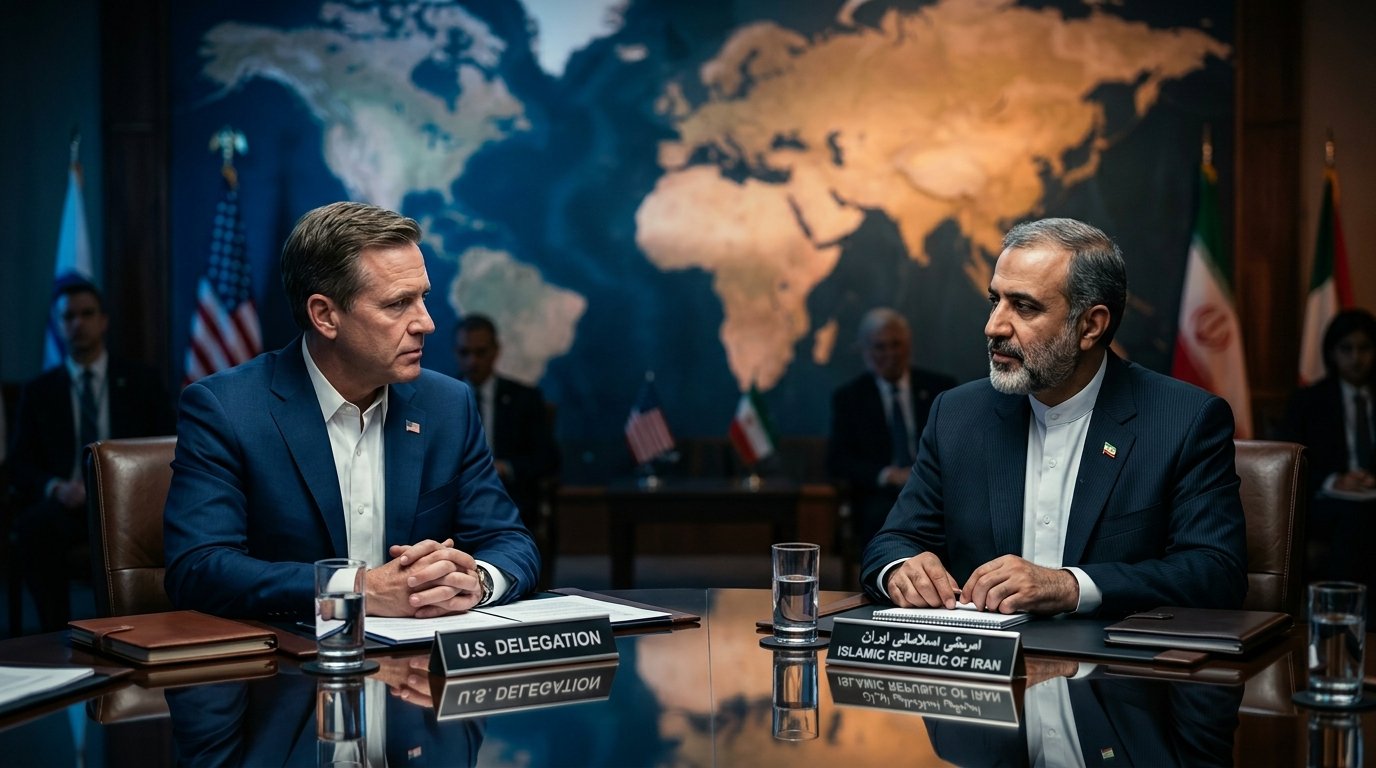
In the theater of global geopolitics, when two nations that have historically defined themselves through mutual animosity decide to sit at the negotiation table, the world stops to watch. Over the final months of 2025 and the opening stretch of 2026, the international community witnessed a diplomatic breakthrough that many thought impossible: a comprehensive, multi-layered strategic understanding between the Islamic Republic of Iran and the United States of America.
For over four decades, the relationship between Washington and Tehran has been defined by proxy warfare, crippling economic sanctions, cyber conflicts, and an overarching threat of regional nuclear proliferation. Yet, the current geopolitical climate has forced an unprecedented compromise. This accord does not merely alter the political landscape of the Middle East; it sends shockwaves through global energy markets, recalibrates maritime security, and shifts the alliances of major superpowers like Russia and China.
But what drove these long-standing adversaries to put down their rhetorical weapons and sign on the dotted line? What are the secret mechanisms making this deal tick, and what does it mean for the future of global stability? To understand the magnitude of this shift, we must look beyond the official press releases and dive deep into the realpolitik behind the scenes.
1. The Long Road to Coercion: Understanding the Historical Friction
To fully appreciate why the 2026 accord is such a massive paradigm shift, one must understand the sheer weight of historical baggage both nations carried to the negotiating table. Following the 1979 Islamic Revolution, the relationship between the US and Iran transformed from close strategic partnership to unyielding hostility.
The modern blueprint for diplomacy was supposed to be the 2015 Joint Comprehensive Plan of Action (JCPOA), brokered under the Obama administration. However, the unilateral withdrawal of the United States from the agreement in 2018 under President Donald Trump plunged the region into what became known as the “Maximum Pressure” era. Washington reimposed devastating primary and secondary economic sanctions, aiming to cripple the Iranian economy and force a regime collapse or a total capitulation of its regional foreign policy.
Instead of bending, Tehran responded with “Maximum Resistance.” By the onset of 2025, the situation had escalated to a critical flashpoint:
- Advanced Enrichment: Iran had pushed its uranium enrichment levels to an unprecedented 60% purity at its Natanz and Fordow facilities—a technical stone’s throw away from the 90% weaponization threshold.
- Maritime Havoc: The Bab al-Mandab strait, the Red Sea, and the Strait of Hormuz became active hot zones. Drone and missile attacks on commercial vessels threatened to suffocate global supply chains.
- The Eurasian Shift: Blocked from Western markets, Iran formalised deep defense ties with Moscow, supplying thousands of loitering munitions (drones) and ballistic missiles utilized in the Ukraine conflict. This directly threatened Western European security architectures.
The world was visibly teetering on the edge of a multi-theater conflict. The status quo was no longer sustainable for either Washington or Tehran, creating the perfect, albeit desperate, conditions for back-channel diplomacy.
2. The Catalysts of Compromise: Why Both Sides Needed a Deal
Nation-states do not act out of altruism; they act out of cold, calculated necessity. Both the United States and Iran found themselves facing severe internal and external vulnerabilities by late 2025 that made a diplomatic truce the only logical path forward.
Washington’s Strategic Overextension
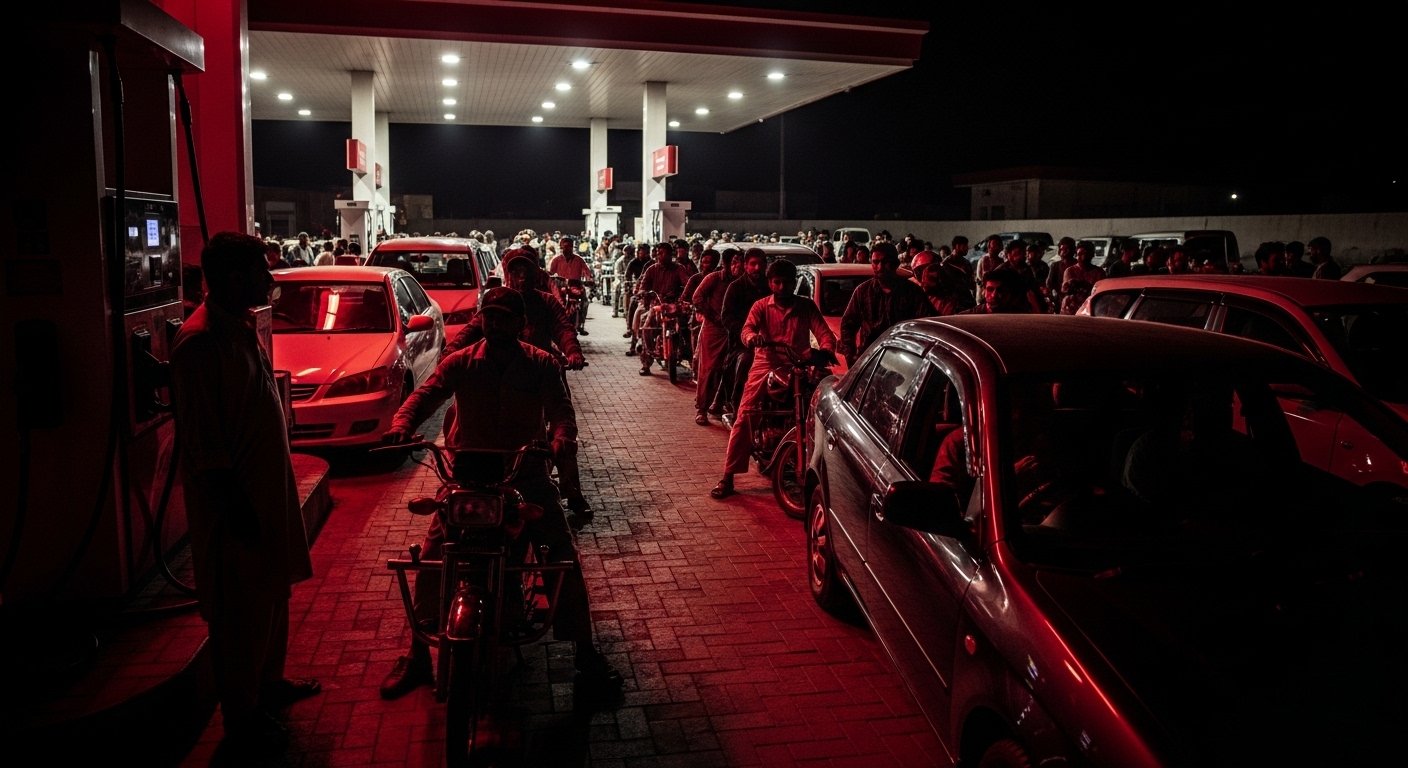
The United States was facing the grim reality of a multi-front strategic overextension. With billions of dollars in military aid tied up in sustaining Ukraine’s defense against Russia, and an increasingly volatile posture regarding Taiwan and China in the Indo-Pacific, the Pentagon simply could not afford to get bogged down in a massive, open-ended conventional war in the Middle East. Furthermore, domestic economic pressures in America—primarily driven by persistent inflation and the volatile nature of global fuel prices—meant that the US leadership needed to stabilize international oil markets ahead of critical domestic political cycles.
Tehran’s Economic Breaking Point
Conversely, Iran was fighting an uphill battle against economic gravity. Decades of isolation, compounded by hyperinflation, a rapidly devaluing Rial, and systemic domestic unrest, had put immense pressure on the ruling establishment. The country’s youth-heavy population was demanding economic reform, employment, and integration into the global community. Tehran urgently needed access to its frozen foreign exchange reserves—billions of dollars locked away in South Korean, Japanese, and European banks—and the legal right to export its vast oil reserves on the open market without resorting to heavily discounted grey-market tracking schemes.
3. The Core Architecture of the 2026 Accord
The 2026 agreement is not a carbon copy of the old JCPOA. It is a highly transactional, phased framework designed with immediate verification mechanisms. It functions on a strict principle of parallel implementation: one verified step of Iranian nuclear deceleration is met with one verified step of American economic relief.
Key Clause A: The Hard Cap on Nuclear Enrichment
Iran has legally committed to immediately halt all uranium enrichment beyond the 20% purity level. This is the most crucial aspect for Western security agencies, as it pushes Iran’s “breakout time” (the time required to produce enough weaponized fissile material for a nuclear device) back from a matter of weeks to several months.
- Iran is required to either downblend its existing stockpiles of 60% enriched uranium to 5% or ship the material to a designated neutral third-party country (likely Oman or Qatar) under strict international seals.
- The International Atomic Energy Agency (IAEA) has been granted “anytime, anywhere” electronic monitoring access to centrifuge manufacturing plants and operating facilities, utilizing next-generation real-time data streaming technology.
Key Clause B: Managed Asset Release and Oil Quotas
In return for verified compliance, the United States has engineered a structured sanctions relief mechanism. Rather than a blanket removal of all sanctions, Washington has created a Humanitarian Financial Channel.
- Iranian assets worth billions of dollars have been unfrozen and transferred into strictly monitored escrow accounts in Qatar and Switzerland. These funds can only be drawn down to pay for food, agricultural technology, medical equipment, and industrial infrastructure upgrades.
- Iran has been granted a specific legal oil export quota of 1.5 to 1.8 million barrels per day (bpd) to international buyers, bringing much-needed liquidity back into its domestic treasury.
Key Clause C: Regional De-escalation and Proxy Management
The quietest but perhaps most vital pillar of the deal involves regional security dynamics. While not explicitly detailed in the public text, the accord functions under a mutual understanding regarding regional asymmetric forces. Tehran has agreed to exert its considerable diplomatic and financial leverage to halt attacks by its regional network on international shipping lanes and American installations. In return, the US has agreed to de-escalate its naval build-up in the Persian Gulf and minimize direct kinetic strikes against aligned groups, provided the peace holds.
4. Superpower Reactions: A Fragmented Global Response
The announcement of the accord has fractured the international diplomatic community, creating an intense divide between those who view it as a triumph of peace and those who see it as dangerous appeasement.
| Nation / Geopolitical Block | Official Posture | Core Strategic Motivation |
| United States & Western Europe | Triumphant but Cautious | Relieved to de-escalate the Middle Eastern front; eagerly anticipating a drop in energy prices and an end to maritime shipping crises. |
| The State of Israel | Categorical Rejection | Views the deal as an existential threat. The Israeli leadership argues that the deal provides Iran with billions in cash flow while leaving its deep nuclear engineering knowledge intact. |
| The Kingdom of Saudi Arabia & UAE | Cautious Optimism / Neutrality | Both nations are focused on massive domestic economic diversifications (e.g., Vision 2030) and prefer a stable, non-hostile maritime trade route over regional war. |
| The Russian Federation | Disappointed Acquiescence | Concerned that a Western-facing de-escalation will reduce Iran’s dependency on Moscow and potentially lower global oil prices, hurting Russia’s energy revenues. |
| The People’s Republic of China | Active Endorsement | China acted as an indirect facilitator. A stable Persian Gulf ensures a steady, uninterrupted flow of sate energy directly into the energy-hungry Chinese industrial complex. |
5. Economic Ripples: What the Accord Means for Global Markets
The immediate aftermath of the 2026 accord has sent massive shockwaves through the global financial ecosystem. The energy sector, which had been pricing in the risk of a catastrophic military conflict in the Strait of Hormuz, experienced an immediate correction.
The Return of Iranian Crude
With Iran legally permitted to inject up to 1.8 million barrels of oil per day back into global supply chains, the global energy deficit has eased significantly. Within weeks of the announcement, Brent crude prices experienced a downward correction, dropping away from volatile triple-digit highs to stable, manageable baselines. This drop has provided immediate inflationary relief to major oil-importing developing nations across South Asia, Africa, and Europe.
Rebuilding Maritime Confidence
The stabilization of shipping lanes in the Red Sea and the Gulf of Aden means that international logistics conglomerates no longer have to reroute their massive container ships around the Cape of Good Hope in South Africa. This reduction in transit times and maritime insurance premiums is expected to shave off significant costs from global consumer goods, providing a soft landing for a fragile global economy.
6. The South Asian Angle: A Golden Window for Local Growth
For developing regional neighbors like Pakistan and India, the normalization of US-Iran ties presents an unprecedented macroeconomic opportunity. For over a decade, major regional energy infrastructure projects had been completely frozen due to the looming threat of American secondary sanctions.
Reanimating Regional Energy Pipelines
The most significant local impact centers on long-delayed infrastructure projects, such as the Iran-Pakistan (IP) Gas Pipeline. For years, regional capitals faced a diplomatic Catch-22: proceed with the pipeline to solve severe domestic electricity and gas shortages, or halt it to avoid being completely disconnected from the US dollar-clearing banking system.
Under the provisions of the 2026 sanctions-relaxed framework, regional actors now have a legitimate legal window to:
- Import Cost-Effective Energy: Finalize natural gas pipelines and direct electricity grid hookups from Iran’s energy-rich Sistan-Baluchestan province, dramatically lowering domestic manufacturing and industrial power costs.
- Formalize Border Commerce: Transform vulnerable, illicit black-market smuggling networks along the border into regulated, tax-generating trade corridors, bringing economic stability to historically neglected border regions.
7. Critical Analysis: Is This Lasting Peace or Just a Strategic Timeout?
As objective analysts, we must separate diplomatic optimism from the gritty realities of international relations. The core question remains: Can the 2026 accord survive the test of time, or is it merely a temporary ceasefire?
The architecture of this deal houses several structural vulnerabilities:
The Problem of Political Transience
The greatest threat to this agreement is the cyclical nature of Western democracies. International accords signed by a current administration can be completely dismantled by a subsequent, more hawkish leadership through executive orders. Iran’s political elite are acutely aware of this vulnerability; they remain highly hesitant to fully integrate their economy into Western networks, fearing another devastating snapback of sanctions in future political cycles.
The Subterranean Nuclear Knowledge Base
You can dismantle a centrifuge, and you can dilute a chemical stockpile, but you cannot delete the scientific knowledge stored inside the minds of Iranian nuclear engineers. Western intelligence agencies remain deeply concerned that even if Iran adheres to the physical limits of the 2026 deal, its breakout capability can never truly return to zero. The moment the agreement expires or fractures, the timeline to a weapon could be accelerated faster than any regulatory body can counter.
8. Conclusion: The Dawn of a Fragmented, Multipolar World
Ultimately, the 2026 Iran-US Strategic Accord serves as a stark reminder that in the realm of global statecraft, diplomacy is rarely about mutual trust; it is entirely about managed mistrust. When the cost of conflict becomes prohibitively expensive for even the world’s most powerful nations, pragmatism will always overcome ideology.
This agreement does not mean that Washington and Tehran have suddenly become allies. They remain deeply suspicious adversaries with vastly conflicting worldviews. However, what this deal does provide is a vital diplomatic circuit breaker. It gives a fractured, war-weary global economy a much-needed moment to breathe, recalibrate, and avoid a catastrophic regional conflict that would have dragged the entire world down with it.
Whether this accord becomes a stepping stone toward a permanently stable Middle East or goes down in history as a temporary pause before an inevitable storm depends entirely on how transparently both sides honor their commitments over the coming months. For now, the silent victory belongs to the diplomats who proved that even in an age of absolute polarization, words can still carry more weight than weapons.
Join the Discussion
Do you believe the United States can be trusted to uphold this deal in the long term, or has Iran taken an immense strategic risk? How do you think regional players will react if this agreement faces domestic pushback? Drop your insights in the comment section below and let’s get the debate started!