On February 28, 2026, the Israel US bomb Iran campaign reshaped the Middle East in a single day. The United States and Israel launched nearly 900 coordinated strikes across Iran in less than 12 hours, killing Supreme Leader Ayatollah Ali Khamenei, destroying missile sites, and flattening nuclear infrastructure. Within days, global oil prices rose above 100 dollars per barrel, transforming a regional crisis into a full‑blown Gulf War 2026.
The conflict did not begin suddenly; it emerged from months of broken diplomacy, rising mistrust, and escalating threats between Iran, the United States, and Israel. This post explains how the Israel US bomb Iran strikes turned into a regional war that now touches every driver, household, and economy linked to the Persian Gulf.
The Road to February 28: When Diplomacy Broke
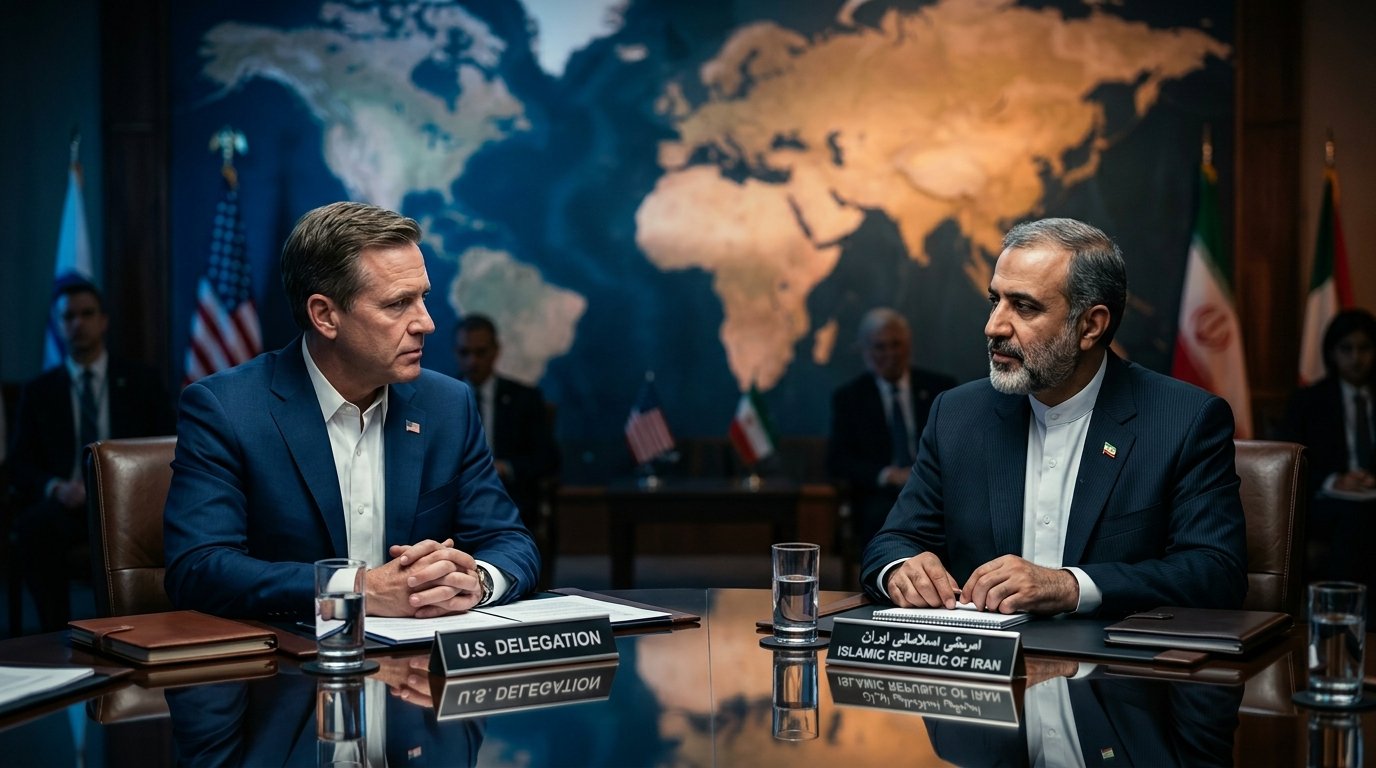
The 2026 Iran war began at the negotiating table, not in the skies over Tehran. For months before the first major strikes, Omani‑mediated nuclear talks in Geneva tried to find a compromise between Washington and Tehran. The US demanded that Iran cap uranium enrichment, restore international inspections, and limit its missile program. Iran, in return, wanted full sanctions relief and the right to maintain control over its missile and nuclear infrastructure. Neither side wanted to compromise on what it saw as a core national interest, and the result was a slow‑motion deadlock.
Behind the scenes, the mood in Washington and Tel Aviv hardened. Intelligence reports suggested that Iran was quietly expanding its missile stockpile and upgrading its centrifuge technology even as the talks dragged on. The US set a tight deadline for progress, and when Iran failed to meet it, President Trump publicly declared the country was “stalling.”
That phrase turned diplomatic pressure into a military threat. By early 2026, the US and Israel had already prepared detailed strike plans, and the failure of the February Geneva talks pushed the conflict into open warfare. The war, therefore, was not a surprise attack; it was the next step in a long‑running confrontation whose diplomacy had quietly failed.
The Opening 12 Hours: How Israel US bomb Iran Unfolded
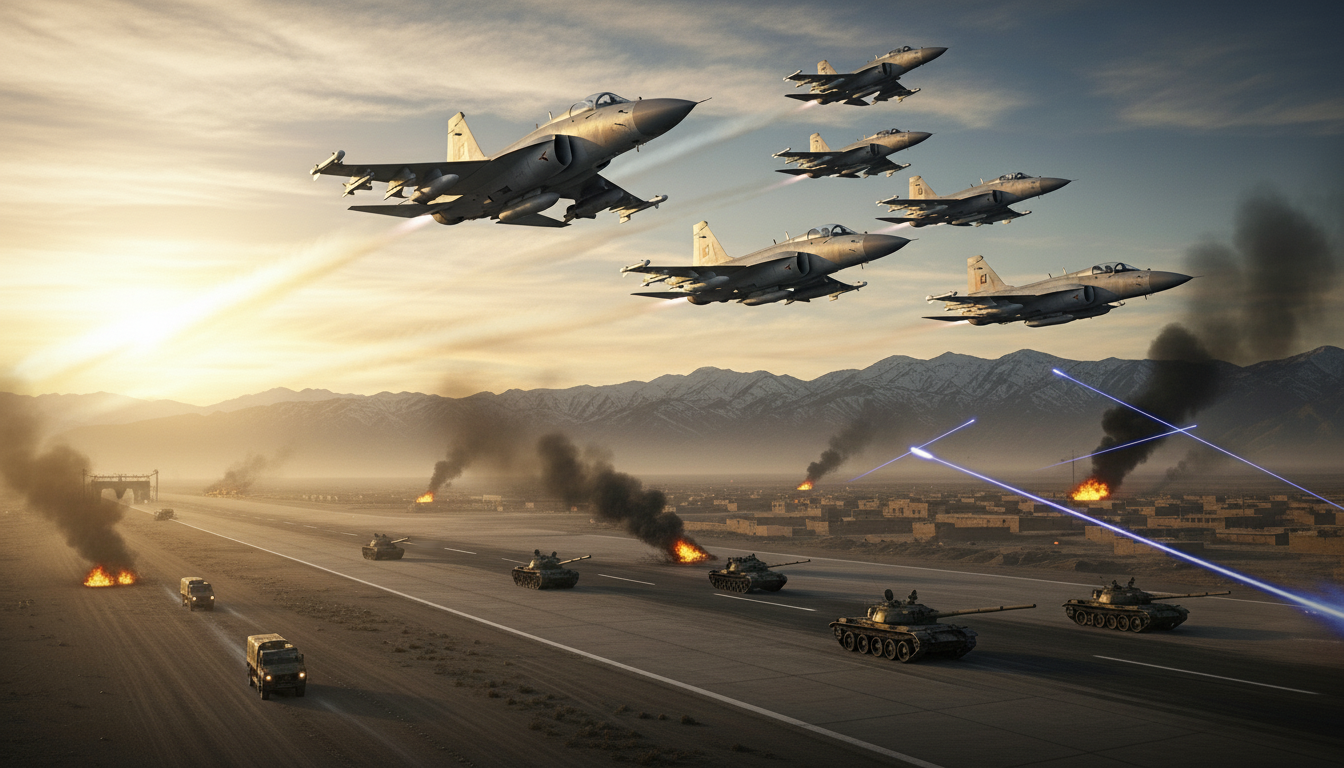
The first notes of the war came at 9:45 a.m. Tehran time on February 28, when the first waves of missiles and drones began to hit Iranian targets. The joint Israel US bomb Iran operation followed a clear three‑phase strategy designed to break Iran’s defenses quickly and decisively. Phase 1 hit the air‑defense networks, radar sites, and key IRGC bases, creating “corridors” for follow‑up strikes. Without functioning early‑warning radars and integrated defenses, Iranian forces were forced to respond blindly, making it harder to shoot down incoming missiles and drones.
Phase 2 shifted to missile launch sites, storage depots, and IRGC command centers. Long‑range missile‑storage facilities in the desert, hardened silos, and mobile launch platforms were struck repeatedly. Command centers that coordinated the IRGC’s missile, drone, and cyber operations were also targeted, fracturing communication and control.
By the end of Phase 2, Iran had already lost much of its ability to launch a coordinated retaliation. The final phase of the opening barrage was the most politically symbolic: the strike on the Supreme Leader’s residence and the leadership complex in central Tehran. Multiple bombs hit the compound, and within hours news emerged that Ayatollah Khamenei had been killed. The war was no longer just about infrastructure; it was about the future of Iran’s ruling system itself.
The Death of the Supreme Leader and the Power Vacuum
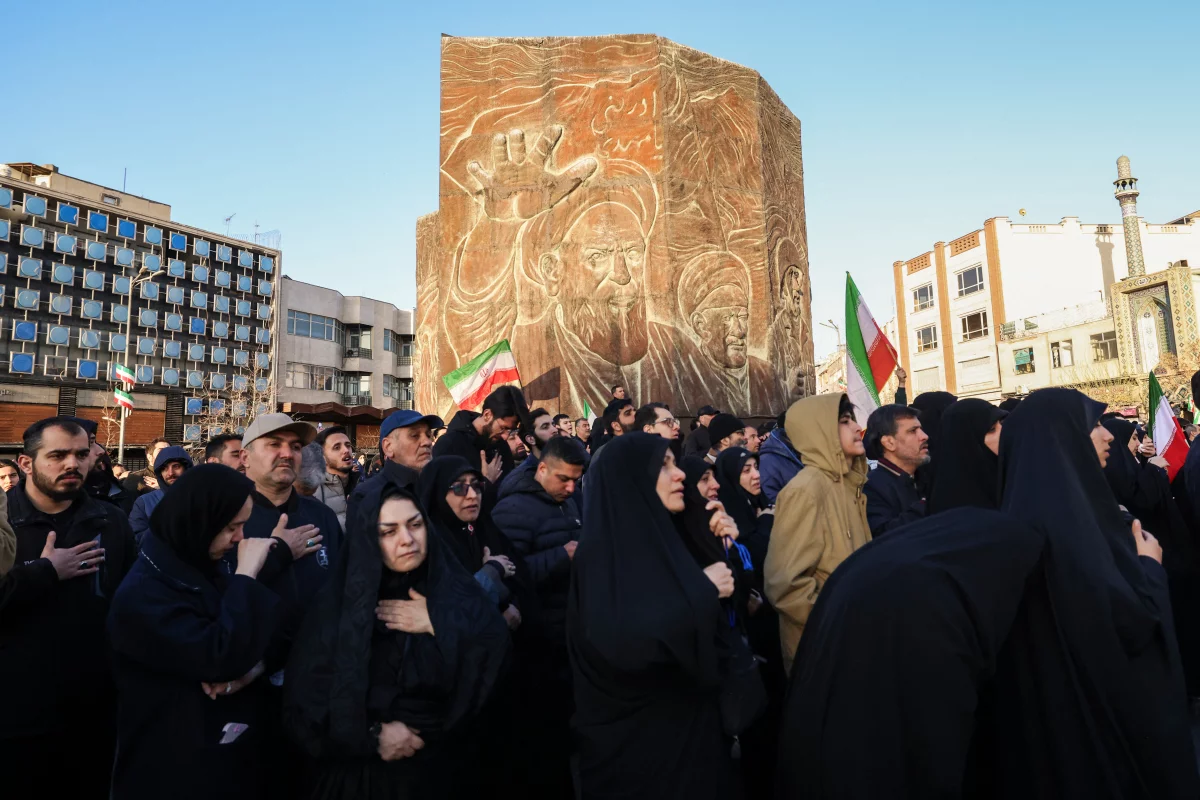
On March 1, Iran’s state television announced that Supreme Leader Ayatollah Ali Khamenei had died in the Israel US bomb Iran strikes. The announcement came with a promise of 40 days of national mourning – a traditional Shia mourning period that also gave the regime time to stabilize information and emotions. Khamenei had held the position of Supreme Leader for 34 years, becoming the most powerful figure in the Islamic Republic and the ultimate authority over the military, judiciary, and Revolutionary Guard. His death left a power vacuum that Iran’s constitution was not designed to handle in wartime.
The Assembly of Experts, tasked with appointing a new leader, found its members scattered, many unable to travel safely. In practice, the formal constitutional process broke down. Two main forces moved to fill the void. The first was the Khamenei family: Mojtaba Khamenei, the late leader’s son, emerged as a dynastic candidate backed by loyalist clerics and security elements.
The second force was the IRGC, whose commanders began acting as de facto wartime rulers, taking control of key security and military decisions. The result was a shift from a clerical‑dominated system to a more military‑oriented wartime government. The Islamic Republic survived the man, but the war rendered the old constitutional rules almost meaningless, reshaping the internal balance of power in Tehran.
Iran’s Revenge: Missiles, Drones, and the Gulf Under Fire
Within hours of the first strikes, the Islamic Revolutionary Guard Corps (IRGC) launched a massive counter‑attack using its large missile and drone stockpiles. The goal was to show that Iran was not defenseless, that it could hit Israel and Gulf cities, and that the aggression would come at a cost. Israeli cities, including Tel Aviv and central areas, were hit by missile and drone barrages. At least nine civilians were reported killed, and damage to homes and infrastructure triggered a wave of fear and anger across the country.
US‑allied Gulf bases also came under fire. The US Air Force’s Al‑Udeid Air Base in Qatar and the US Navy’s 5th Fleet headquarters in Bahrain – two of the most critical regional hubs – were struck by missiles and drones. Damage to runways, hangars, and support infrastructure temporarily disrupted operations and forced the US to re‑route aircraft. Saudi oil infrastructure, including the Ras Tanura refinery, was hit, disrupting production and creating fears of a longer‑term supply shock.
Explosions and damage were reported in Dubai and Doha city centers, signaling that the war had spread beyond remote bases. Iranian leaders publicly declared that no barrel of oil would leave the Gulf while the Israel US bomb Iran operations continued, turning the conflict into an energy war that would hit every driver and household in the region.
The Oil Shock: How the War Hits Global Economies
The most visible global impact of the Israel US bomb Iran war was the oil shock that followed the strikes and the Iranian retaliation. The Strait of Hormuz, through which 20–30% of the world’s seaborne oil trade normally flows, effectively closed to routine shipping. The UAE shut its Ruwais refinery after a drone‑strike fire, and Qatar paused LNG exports from Ras Laffan due to security concerns. The exports of crude oil and gas from the region dropped to roughly 10% of pre‑war levels, sending panic through global markets.
Brent crude oil prices surged from around 82 dollars a barrel to over 100 dollars within days – a jump of about 25–30%. Natural gas prices in Europe and Asia also rose by about 30%, threatening already fragile energy systems. For ordinary people, the war meant higher petrol and diesel prices, more expensive public transport, and rising costs for food and manufacturing.
Countries that depend heavily on Gulf energy and remittances – Pakistan, India, Egypt, and others – felt the pressure almost immediately. The war, therefore, was not just a regional clash of armies; it was an economic crisis that entered homes through the price of fuel, food, and electricity.
Pakistan and India: The South Asian Ripple Effect
The Israel US bomb Iran war hit Pakistan and India in several direct and painful ways. Thousands of South Asian workers in Gulf countries suddenly faced the risk of job losses, contract cancellations, and early repatriation. Many Gulf firms cut back on operations, froze new hiring, or reduced overtime as revenues fell. For families who depend on remittances, the drop in incomes was immediate and dramatic. Pakistan and India saw sharp declines in remittance inflows, worsening their foreign‑exchange pressures and ability to import fuel and food.
Domestically, the rise in fuel prices pushed up transportation and energy costs, which in turn increased the prices of food, textiles, and manufactured goods. Small businesses that rely on diesel generators struggled with higher electricity costs, and farmers who depend on fuel‑driven irrigation and transport saw their margins shrink.
In Pakistan, the situation was further complicated by existing border tensions with Afghanistan and the threat of attacks by Taliban‑linked groups. The war amplified existing economic and security challenges, turning what might have been a distant conflict into a domestic crisis felt at the pump, the market, and the border. In India, protests broke out in several cities over petrol prices and worries about job security abroad, showing how the war was already reshaping public opinion.
Trump’s Strategy: Regime Change or Controlled Escalation?
President Trump framed the Israel US bomb Iran strikes not as a limited operation, but as the opening move in a broader campaign aimed at regime change. In a March 1 statement, he described the death of Supreme Leader Khamenei as a “golden opportunity” for the Iranian people to rise up against the Islamic Republic and promised “immunity” to military personnel who defected or surrendered. The core of the strategy was twofold: first, to cripple Iran’s nuclear capabilities and missile infrastructure, and second, to create conditions inside Iran that would encourage mass protests and the collapse of the clerical‑military system.
However, intelligence agencies had warned that external military attacks often strengthen nationalist sentiment and rally populations around existing leaders, at least in the short term. Those warnings, drawn from Iran’s experience during the Iran‑Iraq war, were later reported to have been downplayed. So far, there has been no mass uprising inside Iran. Instead, the government has used the war and civilian deaths to justify increased repression and security crackdowns.
The strategy of using military force to push regime change, therefore, has produced a more repressive wartime state, not a popular revolution. The war may have achieved its military objectives in the short term, but it has deepened the political crisis inside Iran without resolving it.
The Regional Domino Effect: One Conflict, One War Zone
The 2026 Iran war did not stay confined to its borders; it quickly spilled into neighboring countries and turned the region into one semi‑connected war zone. In Lebanon, Hezbollah launched waves of rocket and missile fire into Israel, targeting cities and infrastructure near the northern border. In response, Israeli airstrikes hit Hezbollah strongholds in the suburbs of Beirut, raising the risk of civil‑war‑style violence. The fragile political balance in Lebanon collapsed as different factions took sides, and the government struggled to maintain control.
Gulf states, which had previously watched the tensions from the sidelines, now found themselves directly in the line of fire. Qatar, the UAE, Saudi Arabia, Kuwait, and Bahrain reported attacks on their bases, airports, and cities, forcing them to join the war more actively.
The conflict also reached Iraq and Syria, where pro‑Iran militias and state forces clashed over the security of US diplomatic missions and military outposts. The war, therefore, transformed the Middle East from a region of separate crises into one interconnected battlefield, reshaping alliances, security arrangements, and the balance of power across the region.
Can Iran Win a Long‑Term War Against the US‑Israel Alliance?
At the start of the war, Iran showed significant short‑term strengths. It has a large stockpile of ballistic missiles and drones, capable proxy networks across the region, and a leadership willing to absorb heavy losses. In the first days and weeks, Iran managed to hit Israeli cities, Gulf bases, and regional infrastructure, proving that it could strike back hard. Tactical successes, such as damaging a US base or sinking a small vessel, could have important psychological and political impact. However, analysts agree that those advantages do not guarantee long‑term victory.
Iran’s long‑term weaknesses are serious. The country lacks an air force that can match US‑Israeli air superiority, and it is heavily dependent on foreign technology for electronics, aviation, and critical infrastructure, which has become harder to obtain due to sanctions and the war. Iran’s oil exports, once the backbone of state revenue, have been reduced to a fraction of their pre‑war levels. Without oil income, the government cannot sustain its military spending or import essential goods.
The US, by contrast, can replenish its missile and drone stockpiles over time, and its economy is far more resilient. The war, therefore, looks very different from Tehran’s perspective than from Washington’s. In the short term, Iran can win battles and inflict costs. In the long term, it is likely to lose the war of attrition unless the conflict ends through a negotiated ceasefire or political change inside Iran.
10. Three Possible Futures: Collapse, Nuclear Sprint, or Economic Ceasefire?
As the war settles into its longer‑term phase, analysts are circulating several scenarios for where it might lead. The first scenario is regime collapse: if the war drags on, sanctions remain in place, and popular unrest builds, the Iranian government could fragment. Parts of the military and security apparatus might defect, and regional rebels or ideological opponents could break away, leading to a political crisis or even civil war.
The second scenario is the nuclear sprint: cornered and desperate, Iran’s leadership may attempt to rush toward a nuclear weapon despite earlier damage to Natanz and Fordow. If they succeed, the war could enter a new, more dangerous phase.
The third scenario is an economic ceasefire: as the oil shock and global recession deepen, major powers like China and the European Union may push all sides toward a negotiated pause. The goal would be to reopen the Strait of Hormuz, stabilize oil prices, and prevent a full‑scale humanitarian crisis. In this case, the conflict might not end neatly, but it could be frozen or reduced to a low‑intensity state while a new political order in Iran gradually emerges.
The Israel US bomb Iran campaign, therefore, is not just another Middle East conflict; it is the beginning of a long and uncertain journey whose final outcome is still being written.