women receiving worse treatment for back and neck pain is the powerful conclusion of a major UK study published in Physical Therapy Reviews. Every year, millions of women sit in doctors’ offices describing chronic spinal pain that is real, measurable, and often debilitating, yet they leave with diagnoses that ignore their hormones, anatomy, and life stage. The result is a pattern of misdiagnosis, undertreatment, and unnecessary suffering that the new research now quantifies in clear, hard numbers. For the 1.2 billion women worldwide living with chronic pain, this is not coincidence – it is a systemic failure in healthcare.
The UK study on women and musculoskeletal pain
The study was led by researchers at the University of Central Lancashire, who reviewed 47 major clinical guidelines for chronic neck and low‑back pain used in the UK and other high‑income countries. These guidelines come from bodies like the National Institute for Health and Care Excellence and equivalent international organizations. The team found that most documents describe patients in generic terms, treating men’s bodies as the default while rarely mentioning female‑specific factors like hormonal cycles, pregnancy, postpartum recovery, menopause, pelvic tilt, or estrogen‑driven ligament laxity.
The researchers concluded that the medical system is using a “one‑size‑fits‑all” approach for a population that is not one size. Pain protocols are built on research that uses mostly male subjects, and then they are applied to both men and women. When that happens, women are left with a mismatch between their biology and the treatment they receive, even when they describe the same level of suffering as men.
Why women’s back and neck pain is different
Hormones play a major role in how women experience musculoskeletal pain. Estrogen, the main female sex hormone, affects muscles, ligaments, and joints across the menstrual cycle, pregnancy, and menopause. At certain points in the cycle, estrogen loosens collagen and increases joint laxity, which can make the spine less stable and more vulnerable to strain. Pain thresholds also shift by roughly 20–30% across the cycle, so the same structural problem can feel very different from one week to the next.
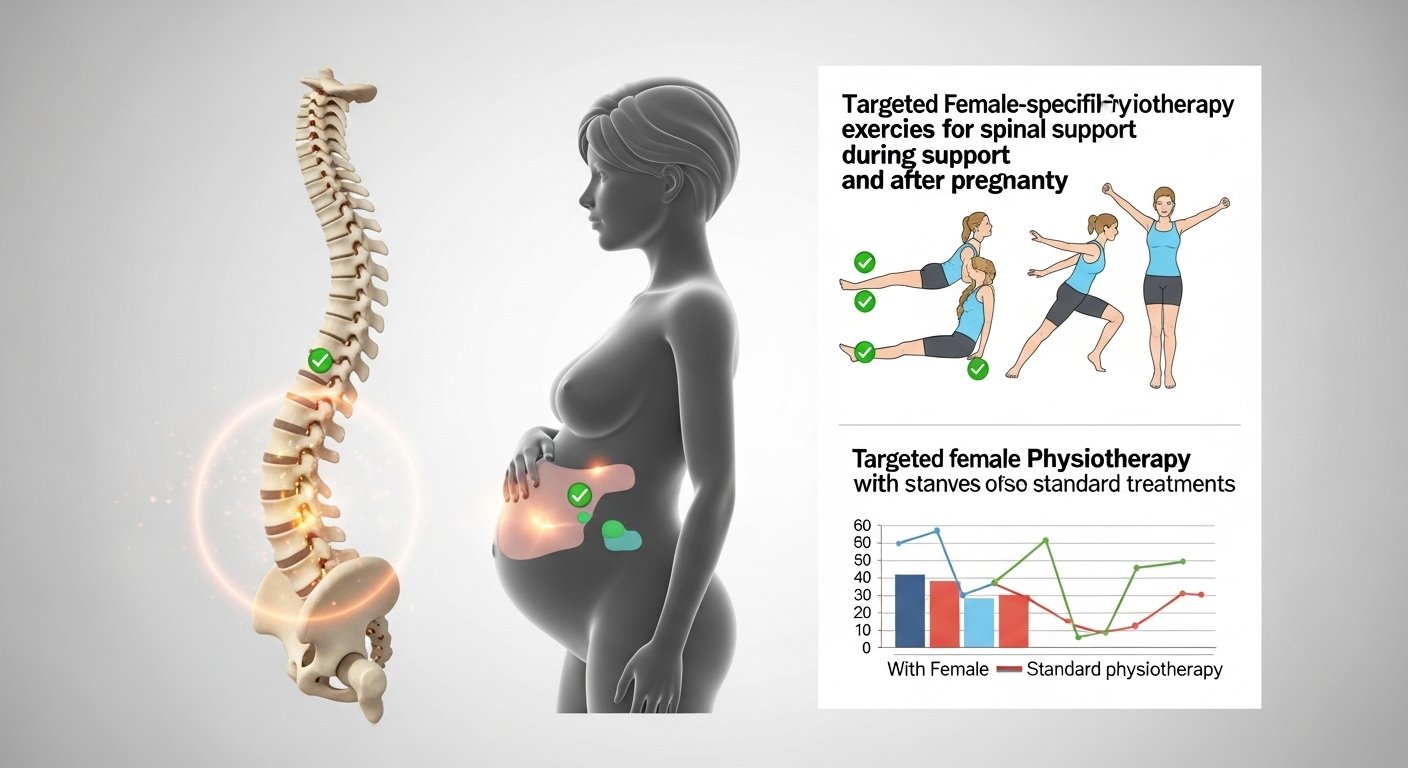
Pregnancy adds another layer of complexity. The growing uterus changes spinal curvature, while the hormone relaxin loosens the ligaments around the pelvis and lower back. The result is a biomechanical load that is very different from the typical male anatomy. Most clinical guidelines do not distinguish between pregnant and non‑pregnant patients, so the advice given is often generic and poorly suited to the real strain on a pregnant woman’s spine.
Menopause introduces a third major shift. Women lose about 1–2% of bone density per year in the early post‑menopausal period, which weakens the spine and reduces the support provided by core muscles. The same back pain that might have been mild in a younger woman can become chronic or recurrent after menopause, yet the guidelines that doctors follow rarely address this clearly. The care offered often reflects a generic “back pain” model rather than a woman‑specific one.
The numbers behind the two‑tier system
The UK study backs up the experience of many women with hard data. Women are roughly 1.5 times more likely than men to develop chronic back pain before age 40, and they are more likely to have recurring episodes over the next decade. Yet, despite making up a large share of back‑pain consultations, they receive 40% fewer MRI scans and 25% fewer specialist referrals for the same symptoms. In emergency departments, women wait about 28% longer for pain assessment than men, even when they present with similar complaints.
When it comes to medication, the imbalance continues. Men are prescribed opioid painkillers at doses about 15% higher than women, even though women consistently report higher pain scores. The pattern suggests that doctors often interpret female pain as less serious or less reliable. This leads to under‑treatment, not more careful, individualized dosing. The result is that women endure more discomfort for longer, with less imaging, fewer specialists, and less powerful pharmaceutical support.
Behind this clinical practice is a deep research bias. Roughly 70% of musculoskeletal clinical trials include only male participants. About 82% of animal‑model studies in the field use only male rodents. Female researchers lead only a small fraction of major spine‑focused studies, so the questions being asked and the way trials are designed often reflect male‑centric priorities. The guidelines that doctors rely on are built on this male‑heavy evidence base, which feeds the cycle of undertreatment for women.
How misdiagnosis and undertreatment happen
The gap between female biology and male‑default guidelines shows up in the treatment room in very real ways. Women’s bulging discs are often misread as simple posture problems, leading to generic exercise prescriptions instead of targeted imaging and therapy. Sacroiliac joint dysfunction, which is more common in women because of pelvic anatomy and the effects of pregnancy, is frequently mistaken for sciatica. This sends treatment toward the wrong structures.
Pain that clearly worsens around menstruation or menopause is too often dismissed as psychosomatic or “stress‑related,” which shuts down the diagnostic process instead of exploring hormonal contributors. Standard core‑strengthening programs do not take into account the altered pelvic and abdominal mechanics of pregnancy and postpartum recovery. When women follow these, they can actually worsen their pain instead of relieving it. Manual therapy that assumes male‑style ligament stability can be too aggressive for women in high‑estrogen phases, raising the risk of strain rather than healing. Drug dosing that ignores the fact that women process certain painkillers differently can lead either to under‑dosing or to higher side effects at standard male‑based doses.
The economic and social costs of this undertreatment are large. Back pain costs the UK economy billions of pounds per year, and women make up the majority of long‑term disability from spinal pain. Misdiagnosis and under‑treatment add hidden costs from repeated visits, failed therapies, and prolonged absence from work or family life. The longer a woman goes without the right diagnosis, the more entrenched her pain becomes, and the harder it is to reverse.
Real stories behind the statistics
Numbers help explain the problem, but the human reality of women receiving worse treatment for back and neck pain is best seen in individual stories. Aisha, a 32‑year‑old woman from Birmingham, experienced increasing lower back pain throughout her pregnancy. Her general practitioner dismissed it as “normal pregnancy back pain” and advised only rest. Two years later, an MRI finally revealed a slipped disc at L4–L5 — a structural problem that had been present all along but never investigated. Those two years were spent in unnecessary suffering that earlier, more targeted care might have prevented.
Margaret, a 58‑year‑old woman from Manchester, suddenly found her back pain worsening around the time of menopause. Her doctor prescribed paracetamol and basic stretching, following the generic first‑line treatment that assumes the same approach fits both men and women. Only when she paid for a private physiotherapist who explicitly considered menopausal changes in bone density and muscle mass did she get a different kind of care. The therapist identified a pelvic tilt and introduced exercises that addressed weakening core support. Within months, Margaret described her first period of true pain‑free living in nearly a decade, not because the problem was imaginary, but because the treatment finally matched her biology.
Sara, a 29‑year‑old woman from Karachi, faced postpartum back pain with radiating leg symptoms. Three local consultations led to vague advice about rest and weight loss, with no imaging or specific pelvic or spine‑focused assessment. When she traveled to London for a private MRI, the scan revealed a herniated disc at L5–S1 combined with pelvic instability. With sex‑specific physiotherapy and hormonal stabilization, her symptoms improved by around 90% within six months. The treatments that worked existed — they were simply not available or routinely offered in her home country’s system, which still leans heavily on male‑default protocols.
Pakistan and the global pattern
The male‑default bias documented in the UK is not just a Western problem. In Pakistan, audits at leading hospitals like Aga Khan University Hospital have found that a large share of female back‑pain protocols are based on guidelines that do not explicitly account for female biology. This means many Pakistani women receive the same “one‑size” approach, even though their bodies, life stages, and access to care differ from men’s.
In Pakistan, the economic gap sharpens the injustice. Wealthier women often travel abroad – to London, Dubai, or the United States – to access more nuanced, sex‑specific assessment and treatment. For lower‑income women, the options are usually limited to over‑the‑counter painkillers and rest, even when their condition might benefit from imaging, targeted therapy, or specialist input. The system effectively prioritizes the health of those who can pay, while the rest are left with generic, inadequate support.
The audit at Aga Khan represents an important first step toward change. When leading hospitals begin to acknowledge the gap between their current guidelines and the realities of female anatomy, they open the door to more thoughtful, evidence‑based reform. The fact that these institutions are now measuring the problem is a sign that change may be possible – the first step toward building guidelines that truly reflect the patients who present, not just the ones who dominated early research.
What fixing this would actually look like
The UK research team did not only describe the problem – they outlined a clear reform agenda. The first step is straightforward: update clinical guidelines to include mandatory sections on female‑specific factors. These should cover hormonal cycles, pregnancy and postpartum changes, menopause‑related bone and muscle changes, pelvic tilt and Q‑angle differences, and sex‑specific dosing for pain medications. The evidence is already in the medical literature; what has been missing is the institutional will to incorporate it into formal guidance.
Next, medical education must change. Medical schools could add a focused module on sex‑specific musculoskeletal pain, so that every new doctor understands how women’s pain differs from men’s and how treatment should be adjusted. Residency programs could require trainees to see and treat a certain number of female patients with back and neck pain. Continuing‑education requirements could mandate regular updates in gender‑aware pain medicine. These changes would not be revolutionary – they would simply bring education into line with what research already shows.
Technology can also help. AI‑driven triage tools trained on sex‑specific pain‑pattern data are beginning to identify female‑specific presentations more accurately than generic systems. Wearable devices that link pain reports to the menstrual cycle let women show doctors exactly when their pain spikes, turning subjective reports into objective data. Telehealth platforms can connect patients in underserved areas with specialists who practice gender‑aware care.
Global momentum for change
The UK study fits into a growing global movement to correct male‑default bias in medicine. In the United States, Johns Hopkins and other leading institutions have echoed the findings, and the American College of Rheumatology has begun reviewing its own guidelines for sex‑neutral assumptions. The All India Institute of Medical Sciences is building a national registry focused on female musculoskeletal conditions, aiming to create an evidence base that includes women’s experiences. In Saudi Arabia, female orthopaedic specialists are demanding that guidelines be rewritten to reflect female anatomy and biology.
The combination of patient advocacy, emerging research, and institutional acknowledgment is creating pressure on the system from many directions. When multiple countries and specialties begin to point out the same bias, the demand for change becomes harder to ignore. The momentum may finally be enough to turn the tide for women who have long felt that their pain is not taken as seriously as men’s.
What women can do now, before guidelines change
Systemic change takes time. Clinical guidelines do not rewrite themselves overnight, and reforms in medical education and research will take years to filter through the system. Women who are suffering today do not have to wait passively. The most immediate step is to seek out doctors and physiotherapists who explicitly practice gender‑aware or sex‑specific musculoskeletal care. These are clinicians who ask about menstrual cycles, pregnancy history, hormonal status, and menopause as part of their assessment, treating them as medically relevant rather than unrelated to spine problems.
Women can also track their pain in relation to their menstrual cycle using simple apps or diaries. This documentation can show clear patterns – for example, pain that consistently worsens in the premenstrual phase or around ovulation – that make it harder for doctors to dismiss the problem as subjective or psychosomatic. When the evidence is documented, the conversation shifts from “I think it’s in your head” to “Let’s treat this based on the data.”
Requesting hormonal assessment, especially around perimenopause and menopause, can open doors to treatments that standard guidelines do not emphasize. Hormone‑related therapies, combined with targeted physiotherapy, can sometimes reduce pain and improve function when generic approaches have failed. Participation in research registries focused on female pain also helps build the evidence base that will eventually change the way guidelines are written.
Conclusion
The Physical Therapy Reviews study on women receiving worse treatment for back and neck pain is not an outlier – it is a clear, evidence‑based explanation of what many women have known for years. The failure is simple: medicine built its guidelines on data drawn mostly from men, and then applied those same rules to women. The result is 40% fewer MRIs, 25% fewer specialist referrals, longer emergency waits, under‑dosed pain medication, and years of preventable suffering.
The message of the research is clear: women are not small men, and their pain deserves a different kind of care. The reform agenda is practical and achievable – updated guidelines, better training, more inclusive research, and the use of technology and patient‑driven data. For the 1.2 billion women living with chronic pain, the study is both vindication and a call to action. Paracetamol and vague “rest” are not destiny. Sex‑specific, evidence‑based medicine can save spines, livelihoods, and lives.