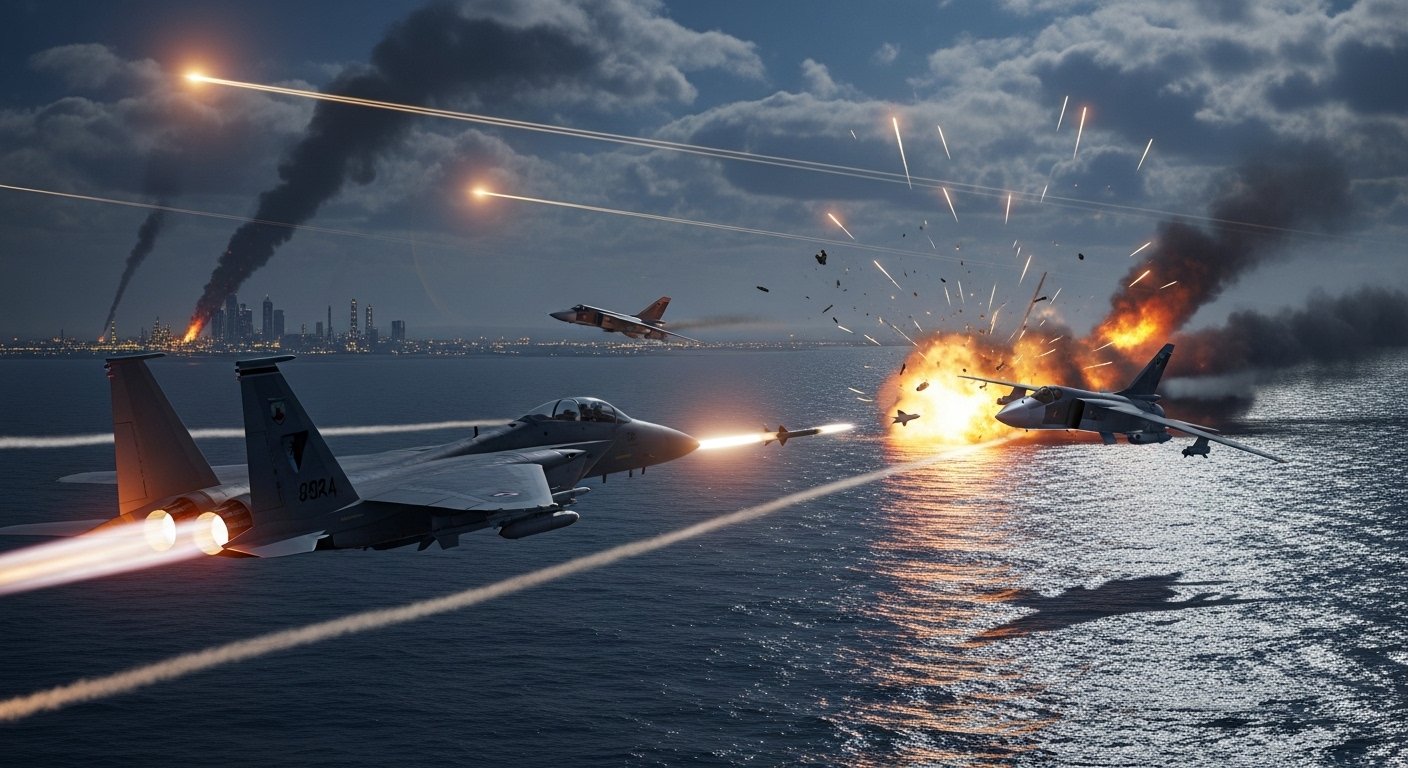
Qatar shoots down Iranian Su‑24 jets in the Persian Gulf, marking the first time any Gulf Cooperation Council (GCC) state has destroyed manned Iranian warplanes in self‑defence. Two Iranian Su‑24 Fencer bombers, flying from southern Iran, entered Qatari airspace along with a wave of ballistic missiles and drones targeting multiple Gulf capitals.
The Qatari Ministry of Defence confirmed that its air force scrambled fighters, destroyed both jets over Gulf waters, intercepted seven missiles, and shot down five drones – all without casualties inside Qatar. The engagement represents a decisive shift in the region’s balance of power and signals the end of Qatar’s long‑standing diplomatic balancing act between Iran and the West.
Qatar Shoots Down Iranian Su‑24 Jets in the Persian Gulf
Qatar shoots down Iranian Su‑24 jets in the Persian Gulf, turning a days‑long regional crisis into an open military confrontation. The Qatari Ministry of Defence confirmed that two Iranian Su‑24 Fencer fighter‑bombers were destroyed by Qatari F‑15QA “Ababil” jets over Gulf waters. The jets fell into the sea, avoiding damage on Qatari soil. Seven ballistic missiles and five suicide drones were intercepted or shot down in the same operation, with no Qatari casualties reported.
This engagement is historic: no GCC state has previously shot down manned Iranian aircraft in a direct air defence operation. The move signals that Qatar, once seen as a neutral mediator, is now fully aligned with the US‑GCC security axis in the current war.
Iran’s Coordinated Gulf‑wide Strike Campaign
The attack on Qatar was part of a broader Iranian campaign targeting multiple Gulf states. Iranian forces launched ballistic missiles, drones, and Su‑24 bombers at Saudi Arabia, Qatar, Kuwait, and others, in a bid to close the Strait of Hormuz and weaken Gulf energy and military infrastructure.
In Saudi Arabia, the Ras Tanura oil refinery caught fire after a missile strike, removing roughly 7% of global oil processing capacity from the market. The Ras Tanura attack threatens the kind of supply shock usually associated with major 1970s‑style oil crises. In Qatar, the Ras Laffan and Mesaieed LNG terminals, which supply about 20% of the world’s liquefied natural gas, were shut down. European and Asian buyers that rely on Qatari gas now face the risk of price spikes and shortages.
The most lethal single strike hit Kuwait, where an Iranian attack on a US military base and embassy killed six American service members. Those deaths dramatically raise the stakes for Washington and increase pressure to consider ground‑troop operations in the region.
Qatar’s Strategic Shift: End of Balancing
Qatar once built its foreign policy around “strategic ambiguity” – hosting the largest US base in the Middle East at Al Udeid while maintaining deep diplomatic ties with Iran and serving as a back‑channel mediator between Tehran and Western powers. On Monday, Qatar shoots down Iranian Su‑24 jets, shattering that image of neutrality.
Using its own air force to destroy Iranian aircraft is not neutral defence; it is a clear choice of side. The missing Iranian pilots become a permanent symbol of the break. Iran will not easily forget that Qatari jets shot down its bombers, and the quiet‑channel diplomacy that once passed through Doha is now politically compromised.
For the GCC, this marks the first time the bloc’s most independent member is fully committed to the collective security front against Iran.
Strait of Hormuz Closure and Global Energy Shock
Iranian military officials declared that the Strait of Hormuz is closed, warning ships not to enter the area. The Strait of Hormuz is the narrow sea lane through which roughly 20% of the world’s daily oil consumption passes. Declaring it closed means shipping routes, insurance, and prices all change overnight.
The combined effects of Ras Tanura burning, Ras Laffan shutting, and Hormuz closing create a multi‑pronged shock to global energy markets. The G7 Strategic Petroleum Reserve can soften short‑term disruptions, but it cannot replace permanently damaged infrastructure. If key Gulf facilities remain offline for weeks, oil prices could move into the $150–200 per barrel range, affecting every major economy.
Regional Ripple Effects: Lebanon, Pakistan, and the Middle East
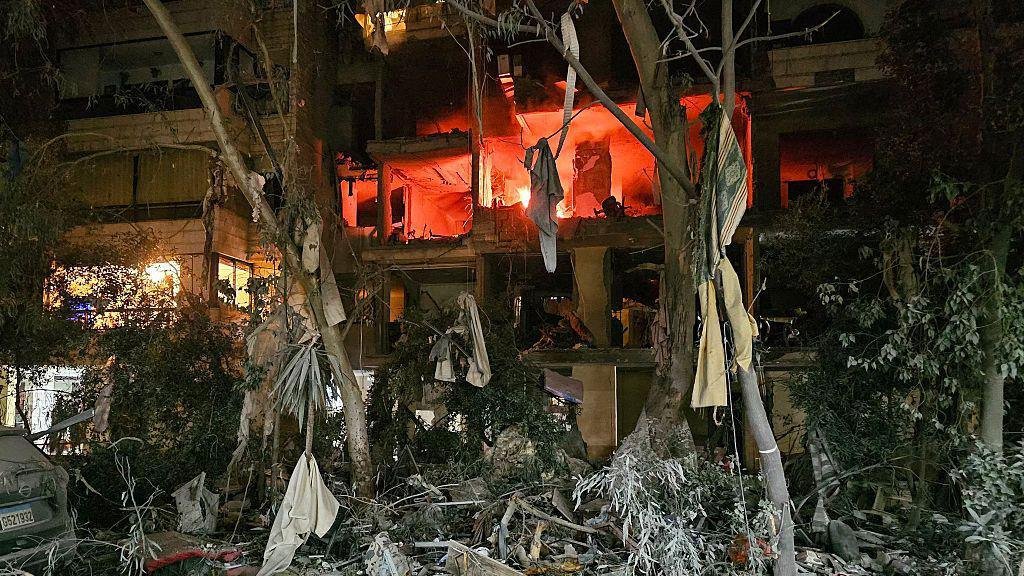
The Gulf war is not the only front. In Lebanon, Israeli ground operations south of the Litani River have killed over 50 people, including senior Hezbollah commanders, and displaced nearly 30,000 civilians. The Lebanese government has officially banned Hezbollah’s military operations, a political move more than a military clampdown. The state wants to create legal distance from Hezbollah’s rockets while still unable to stop them militarily.
In Pakistan, the escalation hits economy and security. The country imports most of its oil and depends on oil‑linked gas prices. The Qatar‑Iran clash and damaged infrastructure mean petrol prices near Rs 400 per litre and industrial‑paralyzing diesel prices are now realistic short‑term projections. Pakistan’s 909‑km border with Iran also faces higher risk of spillover, refugees, and cross‑border incidents. The remittance flows from Pakistani workers in Gulf states could drop if the war disrupts flights and jobs.
US, Trump, and the Ground‑Troop Threat
US President Trump has now said the war will last longer than one month, shifting from earlier “quick‑win” narratives. The stated goal is the permanent elimination of Iran’s missile and nuclear capability, an objective that air power alone cannot achieve. Secretary of State Marco Rubio has confirmed that ground operations in Iran remain under consideration, including possible incursions into the Zagros Mountains.
The six American deaths in Kuwait add domestic pressure for a strong response, but America’s history with Middle Eastern wars also warns of public backlash if the conflict drags on without clear results. Trump’s “long‑war” messaging is a way to manage expectations before the next phase begins.
Diplomacy After the Escalation
Back‑channel diplomacy between Iran, the US, Gulf states, and intermediaries like Qatar has been severely damaged. The fact that Qatar shoots down Iranian Su‑24 jets destroys Doha’s credibility as a neutral bridge. The missing pilots become a permanent grievance for Iran, and the calm‑talk framework is no longer usable.
Emergency UN Security Council sessions, European condemnations, and US statements of support will follow the pattern of earlier escalations, but they have so far had limited impact on Iranian actions. Inside Iran, hardline IRGC elements appear to be driving the escalation, and the logic of the operation may have outpaced political control.
What Comes Next: The New Scenarios
The conflict is now in a higher‑risk phase. Possible near‑term scenarios include:
- US ground operations in Iran, turning the war into a full‑scale invasion‑style campaign in the Zagros region.
- Full GCC military mobilisation, with Saudi Arabia, UAE, and Qatar fighting as a unified bloc.
- Extended Hormuz closure and infrastructure damage, pushing oil prices into the $150–200 per barrel range and triggering global economic shocks.
- Deep energy and inflation shocks in Pakistan, India, and South Asia, potentially leading to blackouts, factory closures, and social unrest.
Each of these risks is now more than a “worst‑case” scenario — they are plausible near‑term outcomes.
Conclusion: Qatar Shoots Down Iranian Su‑24, But the World Pays the Price
Qatar shoots down Iranian Su‑24 jets, but the real cost is paid by global markets, Gulf economies, and ordinary citizens everywhere. Nine countries are now under direct Iranian attack. The world’s most important energy corridor has been declared closed. The economies of the Middle East, Europe, and South Asia are under severe stress.
This war will not end quickly, even if a ceasefire is signed. The real question is how many lives, businesses, and decades of prosperity will be burned into the cost of this escalation. In the middle of it all, a small Gulf state that once balanced between enemies has finally picked a side – and fired.