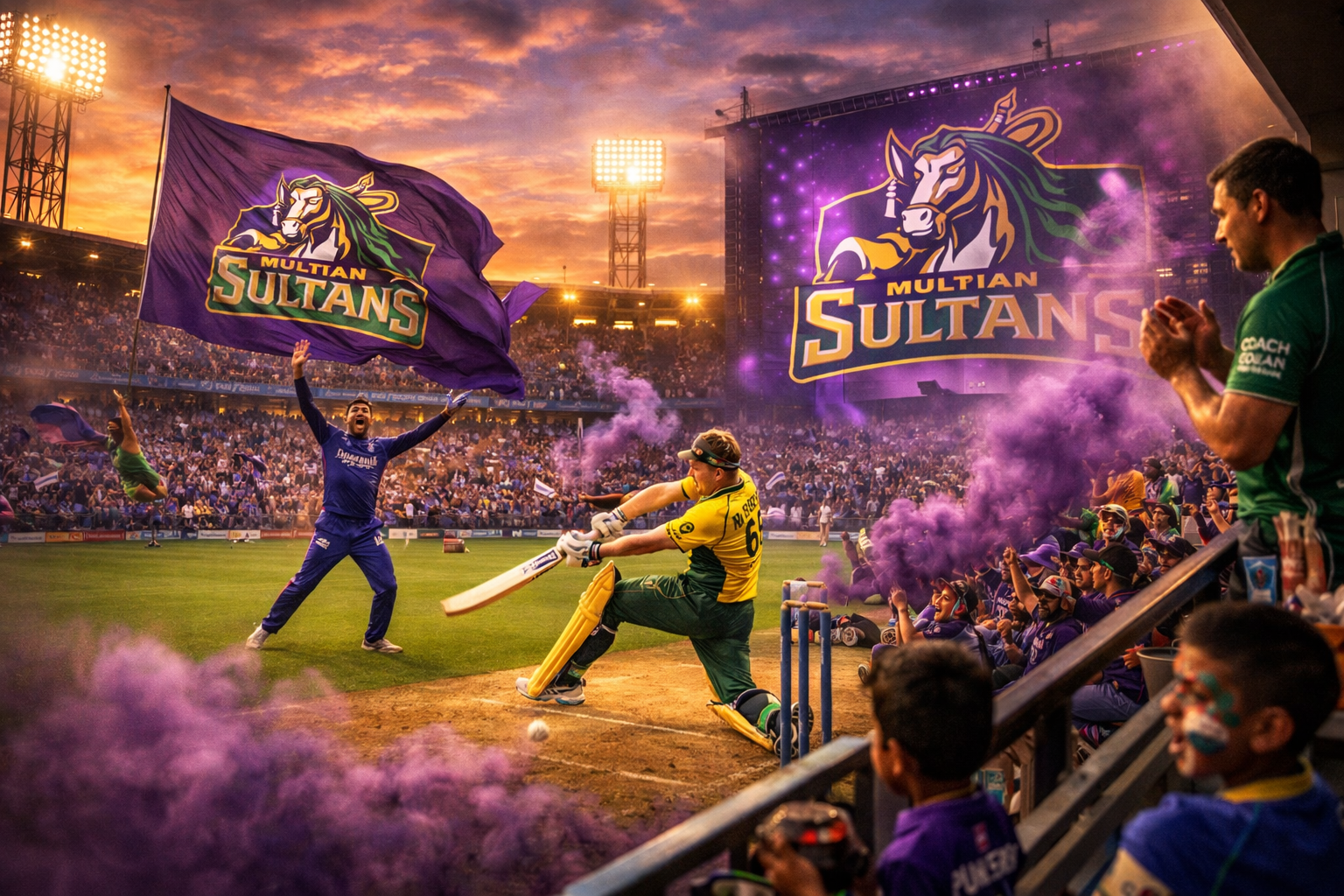
Multan Sultans are back. After a dramatic ownership shift, a financial crisis, and a bold rebrand decision, the most beloved name in Pakistan Super League history is returning to the stage it never truly left. The Sialkot Stallionz franchise, acquired only weeks earlier, has been transformed into the Multan Sultans once again, bringing South Punjab’s voice back to the PSL. This story is not just about cricket; it is about brand, region, identity, and the decisions that can change a league’s landscape in a single announcement. Here is how the Sultans came back, why it matters, and what it means for PSL 11.
The Financial Crisis That Made the Comeback Possible
The Multan Sultans’ return to PSL 11 begins with a financial crisis that almost erased South Punjab’s presence from the league. OZ Developers entered the PSL in January 2026, paying 1.85 billion rupees for the Sialkot Stallionz franchise. The plan was to build a new team in Sialkot, a city with passion but no prior PSL history. The name “Sialkot Stallionz” was fresh, the branding was new, and everything looked like a clean‑start project.
Then, one of their major financial partners pulled out. The franchise suddenly faced a serious funding gap. In T20 cricket, where pre‑season timelines are tight and squad commitments depend on clear money, uncertainty like that cannot be ignored. OZ Developers could not fix it on their own. CD Ventures stepped in with a majority‑stake acquisition, bringing the money and the confidence the franchise needed.
Most importantly, CD Ventures brought Gohar Shah as the new CEO – a man from South Punjab himself. That one decision would change the direction of the entire project. Instead of pushing through with “Sialkot Stallionz”, Shah saw the value in the Multan Sultans name – and made the case that would bring them back.
The Argument That Changed the PCB’s Mind
The turning point was a simple conversation between Gohar Shah and the PCB. After CD Ventures took over, Shah did not propose a long‑term rebrand plan. He argued that the Multan Sultans brand already had five seasons of equity, four finals, one title, and a loyal supporter base. The Sultans’ purple‑clad fans, the chants in Gaddafi Stadium, the merchandise, the TV ratings – all of that was waiting, even in the team’s absence.
Shah’s logic was three‑pronged:
- Commercial: The Sultans brand sells tickets, merchandise, and TV rights better than a new Stallionz identity ever could.
- Emotional: South Punjab lost its representative when the Sultans left. The Sialkot narrative could not replace that regional connection.
- Narrative: The Sultans are not just a franchise; they are a symbol of South Punjab’s cricket culture.
His final line stuck: “A stallion needs a sultan to win the PSL.”
The PCB agreed. The rebrand was approved, the valuation bumped from 1.85 billion to 2 billion rupees, and the Sultans were back.
Why the Multan Sultans Brand Is Worth the Money
The value of the Multan Sultans name is not just about nostalgia. It is about brand equity built over five seasons. Four finals in five years made the Sultans known as genuine contenders, not just qualifiers. The 2020 championship in a bio‑secure environment proved they could win under pressure. Fans remember that title every time they wear their faded 2022 kits, still visible in Multan’s streets today.
The purple brand identity is instantly recognizable. It represents South Punjab’s passion, pride, and commitment to the sport. Purple‑filled stands, local chants, and the unique Gaddafi Stadium atmosphere are commercial assets no new team can buy in one season. The nostalgia already exists. The returning Sultans enter the tournament with an audience that never fully left.
Merchandise alone tells the story. Fans are ready to buy new kits, scarves, and caps simply because the Sultans are back. With star players like Steve Smith and smart foreign signings, the 2026 Sultans can become a global‑market franchise while staying rooted in South Punjab.
The Squad: From Sialkot Stallionz to Sultans
The takeover was smooth on the playing‑side front. OZ Developers had already built a strong Sialkot Stallionz squad. When CD Ventures took over, the contracted players moved with the franchise. The Sultans inherited a ready‑to‑play, competitive group instead of starting from scratch.
Tim Paine, as head coach, brings a mix of Australian Test‑style discipline and T20‑experience from the Big Bash. He knows how to manage pressure, squad dynamics, and overseas players. His presence puts the Sultans in a strong position to build team culture quickly, even with a short pre‑season.
The overseas signings are a major upgrade:
- Steve Smith (36) – a world‑class anchor and finisher at the top, capable of turning any innings.
- Tabraiz Shamsi – a wrist‑spinner who can dominate the middle overs on PSL‑style tracks.
- Josh Philippe – explosive opener and wicket‑keeper, ideal for powerplay aggression.
- Ashton Turner – a death‑overs finisher who can turn losing chases into wins.
- Peter Siddle (41) – a veteran pacer whose experience and control make him lethal in the final overs.
This mix of overseas star‑power and local talent gives the Sultans a squad that is not just symbolic – it is title‑contending from day one.
Sialkot Fans: The Human Side of the Rebrand
The rebrand was not cost‑free. Sialkot Stallionz supporters had already bought merchandise, attended events, and started developing attachment to their new team. When the franchise was renamed and moved to Multan, many felt displaced. The logic made sense commercially, but it hurt emotionally.
CD Ventures handled this carefully. They promised to:
- Keep Stallionz elements in alternate kits or small logo references.
- Offer free transport for Sialkot fans to attend Multan home games.
- Run campaigns with lines like “The Sialkot spirit lives on.”
This approach acknowledged that the transition was not just a business move; it involved real fans, real emotions, and real communities. The Sultans’ return could have ignored Sialkot entirely – instead, it tried to respect the supporter base that had already invested in the project.
South Punjab’s Identity: More Than a Franchise
The Sultans’ comeback is about regional identity as much as cricket. South Punjab – a vast, culturally rich, cricket‑mad region – had been without a true representative in the PSL since the previous Sultans era. Sialkot is passionate, but it is not South Punjab’s heartland in the same way Multan is.
With Gohar Shah leading the franchise, a South Punjab‑born CEO, the Sultans’ connection to the region feels authentic, not corporate. He understands what the team means to local communities, junior players, and future fans. The Sultans are not just a franchise; they are a cultural anchor for a region that wants to see itself on Pakistan’s biggest domestic stage.
A strong Sultans presence also means better academies, scouting, and local talent development. The league’s grassroots pipeline benefits when a franchise invests in its home region. The Sultans’ return creates the chance to restart and expand those pathways, giving South Punjab’s talent new reasons to dream.
How the Sultans Reshape PSL 11
The 2026 season is no longer the same without the Sultans. Their return changes the competitive and narrative landscape of PSL 11.
Lahore Qalandars, chasing a second title, now face a revived Sultans side with a strong squad and a motivation to prove they belong. The Lahore‑Multan “motorway derby” is one of the league’s most intense rivalries, and its return adds drama to the schedule.
Karachi Kings in rebuilding mode and Peshawar Zalmi with their massive fanbase both face a tougher table. With Smith, Shamsi, Philippe, Turner, and Siddle, the Sultans’ overseas core is not just strong — it is match‑winning‑level across formats.
The opening match of PSL 11 is Lahore Qalandars vs Hyderabad Kingsmen, but the emotional center of the season will be the Sultans’ first home game in Multan, the Gaddafi Stadium homecoming, and the question: Can they win titles, not just headlines?
Tim Paine’s Coaching Challenge: Team Over Squad
Tim Paine’s job is not just to pick an XI. It is to turn a collection of players into a team – quickly. The Sultans’ squad contains:
- Overseas players who have never played under Paine before.
- Local players still being finalized through trades and the draft.
- A short pre‑season window.
Paine must build chemistry, understanding, and trust before the first ball is bowled. His experience managing the Australia Test rebuild after the 2018 ball‑tampering crisis is exactly what he needs here — dealing with pressure, scrutiny, and complex off‑field dynamics.
Early reports show him focusing on Josh Philippe’s keeping and powerplay‑hitting, and integrating Tabraiz Shamsi’s wrist‑spin into the middle‑overs plan. The aim: make sure the Sultans look like a cohesive team from Match 1, not a collection of individuals under a famous name.
The Steve Smith Factor: What It Means Beyond Scores
Steve Smith’s PSL debut is a landmark moment for the league. At 36, with a legendary international career behind him, his decision to join the Sultans instead of resting signals something important: the PSL has reached a level where stars want to be seen here.
Smith’s presence brings:
- Global TV and social‑media attention from Australia, England, and South Asia.
- Increased viewership and coverage, even for matches he does not play in.
- A sense of prestige for the league among foreign players and agents.
For South Punjab, watching Smith bat in purple at Gaddafi Stadium is an event by itself. The possibility that this is one of his final extended T20 campaigns adds weight to every innings. The Sultans are not just getting a batsman; they are getting a moment in the region’s cricket history.
The Road to March 26th and the Title Chase
PSL 11 begins on March 26 with the Lahore vs Hyderabad opener. The Sultans have only a short window to finalize their squad, practice, and build a team environment. Gaddafi Stadium is being upgraded ahead of their home games – a sign that this is not just a logo‑rebrand, but a proper homecoming.
Gohar Shah has indicated that trades are still possible, with names like Babar Azam, Shaheen Afridi, and Mohammad Rizwan floated as potential local stars to strengthen the core. The overseas package is already strong; adding one or two home‑grown stars could turn the Sultans into genuine title favorites, not just sentimental favorites.
With Lahore Qalandars hunting a second title, Karachi Kings rebuilding, and Peshawar Zalmi’s passionate fanbase, PSL 11 will be one of the most narratively rich seasons in recent memory. At the center of that story will be the purple‑clad Multan Sultans, returning not just to play, but to win.
Conclusion
The return of the Multan Sultans is a story that works on three levels:
- Business – brand equity, ownership moves, and smart rebranding.
- Culture – regional identity, South Punjab’s voice, and the emotional weight of the Sultans’ name.
- Sport – a strong squad, a clear mission, and a realistic title challenge.
Gohar Shah’s line – “A stallion needs a sultan to win the PSL” – was not just a slogan. It captured the truth that identity, passion, and local connection can be as valuable as any overseas signing. CD Ventures’ acquisition, the PCB’s approval, and the fans’ response have created a franchise that can compete for trophies from the first match.
With Smith’s debut, Shamsi’s spin, Paine’s coaching, and the purple wave rising in Multan, PSL 11 is set to be remembered. And the Multan Sultans, resurrected from a financial crisis and a bold decision, will be at its heart. Sultan. Sultan. Sultan.