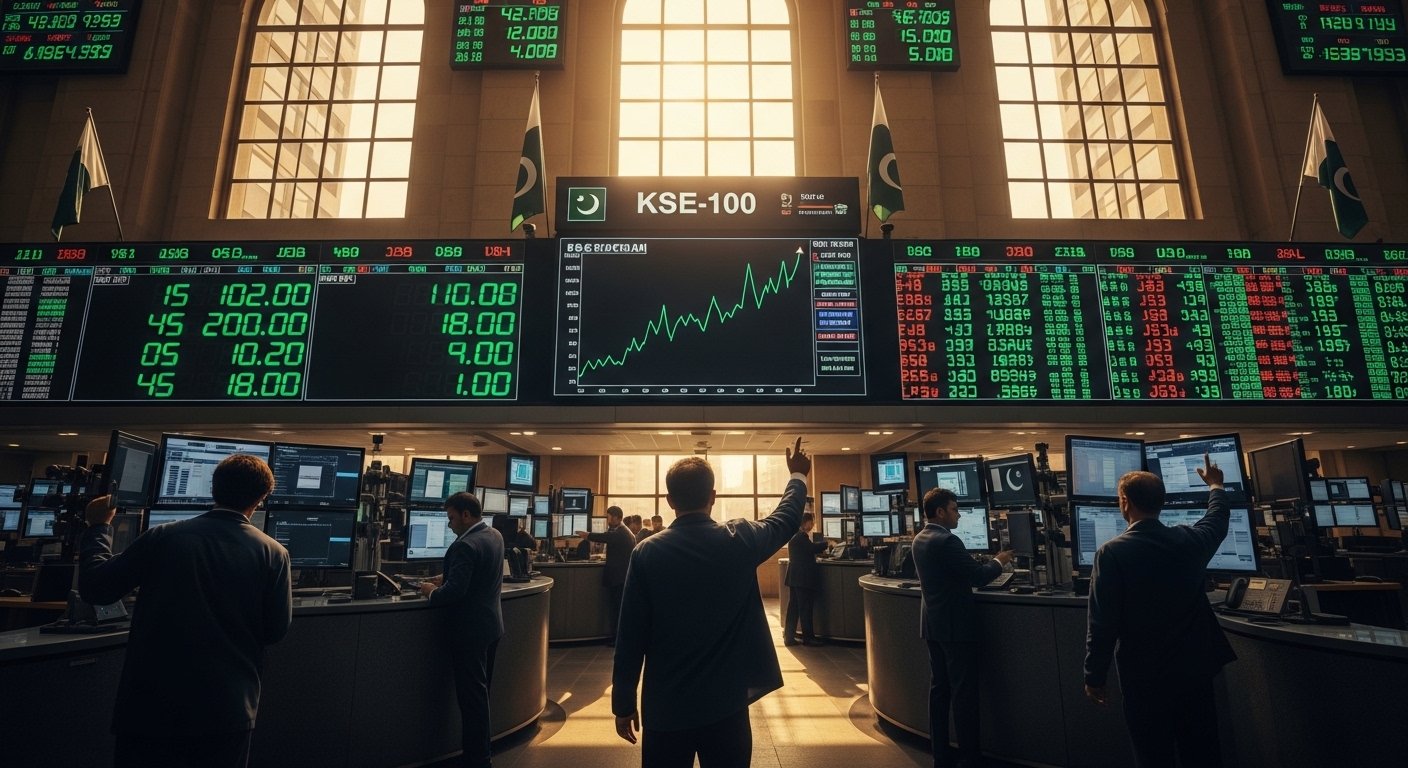
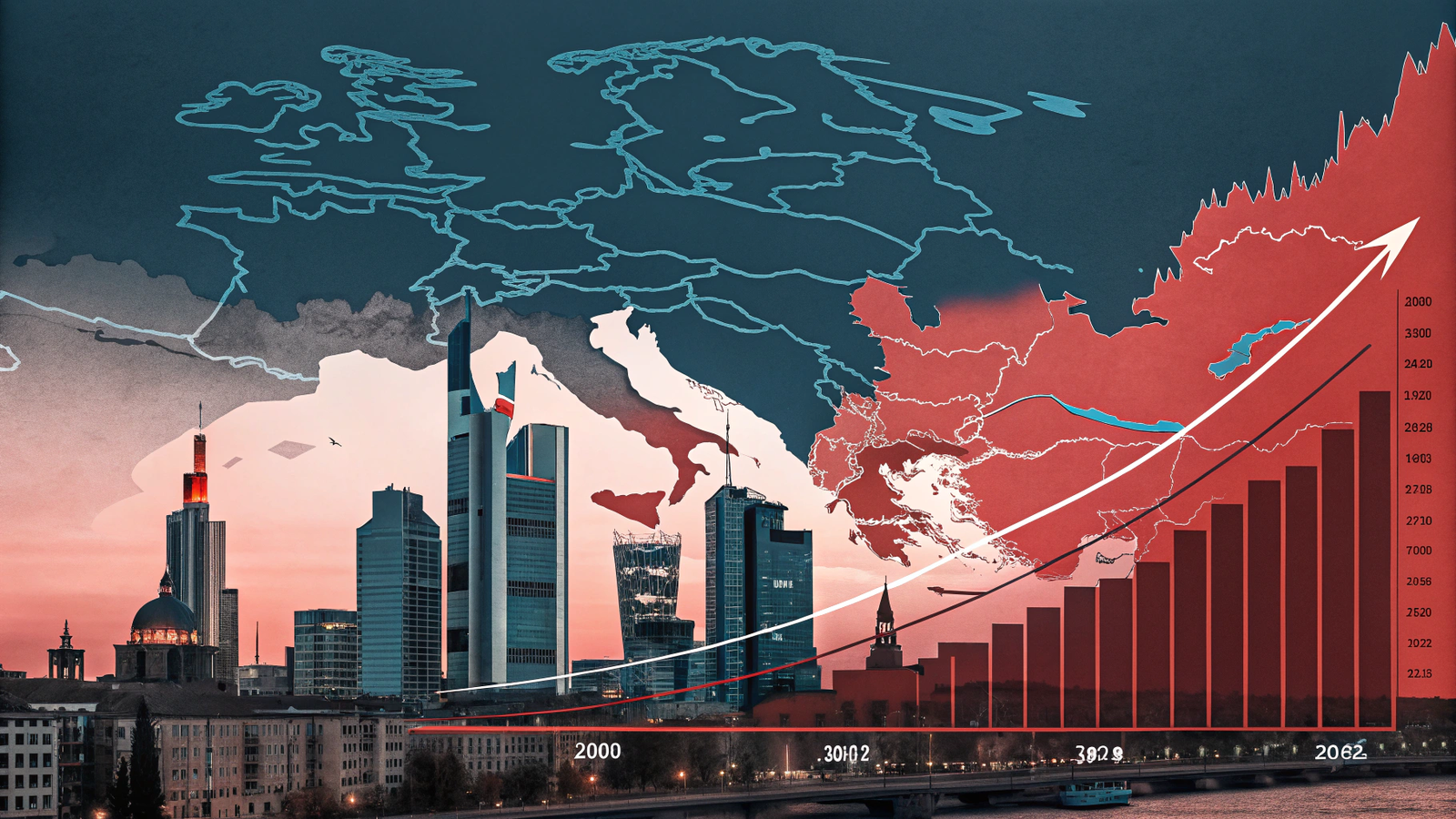
European Bank CDS Spike 2026 has already started reshaping global credit markets – with European bank CDS levels surging to 69 basis points in March 2026 as Gulf War fears grip financial markets. For investors, businesses, and economies tied to global trade – including Pakistan – this is not just a short‑term shock, but a serious structural risk developing in real time.
European Bank CDS levels surged dramatically on March 13, 2026, registering one of the most serious single‑day stress readings in European financial markets in over a year. The trigger was not a domestic banking scandal or a policy error. It was war in the Persian Gulf.
Escalating fears of a prolonged Gulf conflict sent shockwaves through European credit markets, pushing Credit Default Swap (CDS) spreads on major European banks to levels not seen since the October 2024 banking scare.
For investors, businesses, and economies tied to global trade – including Pakistan – the implications are immediate, measurable, and serious.
This article explains:
- What has happened in European bank CDS markets,
- Which banks are most exposed to the Gulf war,
- How war translates into bank balance‑sheet stress,
- What this means for Pakistani investors, businesses, and banks,
- And what you should do right now.
What Are Credit Default Swaps – And Why Are They Rising?
A Credit Default Swap (CDS) functions like financial insurance. When an investor buys CDS protection on a bank, they pay a premium (in basis points) to hedge against the risk that the bank defaults on its debt obligations.
When CDS spreads rise, it means protection is getting more expensive – and fear is increasing.
The benchmark for European bank credit risk is the iTraxx Europe Senior Financial index. On March 13, 2026, this index rose 2 basis points to 69 basis points – its highest level since October 2024.
Before Gulf tensions escalated, it was trading at 55 basis points. That’s a 14‑basis‑point, 25% increase in perceived credit risk across the entire European banking sector in just a few days.
Subordinated debt spreads widened even more. The iTraxx Subordinated Financials index jumped from 82 to 87 basis points. Investors are not just nervous – they are actively selling European bank bonds and moving into safer assets.
How Serious Is 69 Basis Points? Historical Context
To understand 69 basis points, you need historical context.
- 2008 Lehman collapse: iTraxx Financials spiked to 250 basis points.
- 2011 Euro sovereign‑debt crisis: reached 180 basis points.
- 2023 Silicon Valley Bank crisis: jumped to 120 basis points.
At 69 basis points, today’s figure is well below those crisis peaks. But analysts stress that this is an early‑stage reading. A move from 55 to 69 in a week shows rapid, worrying acceleration — and markets expect the stress to persist or intensify as the Gulf war evolves.
Swissquote analyst Ipek Ozkardeskaya said spreads will remain elevated until the war reaches a clear resolution.
Which European Banks Are Most Exposed?
Not all European banks are equally at risk. Exposure depends on:
- Loan‑book composition,
- Trade‑finance relationships,
- Geographic concentration of corporate clients.
Individual CDS movements show which banks are most stressed.
- UniCredit (Italy): CDS at 98 basis points, up 7 bps.
- About 18% of its loan book is concentrated in Turkey and Gulf markets.
- Deutsche Bank: CDS widened from 87 to 92 basis points.
- Heavy exposure to Germany’s chemical and automotive sectors, highly sensitive to oil prices above $100/barrel.
- Barclays: Widened from 79 to 85 basis points.
- Major exposure to shipping finance and energy trading, hit by tanker disruptions and route closures.
- ING (Netherlands): CDS at 82 basis points due to Middle East trade‑finance operations.
- Commerzbank: At 88 basis points, facing risk via German SME exporters already reporting order collapses.
French banks like BNP Paribas and Crédit Agricole show only 3–4‑bps widening, thanks to more diversified loan books and less direct Gulf exposure.
The Safest European Banks Right Now
Some banks are showing remarkable resilience.
- UBS (Switzerland): CDS moved only 1 basis point to 52 basis points.
- Wealth‑management‑driven fee income is less exposed to corporate‑loan losses.
- Nordea (Sweden): CDS at 58 basis points, up 1 bp.
- Mostly domestic retail‑focused, with little exposure to energy‑intensive sectors or Gulf trade.
- DNB (Norway): CDS has barely moved.
- Norway is an oil‑producing nation, so higher crude prices partly hedge the shock hitting other European lenders.
How War Becomes a Bank Crisis: The Three‑Phase Transmission
The mechanism is not vague contagion – it’s clear, measurable, and three‑phase.
The Energy Shock
Oil locked above $103/barrel hits European corporates hard.
- Refiners lose their $15/barrel arbitrage.
- German chemical giants like BASF and Evonik face ~28% higher gas costs, cutting EBITDA by 22%+.
- Airlines burn cash at speeds their liquidity buffers were not built for.
This phase is already happening.
Corporate Defaults
As energy costs crush profits and cash flow, companies begin missing payments.
- Shipping firms like Maersk and Hapag‑Lloyd face 90‑day payment delays as tanker charter rates collapse 65%.
- Airlines burn through cash at ~$2 billion per month.
- Steel plants idle furnaces when production becomes uneconomical.
When these big borrowers default, the banks holding their loans suffer direct losses.
Bank Balance‑Sheet Crisis
Models project 15% more non‑performing loans (NPLs) within 90 days of sustained conflict.
- Depositors flee to German Bunds and US Treasuries.
- As deposits leave and loan losses rise, Tier 1 capital erodes by 8–12%.
- Regulators may be forced to order recapitalisation.
Stress‑Test Results: Which Banks Could Breach Capital Requirements?
Hypothetical war‑scenario stress tests are alarming.
- UniCredit:
- CET1: 13.2% → 7.8%
- Below regulatory minimum.
- Deutsche Bank:
- CET1: 12.8% → 8.1%
- Also below minimum.
- Barclays:
- CET1: 12.1% → 7.9%
- Potential breach.
BNP Paribas and ING maintain enough buffers:
- BNP: 9.2% CET1 after stress.
- ING: 9.5% CET1.
In a worst‑case 6‑month scenario, total European bank loan losses could hit €450 billion.
Emergency ECB recapitalisation of ~€180 billion might be required.
Sovereign Spillover: Italy and Germany at Risk
Bank stress is spilling into sovereign bond markets.
- Italy:
- 10‑year bond spread over German Bunds widened from 187 to 214 bps.
- ECB is believed to watch around 250 bps as a soft intervention line.
- With UniCredit potentially breaching capital requirements, markets are eyeing Q2 2026 for possible bailout talks.
- Germany:
- Its Mittelstand (mid‑sized exporters) is highly exposed to energy‑price shocks.
- If many of them default, regional banks could face a 2008‑style bust.
Impact on Pakistan’s Banking Sector
Pakistan’s financial system is not insulated. Three major banks face direct Gulf exposure.
- HBL:
- $2.8 billion in Saudi/UAE corporate loans (12% of total book).
- Loan‑loss provisions expected to rise 12%.
- MCB:
- $1.4 billion Gulf shipping exposure (8% of total).
- NPL forecasts revised up 18%.
- ABL:
- $900 million tanker‑finance exposure (15% of book).
- Potential 22% write‑down risk.
Meezan Bank stands out as the most resilient domestic player.
Its Shariah‑compliant, sukuk‑based model is less exposed to conventional credit‑market shocks.
The State Bank of Pakistan has already taken action:
- Rs3.5 trillion in open‑market liquidity injections.
- KIBOR cap at 18%.
- $2.1 billion in dollar sales to protect FX reserves.
What Pakistani Investors and Businesses Should Do Now
For investors:
- Equities:
- Meezan Bank is the strongest risk‑adjusted pick.
- Target: Rs35 vs ~Rs28 now (about 25% upside).
- Bank Alfalah: “Hold.”
- HBL and MCB: “Sell on any war‑related rally.”
- Meezan Bank is the strongest risk‑adjusted pick.
- Fixed income:
- Buy US Treasuries (3.8% yield) and German Bunds (hedged for currency risk).
- Sell European bank subordinated debt.
For businesses with Gulf exposure:
- Shipping costs on Gulf routes: +42–45%.
- CNG prices: ~Rs225 per cubic metre.
- Diesel: ~Rs325 per litre.
- Payment delays from Gulf clients: 60–90 days.
Recommended actions:
- Reserve diesel fuel for essentials.
- Convert more delivery vehicles to CNG.
- Require 50% advance payments from corporate clients.
- Build cash buffers to absorb international payment delays.
Where Global Capital Is Flowing
Global investors are in full risk‑off mode.
- US Treasuries: $450 billion in YTD inflows.
- Swiss franc: +12% vs euro.
- Gold: $2,850 per ounce.
- Bitcoin: $78,200, increasingly treated as a geopolitical hedge.
In Europe, capital markets are effectively frozen for banks:
- High‑yield issuance down 78% MoM.
- Bank equity offerings postponed.
- AT1 CoCo bond spreads >800 basis points — new issuance impossible.
Conclusion
European Bank CDS at 69 basis points is not yet 2008‑level crisis territory.
But the speed of the move, the breadth of banks affected, and the clear three‑phase transmission from Gulf war → corporate defaults → bank balance‑sheet stress make this a serious, ongoing risk.
- UniCredit and Deutsche Bank are the most vulnerable majors.
- Italy’s sovereign spread is nearing ECB intervention range.
- Germany’s Mittelstand faces structural vulnerability.
- In Pakistan, HBL, MCB, and ABL face real provisioning pressure through 2026.
- Meezan Bank remains the clearest safe harbour in the domestic sector.
Until the Gulf conflict reaches a political resolution, the risk premium will not disappear.
For assets, operations, and expectations, the smart posture remains firmly defensive.