Cancer survival rates rising is one of the most underreported healthcare stories of the past two decades. While headlines scream about overcrowded ERs, staffing shortages, and drug prices, oncology wards have quietly assembled a medical revolution: more people are surviving cancer than ever before. In the United States, the five‑year relative survival rate for all cancers combined has climbed from 49% in the 1970s to 70% by 2021, a historic jump driven by earlier detection and better treatment. Globally, cancer deaths are now falling by about 2.1% per year, reversing decades of relentless growth.
For patients, this means something very concrete: a diagnosis that once felt like a death sentence now often feels like a manageable chapter. Breast cancer survival has risen from about 85% in 2000 to over 90% today, with localized disease approaching 99% five‑year survival in high‑income countries. Prostate cancer sits near 97% five‑year survival, and childhood cancer as a whole now exceeds 85% survival in developed nations. These are not just abstract charts; they are parents walking their kids to school, grandparents at weddings, and workers contributing to the economy, all because cancer survival rates rising has changed the rules of the game.
Screening: catching cancer before it spreads
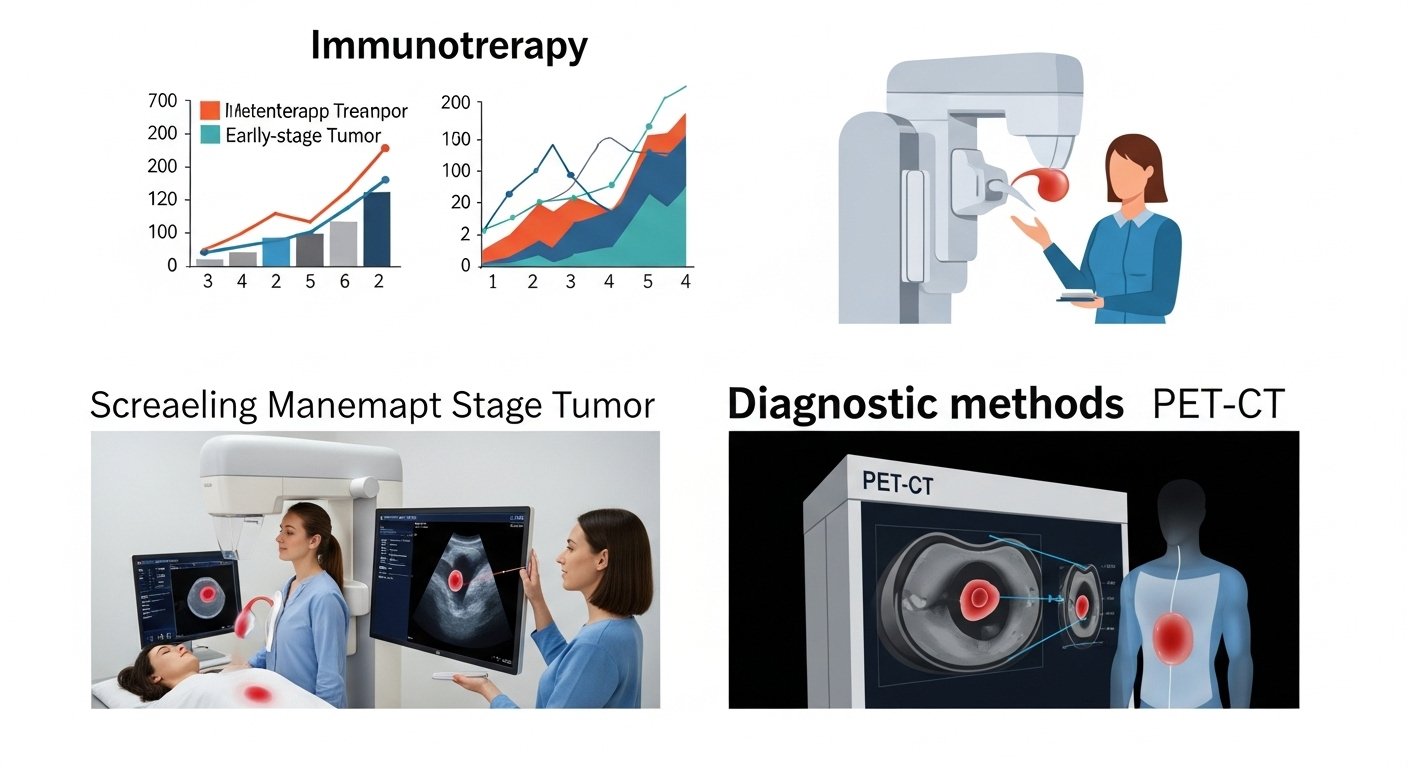
The single biggest driver behind cancer survival rates rising is screening – finding tumors early, when they are small and localized, rather than waiting for symptoms. The difference between Stage 1 and Stage 4 can be the difference between living a normal life and facing a terminal diagnosis. In colorectal cancer, for example, five‑year survival drops from about 90% at Stage 1 to around 14% at Stage 4, even though the tumor biology is essentially the same. The cancer has not changed; when it is found has changed.
Modern mammography, including 3D digital mammograms, detects significantly more breast cancers while reducing false positives, allowing more women to be treated at an early stage. Similarly, refined prostate‑specific antigen (PSA) testing combined with risk‑based models has cut unnecessary biopsies while still driving down prostate cancer deaths by more than 40% since 1990. Emerging “liquid biopsy” blood tests like the Galleri pan‑cancer screen promise to catch multiple cancer types at Stage 1 with high accuracy, turning a once‑yearly blood draw into a powerful early‑detection tool across the body.
Immunotherapy: the immune system as a cancer fighter
If screening changed when cancer is found, immunotherapy has changed what happens after it is found. Drugs called checkpoint inhibitors (like Keytruda and Opdivo) release the brakes that cancer cells use to hide from the immune system, giving T‑cells permission to attack tumors they once ignored. For metastatic melanoma, five‑year survival has climbed from roughly 5% in the chemotherapy era to over 35% with modern immunotherapy, in many ways rewriting the prognosis for a disease once considered almost uniformly fatal.
Even more dramatic are advances like CAR‑T cell therapy, where a patient’s own immune cells are genetically engineered to hunt down blood cancers and then infused back into the body. In pediatric leukemia, CAR‑T trials have yielded complete remission in over 80–90% of children, turning a once‑fatal disease into something resembling a chronic‑but‑treatable condition for many. New in‑vivo CAR‑T approaches now reduce manufacturing time and cost, bringing this life‑saving treatment within reach of more healthcare systems.
Precision oncology: no more “one‑size‑fits‑all”
Cancer survival rates rising also owes much to precision oncology, the shift from organ‑based chemotherapy to treatment tailored to a tumor’s DNA. In 2005, fewer than 15% of cancer patients matched to a targeted therapy; by 2026, that figure exceeds 90% for many tumor types. For HER2‑positive breast cancer, adding trastuzumab (Herceptin) to treatment raised five‑year survival from mid‑70s to over 85–90% in many series. In lung cancer driven by EGFR mutations, new drugs like osimertinib extend median survival to over three years, far beyond the 12–15 months typical a decade ago.
Precision oncology also means fewer brutal side effects for patients who do not benefit from certain drugs. Genetic profiling lets doctors avoid giving toxic chemotherapy to people whose biology suggests it will not work, instead matching them to drugs that hit their specific mutations. This precision, combined with liquid biopsy monitoring of circulating tumor DNA, allows oncologists to see treatment response in real time and adjust faster, preventing months of ineffective therapy.
AI and diagnostics: smarter, faster, more accurate detection
Another pillar behind cancer survival rates rising is artificial intelligence in imaging and pathology. Studies show that AI‑assisted lung‑nodule detection outperforms human radiologists alone, catching cancers that might otherwise be missed or delayed. Similarly, AI‑powered pathology tools can predict breast cancer recurrence and treatment response with over 90% accuracy, helping doctors choose the right intensity of therapy for each patient.
In middle‑income countries like Pakistan, AI‑enhanced mammography programs have already shown high sensitivity at lower cost than traditional screening, making early detection more accessible in resource‑limited settings. These tools do not replace doctors; they give them sharper eyes, reducing misdiagnoses and ensuring that patients who need urgent treatment get it sooner, directly supporting the global trend of cancer survival rates rising.
Developing‑world progress: catching up to rich countries
Despite the narrative that cancer progress is a rich‑country story, cancer survival rates rising is also visible in many developing and middle‑income countries. India’s Tata Memorial Centre has boosted five‑year breast cancer survival from around 60% to over 80% in selected cohorts, approaching Western benchmarks. In Egypt, childhood leukemia survival has climbed from low‑40s to nearly 80%, thanks to wider access to affordable generic versions of key drugs. Lagos University Teaching Hospital in Nigeria reports Stage 1 cervical cancer survival near 90%, far above the global average where late‑stage diagnosis is still common.
Much of this progress ties back to WHO’s Essential Medicines List and generic manufacturing that has slashed the price of lifesaving drugs. Imatinib for chronic myeloid leukemia once cost thousands per month but now runs under $30/month in many systems; trastuzumab for HER2‑positive breast cancer is now widely available in countries like Pakistan at a fraction of its former price. When patients can actually afford the treatments that work, cancer survival rates rising becomes a global rather than a Western‑only story.
Pakistan’s role in the global story
In Pakistan, the contrast between leading cancer centers and national averages illustrates both the potential and the access gap. Aga Khan University Hospital reports early‑stage breast cancer detection above 60%, well above the national average, and collaborates with international networks to adopt advanced screening and treatment protocols. Shaukat Khanum Memorial Cancer Hospital treats thousands of new cases per year and achieves survival rates for some cancers that rival or exceed those in the UK and Europe.
Nonetheless, the cancer survival rates rising story is not yet evenly shared. Many patients still present in Stage 3 or 4 because of limited awareness, weak screening infrastructure, and long diagnostic delays. Urban centers with PET‑CT and advanced labs see better outcomes than rural areas, where access to chemotherapy and radiotherapy can be scarce. For Pakistan, narrowing this gap means scaling proven tools — from population‑based screening, PET‑CT staging, and nurse‑navigator programs to cheaper generics and training more oncologists.
Remaining challenges: late diagnosis and access gaps
Even as cancer survival rates rising worldwide, two stubborn problems persist. First, late diagnosis still kills too many people. In low‑income countries, more than 70% of cancer patients present at Stage 3 or 4, where treatment is much less effective. In high‑income countries, the figure is around 30%, still far too high for a disease where early detection is so powerful. Systematic, equitable screening is the obvious solution — but it demands political will and sustained investment.
Second, access gaps between insured and uninsured, urban and rural, and rich and poor mean that advances in treatment do not reach everyone equally. Uninsured patients in systems without universal coverage often experience delays of weeks to months for scans and chemotherapy, with each week of delay linked to worse survival. Rural patients may face travel barriers and financial strain just to reach a tertiary cancer center. These structural issues, not the science, become the limiting factor on how much cancer survival rates rising can truly improve across the board.
What’s next? The coming decade of oncology
The past twenty years laid the foundation; the next decade promises even steeper gains in cancer survival rates rising. Vaccines targeting KRAS mutations, long considered “undruggable,” have already shown delayed progression in pancreatic cancer in early trials, a disease that still lingers near 10% five‑year survival. New antibody‑drug conjugates deliver chemotherapy more precisely to cancer cells, increasing potency while cutting widespread toxicity. FLASH radiation therapy delivers tumor‑killing doses three times faster than conventional radiotherapy, potentially sparing healthy tissue and improving quality of life.
Gene‑editing tools like CRISPR have produced near‑complete remission in animal models of aggressive blood cancers, and lab‑grown “tumor organoids” can now predict a patient’s response to drugs with around 90% accuracy, before treatment even begins. These tools will need time to prove themselves in large human trials, but the direction is clear: the next wave of oncology will push cancer survival rates rising even higher, especially for cancers that have resisted previous therapies.
What patients and policymakers should do now
For individual patients, the data suggest a simple, powerful message: screening saves lives. A Stage 1 breast or colon cancer often has five‑year survival above 90%, while Stage 4 plunges into the teens. The difference is not always better drugs; it is finding the cancer earlier. Anyone eligible for recommended screening — whether mammograms, colonoscopies, or lung‑screening for high‑risk smokers — should treat it as seriously as a life‑saver, not a formality. Genetic testing for inherited mutations (like BRCA1/2 or Lynch syndrome) can also guide prevention and surveillance, cutting lifetime risk by up to 80% or more in some cases.
For policymakers, the economic case is straightforward. Every dollar invested in cancer screening generates more than $3 in treatment‑cost savings, and every dollar in research returns over $7 in economic value through longer, healthier lives. In Pakistan, scaling PET‑CT, expanding nurse‑navigator programs, and fast‑tracking generic approvals can help spread the gains already visible in elite centers to the broader population. As cancer survival rates rising continues, the real question is not whether progress is possible — it is whether societies will make it equitable and universal.
Conclusion: medicine is winning, but work remains
The story of cancer in 2026 is not one of unrelenting despair. It is one of measured, hard‑won optimism. Five‑year survival for all cancers has doubled since the 1970s; the most lethal cancers now offer meaningful chances of years, not just months. Children who once had almost no hope now routinely reach adulthood cancer‑free. The numbers behind cancer survival rates rising are real, visible, and directly tied to earlier detection, safer and more effective treatments, and smarter use of data and AI.
Still, the challenges of late diagnosis, unequal access, and resistant cancers like pancreatic and liver tumors remain formidable. The goal is not just to keep climbing the survival curve, but to make sure it rises for everyone, not just those who live in the right city or can afford the right insurance. For patients and families around the world, the steady upward trend of cancer survival rates rising offers a rare, data‑based source of hope in an otherwise turbulent healthcare landscape.