King Charles III’s state visit to the United States in 2026 is set to begin on April 27, when the monarch and Queen Camilla will arrive in Washington, D.C. The trip will include an address to a joint session of Congress, dinners at the White House, and ceremonial events in New York and a rural location, with a final stop in Bermuda.
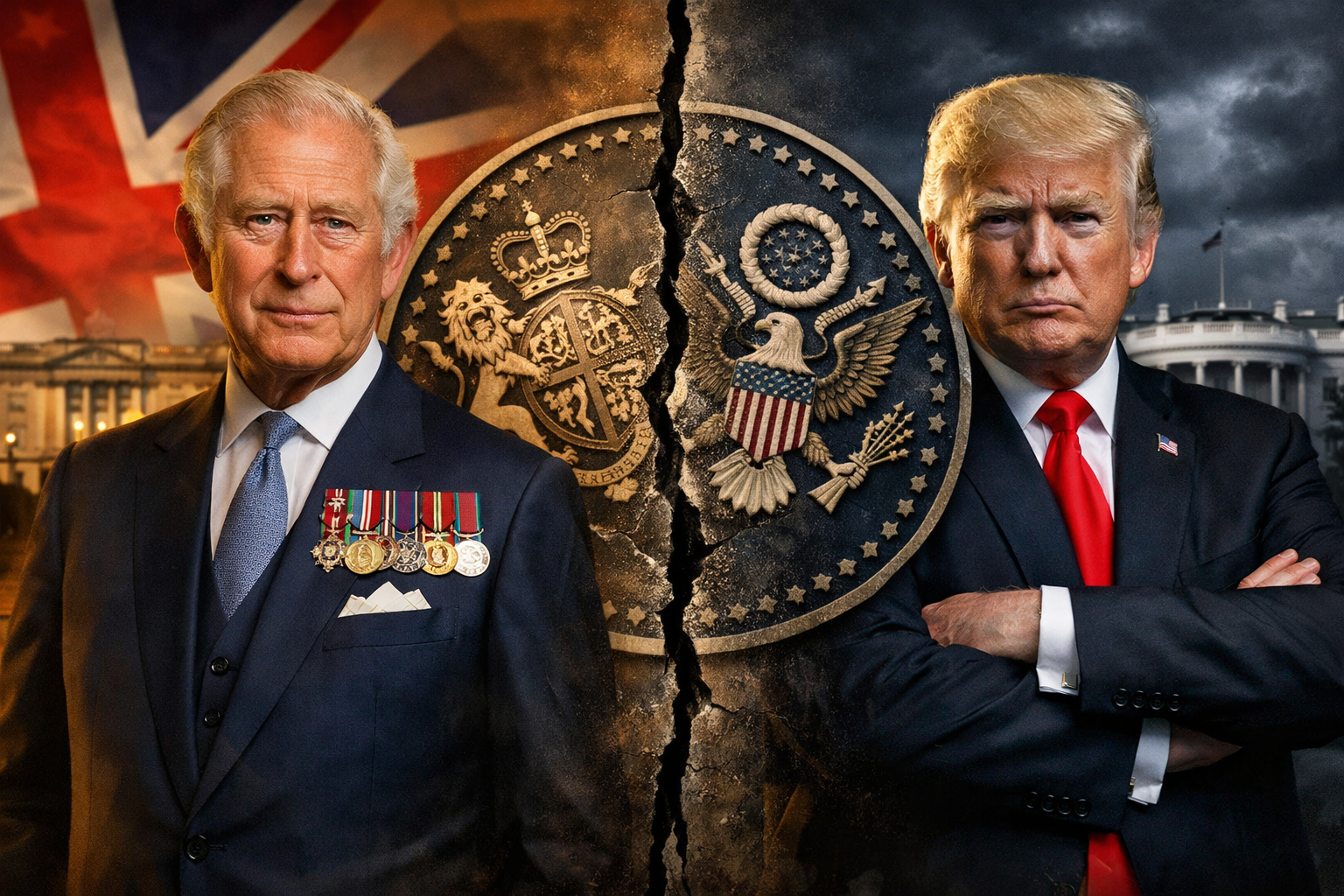
On paper, this is a historic moment: the first state visit to the U.S. by a British monarch in many years, timed to the 250th anniversary of American independence and framed as a celebration of the “special relationship” between London and Washington. In reality, it is unfolding in the shadow of a deepening diplomatic crisis, an Iran‑led war in the Middle East, and growing public anger in Britain, Canada, and the United States.
From “Toys” to Red Carpets – The Backlash Begins
The meaning of the King Charles US visit 2026 cannot be understood without the insults that came before it. In previous months, President Donald Trump repeatedly mocked the UK’s military strength, calling British aircraft carriers “toys” and claiming that British troops “avoided the frontline” in Afghanistan. He demanded that the UK allow American forces to use British bases to launch strikes on Iran and told Britain to “fight for yourselves” instead of expecting U.S. support.
British officials pushed back, and the two nations’ tensions grew. Prime Minister Keir Starmer initially refused to grant the full military access Trump demanded, prompting a fresh wave of public criticism from the White House. Against that backdrop, Buckingham Palace’s decision to send the King to Washington now feels like a high‑risk diplomatic move — and one that many in the UK, Canada, and the U.S. see as a reward for bullying rather than a sign of partnership.
Why the Public Feels Humiliated
Opposition to the King Charles US visit 2026 is not anti‑royal in nature; it is anti‑humiliation. Surveys show that 58% of British readers (Daily Mail / YouGov‑style polls) believe the visit should be canceled, while almost half of Canadians feel abandoned by a monarch who is supposed to be their head of state yet stands beside the leader who has called Canada the “51st state.”
Critics argue that Trump has:
- Insulted the Royal Navy and British military,
- Threatened to abandon the UK in its time of need,
- Imposed tariffs on British goods, and
- Repeatedly threatened the sovereignty of Canada.
Yet the King is still being sent on a three‑day state visit that will include photo‑ops, speeches, and a White House dinner with the same president. For many families, that image feels like a betrayal of national pride, not a diplomatic necessity.
The Monumental Cost of “Soft Power”
State visits are not just about handshakes; they are expensive security operations that fall on taxpayers. When Trump visited the UK in September 2025, Thames Valley Police spent $1.3 million securing Windsor Castle, and local authorities are still fighting for full reimbursement from the UK Home Office.
Now, another massive security operation is being prepared for the King Charles US visit 2026, with additional costs for police, intelligence, and logistics in three or four cities. The optics are clear: the UK is paying millions to protect an American president who has insulted the country, while the King is sent to the White House for a tightly scripted show of unity. For many Britons, the cost is not just financial — it is emotional and political.
The Diplomatic Tightrope with the United States
For American families, the King Charles US visit 2026 is being sold as a celebration of 250 years of independence and the enduring alliance between the two nations. U.S. lawmakers have framed the King’s address to Congress as a chance to “reaffirm the alliance” at a pivotal moment in history.
But the reality is more complex. The U.S. is deeply engaged in a war with Iran, relying on British support without always offering clear guarantees in return. During the visit, Americans will be watching to see:
- Whether the King uses his speech to gently challenge Trump’s rhetoric,
- Whether the administration presses the UK for deeper military involvement,
- And whether the imagery of the two leaders standing side‑by‑side helps calm the alliance or deepens the sense of imbalance.
The King’s presence can make the U.S. look powerful and united from one angle — but from another, it can look like Washington using royal pageantry to cover up diplomatic pressure.
A Divided Britain Reacts
In the UK, families are watching the King Charles US visit 2026 with a mix of embarrassment, anger, and resignation. The criticism is not directed mainly at the King, but at the government that chose to proceed with the trip while Trump’s relationship with the UK is at its worst in decades.
Political leaders, including Sir Ed Davey, leader of the Liberal Democrats, have called the visit a “humiliation,” arguing that sending the monarch to Washington after the president dismissed the Royal Navy as “toys” sends the wrong message. Many ordinary Britons echo that view, especially in communities that feel overlooked in global politics but will still pay for the security costs.
The debate is not just about one trip; it is about what the UK wants to signal to the world about its relationship with the United States — and at what price.
Canada’s Sovereignty and the King’s Symbolism
For Canadians, the King Charles US visit 2026 lands even harder. The King is not a foreign guest; he is Canada’s head of state, represented locally by the Governor General and appearing on the country’s currency. When he stands beside Donald Trump, he is implicitly representing millions of Canadians who fear being treated as a “51st state.”
Trump has threatened to annex parts of Canada, launched trade wars targeting Canadian industries, and used degrading language about the country in public remarks. Against that backdrop, the King’s visit to Washington looks less like diplomacy and more like normalization of behavior that many see as unacceptable.
Some Canadians hoped that the King’s earlier visit to Ottawa, where he opened the Canadian parliament with a carefully worded script, was a sign of moral support. But the King Charles US visit 2026 risks undermining that message, turning the monarch into a symbol of compromise instead of protection.
Expert Analysis – A Diplomatic Misstep?
From a diplomatic standpoint, the King Charles US visit 2026 is deeply risky, not rewarding. The timing is poor: the West is at war with Iran, the UK and US are publicly at odds, and Trump has already damaged the reputation of the “special relationship.” Sending the King now does not leverage royal soft power; it exposes the King’s vulnerability to political pressure.
State visits are usually deployed to repair ties, not to paper over ongoing conflict. When the UK sends the King to the White House while Trump is insulting the country and threatening its allies, it sends a message that no behavior is serious enough to cancel a ritual visit. For many observers, that is less diplomacy and more royal appeasement.
What Your Family Can Do – Practical Preparation Steps
You cannot control geopolitics, but you can reduce the real‑world impact of the instability around the King Charles US visit 2026. For families in the US, UK, and Canada, here are seven practical steps:
- Review your emergency savings
Political tension often leads to economic uncertainty. Aim for 3–6 months of basic expenses in a liquid emergency fund. - Check passport validity and travel plans
Ensure every family member’s passport has at least six months of validity. If you have upcoming trips between the US, UK, or Canada, monitor travel‑advisory channels. - Review your investments
Speak with a financial advisor about whether your portfolio is too reliant on transatlantic markets. Consider diversifying across regions. - Limit doomscrolling, not information
Set specific times to read news from reputable, balanced sources. Avoid spending hours in reactive social‑media debates. - Talk to your children in an age‑appropriate way
Focus on the fact that the family’s safety and routines are more important than far‑away speeches. - Engage with local representatives
A short phone call or email to your MP, Congress member, or senator can have more impact than a thousand social‑media comments. - Strengthen local networks
In times of crisis, your neighbors, relatives, and local community matter more than any royal handshake.
Royal Symbolism vs. Family Reality
On April 27, 2026, the King Charles US visit 2026 will begin. The King will walk into the White House, address Congress, and appear in global headlines. The images will be polished, the speeches will be prepared, and the world will watch carefully.
But for millions of families in the UK, US, and Canada, the real story is not about ceremonies — it is about inflation, security, trade, and sovereignty. The King’s visit may ease diplomatic tensions or deepen them; only time will tell. What is certain is that the safety, stability, and resilience of your family will not come from one photo‑op.
They will come from your choices: how you save, how you prepare, how you vote, and how you stay grounded in the face of noise and spectacle.