
LIVE
Wednesday, Mar 18, 2026
24/7 News

Social Media Addiction Is Real – A Jury Just Proved It and Your Children May Be Next

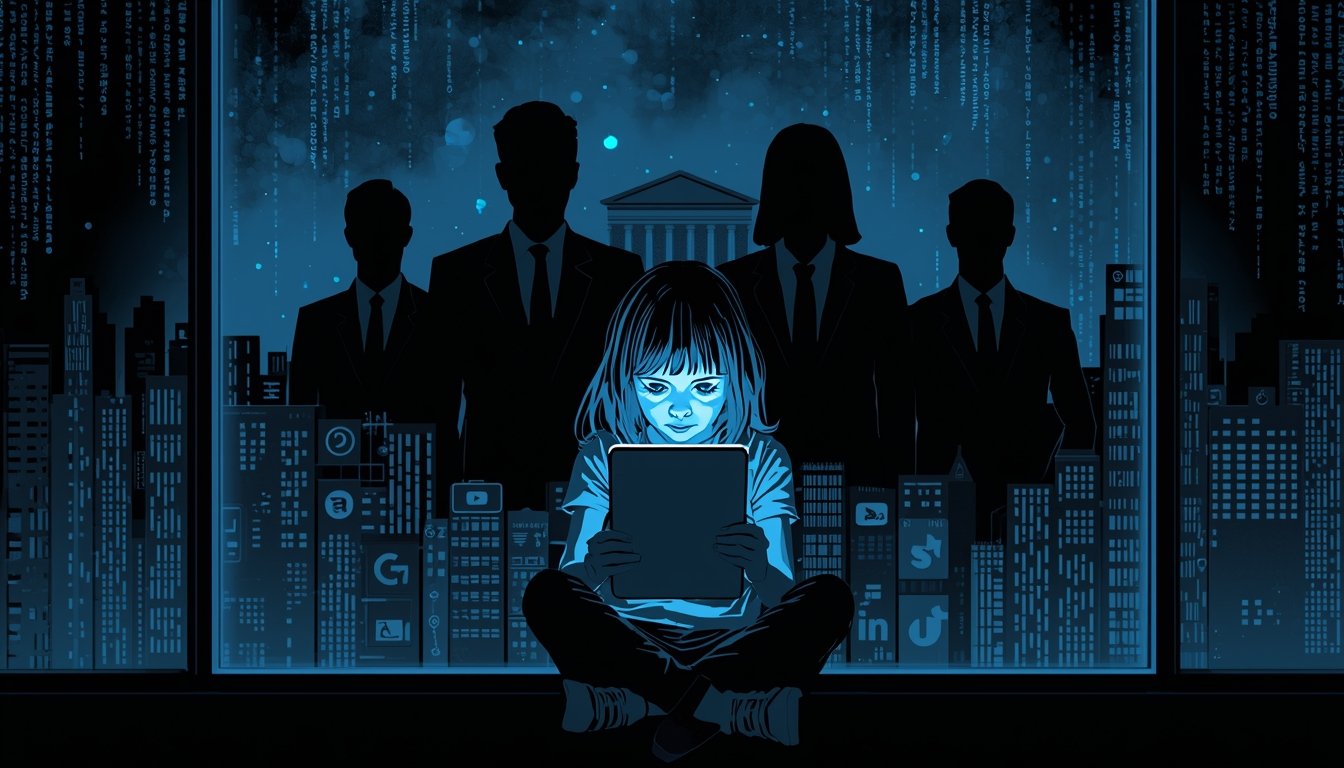
She was six years old when she first opened YouTube.

By the time Kaley finished elementary school, she had posted 284 videos online. She was spending up to 16 hours a day on Instagram and YouTube. She stopped talking to her family. She developed severe anxiety, depression, and body dysmorphia. She began having thoughts of suicide – at ten years old.

Kaley is now twenty. And this week, a jury of twelve ordinary Americans looked at everything Meta and YouTube did to her – and said: guilty.

A California jury found that Meta and Google were to blame for the depression and anxiety of a woman who compulsively used social media as a small child, awarding her $6 million in a rare verdict holding Silicon Valley accountable for its role in fueling a youth mental health crisis.

Social media addiction children 2026 has officially become a legal reality. Not a theory. Not a concern. A jury-proven fact.

And if you have a child who uses Instagram, YouTube, TikTok, or any other social media platform – this verdict is the most important thing you will read today.

What Just Happened in That Los Angeles Courtroom

Most Americans did not hear about this trial while it was happening. The seven-week courtroom battle between one young woman and two of the world’s most powerful companies was buried under Iran war headlines, gas price updates, and March Madness scores.

But what happened inside that Los Angeles courtroom over the past seven weeks may change the internet – and your child’s life – more than any of those other stories.

The jury awarded $3 million in compensatory damages and $3 million in punitive damages to the lead plaintiff in the case, a woman named Kaley. She alleged that using YouTube and Instagram from a young age led to addictive use of the platforms and contributed to her mental health problems, including depression, body dysmorphia and suicidal thoughts.

The jury did not just decide that Meta and YouTube were careless. They decided something far more serious.

Jurors ruled that Meta and YouTube were negligent in designing and operating their platforms, factors that resulted in harm to the plaintiff. The jurors also found that the companies were aware that their platforms could have adverse effects on minors but failed to adequately warn users.

They knew. They knew their platforms were harming children. They knew, and they did nothing. That is what twelve American jurors decided after forty-four hours of deliberation.

Jurors also decided the companies acted with “malice, oppression or fraud,” accounting for the $3 million award in punitive damages.

Malice. Oppression. Fraud. Against a child.

The Internal Documents That Shocked the Jury

Here is where this story gets truly disturbing – because the most damaging evidence in this trial did not come from Kaley’s lawyers. It came from Meta and YouTube themselves.

Lawyers for KGM showed the jury internal documents from Meta in which CEO Mark Zuckerberg and other executives described the company’s efforts to attract and keep kids and teens on its platforms. One document said: “If we wanna win big with teens, we must bring them in as tweens.”

Read that again. The CEO of the company that owns Instagram – the platform that Kaley started using at age nine – wrote that to win with teenagers, you need to hook them when they are even younger. Tweens. Children aged eight, nine, ten years old.

Another internal memo showed that 11-year-olds were four times as likely to keep coming back to Instagram, compared with competing apps, despite the platform requiring users to be at least 13 years old.

The platform requires users to be thirteen. The company’s own data showed that eleven-year-olds were its most loyal, most addicted users. And they did not use that data to protect children. They used it to design a more addictive product.

One document, recently discussed during a hearing in a federal California case, included a 2016 email from Mark Zuckerberg about Facebook’s live videos feature. In the email, Zuckerberg wrote the company would “need to be very good about not notifying parents or teachers” about teens’ videos.

Not notifying parents. The man who built the platforms your children use every day wrote in an email that he needed to make sure parents did not find out what their kids were doing on his platform.

I think many parents reading this right now are feeling something shift inside them. That feeling is called betrayal – and it is completely justified.

The $375 Million Verdict Nobody Talked About – Until Now

The Los Angeles trial was not even the biggest Meta loss this week. One day before the Kaley verdict, something even more shocking happened in New Mexico – and most Americans missed it entirely.

Wednesday’s decision comes one day after a New Mexico jury found Meta liable for violating the state’s consumer protection laws and failing to protect children from sexual predators. The decision is a crucial moment of accountability for families and advocates who for years have called for more social media guardrails.

Jurors found there had been thousands of violations carrying a penalty of $5,000 each, counting separately towards a penalty of $375 million.

Three hundred and seventy-five million dollars. For knowingly failing to protect children from sexual predators on a platform that children used every day.

“For years, social media companies have profited from targeting children while concealing their addictive and dangerous design features. Today’s verdict is a referendum from a jury, to an entire industry that accountability has arrived,” co-lead counsel for Kaley said in a joint statement.

Accountability has arrived. Two verdicts. Two states. Two juries. And thousands more cases waiting in courts across America right now.

Kaley’s Story – The One That Changed Everything

Many people don’t realize that behind every landmark legal verdict, there is a real human being who chose to stand up and tell their truth in public. Kaley did that – and what she described in that Los Angeles courtroom should be required reading for every parent in America.

KGM testified in February, saying her early use of social media triggered her addiction to the technology and exacerbated depression and suicidal thoughts. She said she had developed body dysmorphia – a clinical condition diagnosed by doctors – as a result of her social media use.

The plaintiff, known by her initials KGM, testified at the trial that she spent up to 16 hours a day on social media platforms, specifically Meta platforms and Google’s YouTube, as a child and that it exacerbated mental health struggles.

Sixteen hours a day. As a child. That is every waking hour outside of school sleep. That is a child who has been completely consumed by a product that a company designed – intentionally, knowingly – to be impossible to put down.

She said: “I stopped engaging with family because I was spending all my time on social media.” She added that she began to suffer anxiety and depression at the age of 10 – and was later diagnosed with both.

She stopped engaging with her family at ten years old. Not because of trauma. Not because of a difficult home life – though Meta tried to blame that. But because an algorithm designed in a Silicon Valley office building was more engaging than her own parents.

How many children in your family are in the same situation right now?

This Is Not One Case – It Is 2,000 Cases and Counting

The outcome of this case could influence thousands of other lawsuits, including from state attorneys general, school districts and other plaintiffs, alleging harm by social media companies. The litigation has drawn comparisons to the legal crusade in the 1990s against Big Tobacco, which forced the industry to stop targeting minors with advertising.

Big Tobacco. That comparison deserves a moment of attention.

In the 1990s, the tobacco industry insisted for decades that cigarettes were not addictive – while their own internal research proved they were. They targeted teenagers. They buried the evidence. They kept selling.

Then the lawsuits came. And everything changed.

“I think the reason why they would be concerned, and I’ve seen this analogy with the tobacco lawsuits, is that once you have this type of verdict in one case, it just opens the floodgates for so many more,” legal experts said.

More than 40 state attorneys general have filed lawsuits against Meta, claiming it’s contributing to a mental health crisis among young people by deliberately designing Instagram and Facebook features that are addictive.

Forty state attorneys general. School districts across America. Thousands of individual families. The dam is breaking – and the flood of accountability that is coming for Meta and YouTube will be unlike anything Silicon Valley has ever faced.

What Meta and YouTube Said – And Why Their Words Ring Hollow

Both companies responded to the verdict with carefully worded statements that sound reasonable until you compare them to the internal documents their own executives wrote.

“We respectfully disagree with the verdict and will appeal,” a Meta spokesperson said. “Teen mental health is profoundly complex and cannot be linked to a single app.”

Teen mental health is profoundly complex. That is true. But the jury heard forty-four hours of evidence including Meta’s own internal documents and decided that Instagram was a substantial factor in causing Kaley’s harm. The company’s own memo said they needed to hook children as tweens. Their own data showed eleven-year-olds were their most addicted users. Their own CEO wrote that parents and teachers should not be notified about teen activity on the platform.

One juror told reporters after the verdict that Meta CEO Mark Zuckerberg’s testimony did not “sit well” with the jury.

It did not sit well with twelve ordinary Americans who listened carefully to everything Zuckerberg said and compared it to everything his own documents showed. That is what juries are for.

The Teen Mental Health Crisis – The Numbers Behind the Headlines

This verdict does not exist in a vacuum. It is the legal consequence of a mental health emergency that has been building in American children for over a decade – and that the data has been screaming about for years.

According to the American Psychological Association, rates of depression and anxiety among American teenagers have more than doubled since 2010 – the same period during which Instagram, YouTube Shorts, and TikTok became the central organizing experience of American adolescence.

The Surgeon General of the United States issued an advisory in 2023 warning that social media poses a “profound risk of harm” to children’s mental health. He called for warning labels on social media platforms – the same kind of warnings that appear on cigarette packages.

Emergency room visits for teenage girls with eating disorders increased by 42 percent between 2019 and 2022. Body dysmorphia — the exact condition Kaley described developing through Instagram has become one of the fastest-growing mental health diagnoses in American adolescents.

Could your child be next? Many parents are asking that question for the first time this week. Many of them already know the answer they just have not wanted to say it out loud.

What the Experts Are Warning Will Happen Next

Legal experts said the jury’s decision could have implications for thousands of other lawsuits, including from state attorneys general, school districts and other plaintiffs, alleging harm by social media companies.

Sarah Kreps, a professor and director of Cornell University’s Tech Policy Institute, said that the verdict could guide the resolution of “thousands” of other pending cases throughout the United States.

“It definitely could open the floodgates of litigation,” said Clay Calvert, a nonresident senior fellow of technology policy studies at the American Enterprise Institute. “It will certainly trigger more.”

The federal trial scheduled for this summer in California will hear consolidated claims from school districts and parents across the entire nation – making it potentially the largest social media accountability case in history.

What happens if Meta and YouTube lose that case? The financial consequences could be existential hundreds of billions of dollars in damages. But more importantly, the legal pressure could finally force these companies to redesign their products in ways that actually protect children rather than exploit them.

That is what happened with Big Tobacco. That is what could happen here.

Why American Parents Cannot Wait for the Courts to Fix This

Here is the uncomfortable truth that the excitement around this verdict cannot obscure: even if every lawsuit succeeds, even if Meta pays hundreds of billions in damages, the platforms will still be on your child’s phone tonight.

The legal process takes years. Appeals take years. Legislative change takes years. And your child’s brain is developing right now.

“For too many years, kids have suffered immeasurable harm from social media, while the owners of these tech companies have reaped billions in profits,” said John M. Bennett, Director of the California Initiative for Technology and Democracy, calling the tech industry’s business model “fundamentally exploitative, addicting young children in order to create lifelong consumers, no matter the cost to their health or the damage to their lives.”

Fundamentally exploitative. Addicting children. No matter the cost to their health.

While the courts deliver justice, parents need to act. Not tomorrow. Tonight.

What Congress Is – and Is Not – Doing

American lawmakers have been aware of the social media youth mental health crisis for years. Senate hearings have featured tearful testimony from parents of children who died by suicide after social media abuse. Mark Zuckerberg himself sat in front of Congress and apologized to those families.

And then almost nothing changed.

The Kids Online Safety Act has been debated in Congress for multiple sessions. As of March 2026, it has still not become law. The platforms spend hundreds of millions of dollars lobbying to prevent meaningful regulation – and that money has been spectacularly effective.

This is your money, in a way. When you buy products from advertisers on Instagram and YouTube, you are funding the companies’ lobbying operations. You are helping them fight the legislation that would protect your own children.

The verdict in Los Angeles may change the political calculation. When companies face potential billions in damages, they sometimes decide that regulated safety is cheaper than unlimited liability. That is what happened with tobacco. Congress may finally act – but families cannot afford to wait.

Media Coverage – Why You Almost Missed This Story

Here is something worth thinking about. This trial – the most significant legal reckoning for social media companies in American history – ran for seven weeks in a Los Angeles courtroom. The verdict came down on March 25, 2026.

How many Americans heard about it before today?

The Iran war dominates every cable news hour. Gas prices fill every business segment. March Madness occupies every sports broadcast. The social media addiction trial a case involving the mental health of every American child who uses a smartphone – was covered in dribs and drabs, buried in technology sections, treated as a niche story.

This is not a coincidence. Meta and Google are among the largest digital advertising platforms in the world. News organizations depend on digital advertising revenue. The financial incentives for deep, sustained coverage of a trial that damages those platforms are complicated.

SultanNews believes you deserve to know what is happening in that courtroom. Not because it generates outrage. Because it affects your child.

What You Can Do Right Now – 8 Actions for Every American Parent

One – Audit your child’s social media use today. Not in a confrontational way in a concerned, curious way. Ask what platforms they use. Ask how much time they spend. Ask how it makes them feel. Listen to the answers without judgment.

Two – Use screen time tools on every device. Every iPhone and Android device has built-in screen time monitoring. Set it up. Know how much time your child spends on each platform. The data will probably surprise you.

Three – Have an honest conversation about body image. The most consistent harm documented in this trial was body dysmorphia – the distorted perception of one’s own appearance driven by constant exposure to algorithmically curated “perfect” images. Talk to your children about how social media images are edited, filtered, and selected to be unrealistically attractive.

Four – Make bedrooms phone-free. Research consistently shows that social media use at night particularly Instagram – is among the most harmful patterns for teenage mental health. The phone charges in the kitchen. Not the bedroom. This single change has been shown to improve teen sleep quality and mental health measurably.

Five – Contact your Congressional representative. The Kids Online Safety Act needs to become law. Your representative’s contact information is available at congress.gov. Call. Email. Show up to a town hall. Tell them that the jury in Los Angeles just confirmed what parents have known for years and ask why Congress has still not acted.

Six – Support the families in these cases. The Social Media Victims Law Center represents thousands of American families whose children were harmed by social media addiction. Their work is creating the legal accountability that no regulation has achieved. Awareness and amplification are forms of support.

Seven – Share this article. Many parents in your community do not know about this verdict. They do not know what Meta’s internal documents revealed. They do not know that Zuckerberg wrote that the company needed to hook children as tweens. They have a right to know. Share this.

Eight – Trust your instincts. If something about your child’s relationship with social media feels wrong the mood changes after scrolling, the obsessive checking, the withdrawal when the phone is taken away trust that feeling. You are probably right.

Conclusion

“Today’s verdict is a historic moment – for Kaley and for the thousands of children and families who have been waiting for this day,” attorneys representing the plaintiff said in a statement after the verdict. “She showed extraordinary courage bringing this case and telling her story in open court.”

Kaley was six years old when YouTube entered her life. She was ten when depression entered her life. She is twenty now – and she stood in a courtroom and told her story to twelve strangers who listened, deliberated for forty-four hours, and said: you were wronged.

This verdict will not undo what happened to Kaley. It will not restore the childhood that Instagram and YouTube consumed. But it may – if enough families pay attention, if enough parents act, if enough lawmakers finally move – prevent what happened to her from happening to the next six-year-old who opens a social media app for the first time.

The warning signs have been there for years. A jury just confirmed them. The only question now is: what are we going to do about it?

Stay informed, stay prepared, and stay one step ahead with SultanNews – your trusted source for technology, health, politics and global news, updated 24 hours a day, 7 days a week.

Leave a Reply

Your email address will not be published. Required fields are marked *

News That Commands Truth — Without Filter

Independent journalism covering Pakistan and the world. Unfiltered reporting on politics, business, sports, and culture — delivered with clarity and purpose since 2024.

BREAKING LIVE EXCLUSIVE
f X in YT W
Contact Info
Email
info@sultannews.online
Editorial
editor@sultannews.online
Location
Karachi, Pakistan
Newsletter
© 2026 Sultan.News — All Rights Reserved. Karachi, Pakistan.