The driverless era did not arrive as a distant promise. It arrived as a live service on the Las Vegas Strip, where passengers can now hail a robotaxi from the standard Uber app and pay for a ride they never imagined taking. Uber Robotaxi Rollout 2026 is the moment when autonomous vehicles moved from controlled tests to a structured, global deployment, with Las Vegas as the first real‑world stage.
Uber Technologies has announced a multi‑city, multi‑partner strategy that will see Level 4 robotaxis operating in Las Vegas today, Zoox pods joining the network in summer 2026, and Wayve‑powered Nissan LEAF robotaxis launching in Tokyo before the end of 2026. At the heart of this move is a simple idea: Uber is not trying to beat every car company and AI startup. It is trying to become the platform through which the world experiences robotaxis.
For investors, cities, and even Pakistani tech firms, this shift changes how mobility, logistics, and digital platforms are valued. The economics of ride‑hailing are being rewritten, and Uber Robotaxi Rollout 2026 is the first clear chapter in that new story.
The Vegas Launch: Where It All Started
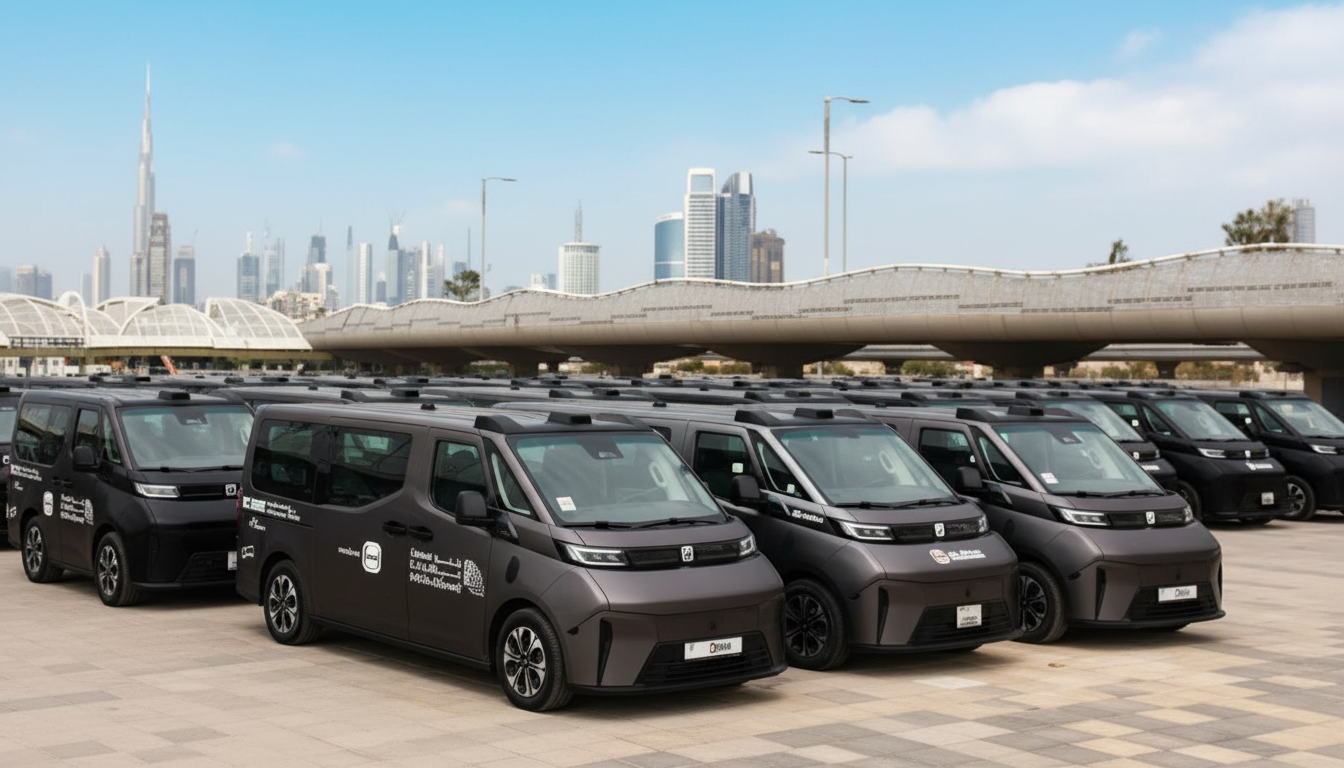
The first phase of Uber Robotaxi Rollout 2026 is already live in Las Vegas. Motional, a joint venture between Hyundai and Aptiv, has converted the Hyundai IONIQ 5 into a Level 4 autonomous vehicle capable of handling all driving tasks within a defined area without human intervention. These robotaxis are now operating on the Las Vegas Strip, picking up passengers from casinos, major hotels, and McCarran International Airport.
What makes this different from earlier test phases is that riders book these cars through the standard Uber app under UberX, Comfort, and EV categories. There is no separate sign‑up, no extra step, and no special app. For the user, the only difference between a robotaxi and a regular Uber is visible inside the car — there is no driver behind the wheel.
The initial fleet in Las Vegas starts with around 50 robotaxis, but Uber plans to scale that to 500 by the end of 2026. Hyundai has committed $1 billion in manufacturing support to ensure that hardware supply does not become a bottleneck, while the long‑term partnership signed in 2022 locks both companies into a shared roadmap for technology and commercial rollout.
Motional IONIQ 5: The Technology Inside
Motional’s IONIQ 5 relies on a multi‑sensor fusion approach to perception and decision‑making. LIDAR creates a high‑precision three‑dimensional map of the vehicle’s surroundings, allowing it to understand the position of other cars, pedestrians, and infrastructure in real time. Radar adds reliability in adverse weather, such as heavy rain or fog, where optical sensors can struggle. Camera systems handle object recognition, identifying pedestrians, cyclists, traffic signals, and lane markings with enough detail to guide the car’s path.
By combining these three sensor types, Motional avoids the weaknesses of any single technology. A camera‑only system might fail in low light, while LIDAR‑only setups can be blind to complex traffic patterns. Together, the sensors create a redundant perception layer that makes the car’s understanding of the environment far more robust.
From a safety standpoint, Motional reports 1.2 million autonomous miles driven, with a crash rate of 0.42 incidents per million miles, well below the 1.9 incidents per million miles typical for human drivers. Passenger satisfaction, measured on the Net Promoter Scale, has reached 94 percent, far above the benchmarks for traditional ride‑hailing services. This combination of safety and user experience gives Uber the confidence to treat Las Vegas not as a test, but as a real commercial launch.
Zoox: The Amazon‑Backed Pod That Changes Vehicle Design
While Motional’s IONIQ 5 is an evolution of existing car design, Zoox is a clean‑sheet rethink of what a passenger vehicle can be. Designed from the start as an autonomous platform, the Zoox pod has no steering wheel, no pedals, and no front or back. It is a bidirectional vehicle, capable of driving as efficiently in one direction as in the other, which simplifies route planning and reduces the need for complex turning maneuvers.
The absence of traditional controls is not just a design choice – it reflects the operating model Zoox is targeting. The pod is built for dense urban environments where trips are short, traffic is constant, and space is limited. With 360‑degree sensor coverage, the vehicle has no blind spots, allowing it to respond to changing conditions with far more flexibility than a conventional car. The real‑time decision‑making is supported by Amazon Web Services, which handles the complex calculations needed to interpret traffic patterns, optimize routing, and respond to unexpected events.
Zoox has already been operating on public roads in San Francisco since 2023, giving it a meaningful track record before integration with Uber’s network. Amazon’s financial backing ensures that capital constraints will not slow deployment, while Uber’s 150 million monthly active users provide a demand base that Zoox could never build independently. The Las Vegas launch in summer 2026 will act as a commercial proving ground for the Uber‑Zoox partnership, testing pricing, customer experience, and regulatory compliance. If successful, the Los Angeles rollout in mid‑2027 will open one of the largest urban markets to fully autonomous robotaxi operations.
Wayve and Nissan: Uber’s Tokyo Robotaxi Strategy
Tokyo is one of the most challenging environments for any new transportation technology. Its density, traffic complexity, and deeply embedded taxi culture have defeated many attempts to disrupt the local market. Uber’s approach is not to impose the same system used in American cities but to build a solution specifically tailored to Japanese conditions.
The partnership is built around Wayve, a British artificial intelligence company that has developed a mapless navigation system for autonomous vehicles. Most AV companies rely on highly detailed pre‑built maps of every road, which is slow to scale and brittle when conditions change. Wayve’s AI instead learns human‑like driving patterns dynamically, adapting to new environments in a way that is closer to how a human driver learns a city.
The vehicle platform is the Nissan LEAF, a mass‑production electric car that runs on Nissan’s existing manufacturing lines. This hardware‑agnostic AI stack allows Wayve to deploy its technology without requiring custom vehicle manufacturing. The combination of standard Nissan hardware and Wayve’s AI software creates a scalable, low‑cost entry point into Tokyo’s robotaxi market.
Uber will begin monitored operations in Tokyo in late 2026, starting with 100 vehicles and scaling to 1,000 by 2027. The service will integrate fully into the Uber Japan app, giving passengers a seamless experience similar to the one they already know in other cities. Japan’s Ministry of Land, Infrastructure, Transport and Tourism has already created a regulatory framework that supports commercial autonomous vehicle pilots, giving Uber the legal clarity it needs to operate safely and legally.
The Economics of Robotaxis: Rewriting Uber’s Profit Model
The shift from human‑driven cars to robotaxis is not just a technical upgrade – it is a profit‑engine rebuild. Under the current model, Uber earns roughly $0.80 in profit per mile, taking about 60 percent of the fare and passing the remaining 40 percent to the driver. In the autonomous model, the driver’s share effectively disappears. With no driver to pay, Uber’s platform take rate can rise to approximately 90 percent, and profit per mile increases to around $1.20.
Autonomous vehicles can also operate 24 hours a day, seven days a week, dramatically increasing their utilization compared to human drivers who work limited hours and face fatigue and labor‑law constraints. The combined effect of higher profit per mile, higher utilization, and larger fleets creates a powerful compounding effect. If the fleet size grows by ten times, utilization triples, and profit per mile rises by 50 percent, the total profit potential can be 36 times larger than the equivalent human‑driven operation.
The Las Vegas pilot already illustrates the numbers at a small scale. Fifty robotaxis completing 100 trips per day at an average fare of $25 would generate $125,000 in gross bookings per day. Uber’s typical 30 percent fee on that volume would produce $37,500 per day, or roughly $13.7 million per year from a single city. When analysts extend this model to 5 million robotaxis operating globally by 2030, the potential revenue reaches $300 billion annually, transforming Uber from a ridesharing company into one of the largest autonomous mobility platforms in history.
Wall Street has already reacted. Truist raised its price target to $108, highlighting Uber’s unmatched network of autonomous partners. Wedbush set a $115 target, emphasizing the significance of the Tokyo entry. Morgan Stanley, with an overweight rating and a $112 target, points to Uber’s scale advantage over regionally focused competitors. On the day of the announcement, Uber’s market capitalization rose by 8 percent to $150 billion, reflecting the market’s recognition that the autonomous shift is no longer theoretical but firmly part of the company’s growth plan.
Partnership Strategy: Why Uber Is Not Building Its Own Cars
One of the most important strategic choices in Uber Robotaxi Rollout 2026 is what Uber is not doing. After shutting down its ATG division and selling the technology to Aurora in 2020, Uber decided to pivot away from vertical integration and toward platform‑based partnerships. Instead of building its own self‑driving stack, Uber has created a technology‑agnostic network that sits above multiple AV technologies.
Today, Uber has more than 25 autonomous vehicle partnerships, including Waymo, Cruise, Motional, Zoox, and Wayve. This gives it a broad exposure to the entire sector, allowing it to benefit from every breakthrough without betting the entire company on a single approach. The risk of a single technology failing or being outpaced by a rival is therefore distributed across many partners, rather than concentrated in one proprietary system.
Each of those partners brings a different strength to the ecosystem. Waymo leads in safety and technical maturity, while Zoox offers a purpose‑built, passenger‑centric pod. Cruise is working on recovery and expansion in US cities, and Tesla’s Cybercab aims to deliver mass‑market affordability. Uber’s role is to connect those diverse technologies to a single global demand network. The 150 million monthly active users on Uber’s platform, combined with its global payment infrastructure and brand recognition, create a moat that no pure‑play autonomous vehicle company can replicate.
Regulatory Foundations: Where the Green Lights Have Appeared
Autonomous vehicles depend on more than technology – they also require clear regulatory approval. Uber’s rollout is therefore tightly linked to developments in its target markets.
In Nevada, the Department of Motor Vehicles has already authorized commercial Level 4 autonomous operations in Las Vegas, giving Motional the legal basis to run fully driverless rides in defined areas. In California, the DMV is processing Zoox’s application for expansion to Los Angeles, with approval expected in Q2 2026. In Japan, the Ministry of Land, Infrastructure, Transport and Tourism has created a pilot framework for autonomous vehicles in Tokyo, ensuring that Uber’s Wayve‑Nissan operations can begin under clear rules. In the UAE, Dubai’s Robotaxi Zone provides a dedicated testing and deployment area that supports Uber’s Careem subsidiary as it explores robotaxi operations in the Middle East.
By choosing markets with clear regulatory paths, Uber is building a track record of safe, compliant operations that can be used to justify entries into more complex jurisdictions later. Every city that approves a new phase of Uber Robotaxi Rollout 2026 adds to the credibility of the entire network.
Pakistan’s Position in the Robotaxi Revolution
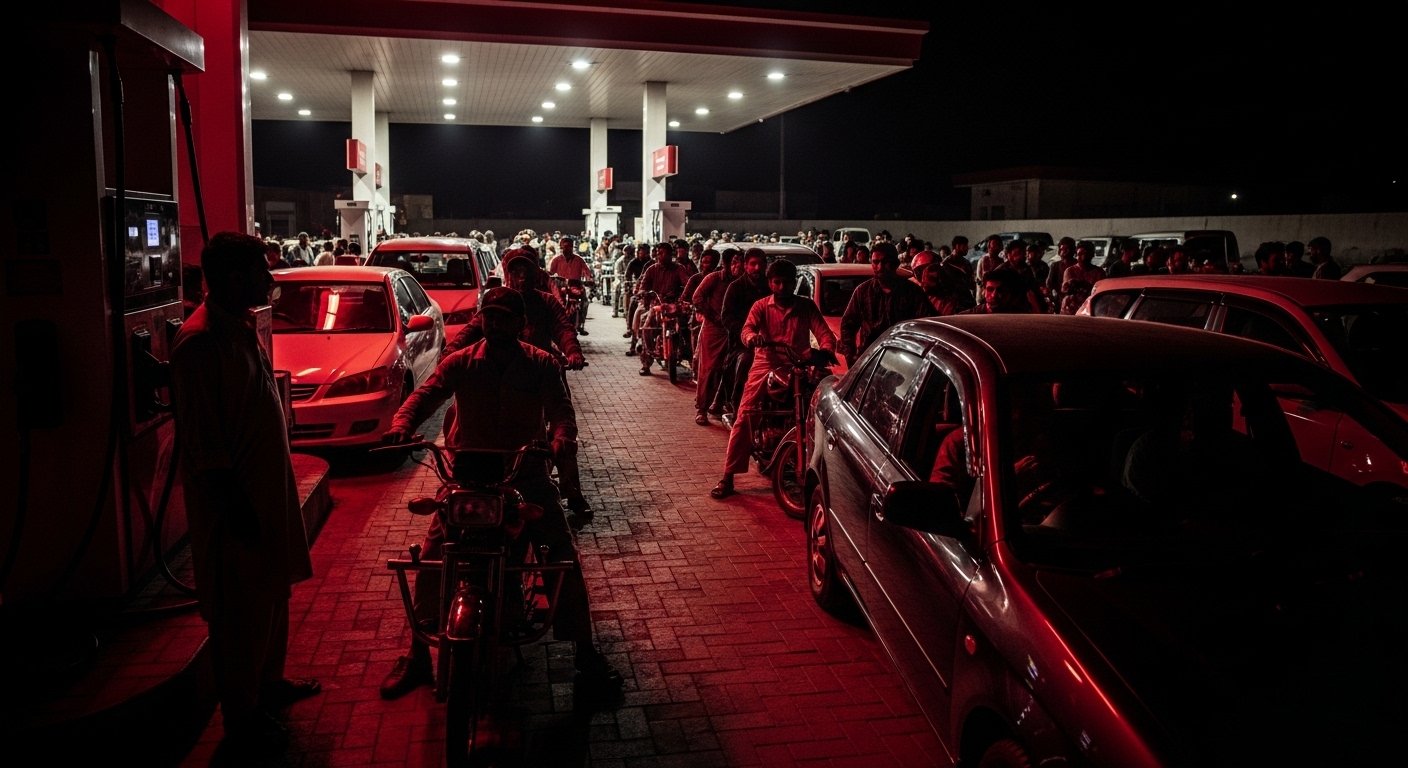
Pakistan’s direct adoption of robotaxis in 2026 is unlikely, largely due to well‑understood structural challenges. Karachi’s traffic complexity is far greater than that of Las Vegas, reflecting decades of organic growth without comprehensive road planning. The dominant form of last‑mile transport in many cities is the CNG motorcycle, which can move users at roughly Rs4 per kilometre, making a projected robotaxi fare of Rs15 per kilometre deeply uncompetitive for the average household.
Electric vehicle fleets also face a major hurdle: load‑shedding. With an average of around two hours of power cuts per day in many areas, the infrastructure for reliable charging is not yet in place. On top of that, neither federal nor provincial regulators have established a legal framework for autonomous vehicles, which means Uber and other companies cannot operate widespread robotaxi services in Pakistan under the current rules.
However, the indirect impact of Uber Robotaxi Rollout 2026 is already visible in the Pakistani market. Systems Limited, a homegrown software and IT services firm, gained 4 percent in share price following Uber’s announcement, as investors recognized the potential for contracts related to autonomous vehicle software, data analytics, and fleet management. NETSOL Technologies rose 3 percent on similar logic, given its position in fleet and logistics management systems. Uber’s Careem subsidiary, which operates across Pakistan and the Middle East, is expected to benefit from parent‑company technology acceleration in business delivery services.
Longer‑term opportunities for Pakistan include Bykea robotrickshaw pilots adapted for autonomous last‑mile delivery, Lahore–Islamabad motorway trials for autonomous trucks, and Careem partnerships with Chinese EV manufacturers such as BYD to develop localized robotaxi fleets. Even if Pakistan does not see full‑scale robotaxi operations in 2026, its software and logistics ecosystem can still play a meaningful role in the global autonomous vehicle revolution.
The Financial Trajectory: From $150 Billion to $1 Trillion
Wall Street is modeling a robotaxi‑driven revaluation of Uber’s long‑term value. In 2026, autonomous vehicle revenue is projected to reach $500 million as pilot programmes scale across Las Vegas, San Francisco, and early Tokyo operations. By 2027, with roughly ten cities in commercial operation, that figure is expected to rise to $4.2 billion. The 2028 estimate of $18 billion reflects expansion to about 50 markets. By 2030, the robotaxi segment alone is expected to generate $75 billion in annual revenue, accounting for roughly 70 percent of Uber’s total business.
This trajectory underpins what analysts are calling the trillion‑dollar valuation thesis – the idea that Uber’s combination of a global robotaxi network and its existing ride‑hailing operations could justify a $1 trillion market capitalization within this decade. At $150 billion today, that would represent a seven‑fold increase in value.
For investors, this means the window to position early is measured in months, not years. For Pakistani investors, companies like Systems Limited and NETSOL Technologies offer local‑market exposure to the broader autonomous vehicle theme, with potential upside tied to global AV spending and software demand.
Conclusion: The Driverless Era Has Already Arrived
The Uber Robotaxi Rollout 2026 is not a distant experiment. It is a live, multi‑city, multi‑partner deployment backed by billions of partner capital, regulatory approvals across three continents, and the largest on‑demand mobility network in history.
Las Vegas is live today. Zoox is arriving in summer 2026. Tokyo is launching in late 2026. Each milestone adds to Uber’s safety record, regulatory experience, and rider familiarity, which accelerates the next phase of deployment.
The economics are clear: 90 percent platform take rates, 24/7 utilisation, and a 36‑fold profit multiplier from scale will eventually make human‑driven ridesharing a legacy business. Uber has positioned itself not to resist this shift, but to lead it.
For investors, the timing is urgent. For businesses with logistics, last‑mile, or delivery exposure, the planning horizon for autonomous operations is no longer theoretical – it is operational. And for Pakistan’s technology sector, the global robotaxi revolution offers real, indirect commercial opportunities for companies that are willing to think ahead.