US and Israel attack Iran in what is now being called the “Gulf War 2026” – a conflict that started with a single, targeted strike and expanded into a multi‑front regional war stretching from the Strait of Hormuz to Lebanon, to the Pakistan–Afghanistan border.
The war is not just about missiles and drones – it is about oil prices, Gulf jobs, Pakistan’s fuel crisis, and whether ordinary people in the region will have enough to eat, fuel to drive, or safety to live. Behind the headlines of Khamenei’s death, Pentagon strategies, and UN casualty reports, millions of families are watching their savings, remittances, and children’s futures change almost overnight.
This article explores why the US and Israel attacked Iran, how the war unfolded, and how long it could realistically last – without the hype, just the facts.
Why the US and Israel attack Iran in the Gulf War 2026 can only be understood if you look beyond the first missile strike and the first casualty report. The war began with a decisive decision – the targeted killing of Iran’s Supreme Leader, Ali Khamenei, in his Tehran compound, followed by coordinated strikes on the IRGC (Iranian Revolutionary Guard Corps) command structure, missile bases, and intelligence‑related facilities across the country.
The operation, later named Operation Epic Fury by the US‑led coalition, was framed as a surgical blow to stop Iran from moving closer to a nuclear weapon and from expanding its missile‑driven dominance over the Gulf and the wider Middle East.
The underlying logic was simple: if Iran’s military leadership and nuclear‑related infrastructure were hit hard enough and fast enough, the regime would either collapse or be forced to negotiate on terms favorable to the US, Israel, and their Gulf allies. The war, however, did not stay surgical for long – it quickly escalated into a full‑scale regional conflict with consequences that stretch far beyond the battlefield.
The immediate trigger for the US and Israel attack Iran was the perception that Iran’s nuclear programme was nearing a critical point. Intelligence reports suggested that Iran had enriched uranium to 90%, putting it within weeks of weapons‑grade material.
At the same time, Iran’s missile stockpile, estimated at around 8,000 weapons before the war, included short‑range rockets aimed at Israel, Gulf cities, and US bases, as well as longer‑range systems that could threaten deeper regional targets. The US and Israel argued that if Iran was allowed to consolidate its capabilities further, the region would face a new nuclear‑armed player – a scenario that would fundamentally change the balance of power and potentially trigger a regional arms race.
The decision to strike Khamenei and his inner circle was not just about removing one man; it was about breaking the command chain that coordinated Iran’s military, nuclear, missile, and proxy operations across the region – from Lebanon’s Hezbollah, to groups in Iraq and Syria, to the Tehrik‑i‑Taliban Pakistan (TTP) operating along the Durand Line.
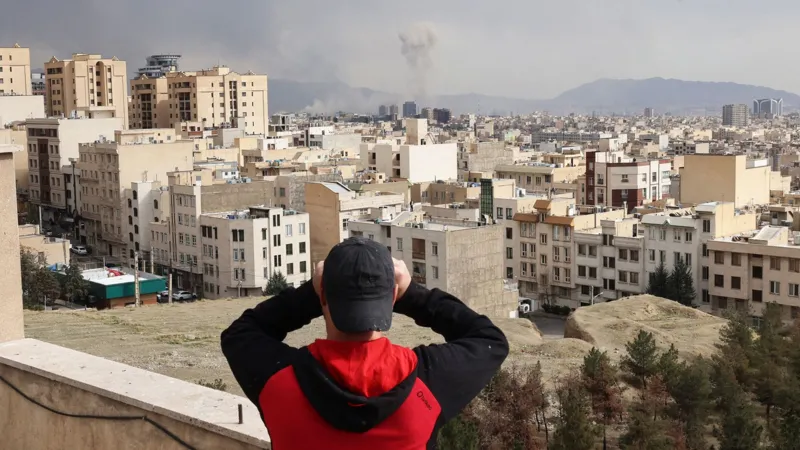
The first hours of the war were brutal and decisive. US and Israel attack Iran in a coordinated air and missile campaign that hit at least 130 targets across the country. The Supreme Leader was killed, along with several key IRGC generals, including the Defence Council secretary, Defence Minister, and IRGC ground forces commander.
The immediate casualty figures, reported by Iran’s Red Crescent, listed hundreds of dead, including dozens of civilians in strikes near military facilities and in one especially tragic case, a girls’ school in the southern Iranian town of Minab, where around 168 children were killed in a single missile strike that hit the school building during morning classes.
That incident alone shifted the war’s moral tone – it was no longer just a “clean” strike on leadership; it became a conflict where children, schools, homes, and cities were caught in the crossfire. Iran’s response was swift and wide‑ranging: within hours, Iranian missiles and drones were launched at Israel, the Gulf states, US bases, Cyprus, and even parts of Saudi Arabia, killing civilians and soldiers and signaling that this was no longer a limited operation but a full‑scale war.
For the US and Israel, the attack on Iran was also a message to the wider region and the world: the era of containment, deterrence, and limited sanctions was over. After years of diplomacy, sanctions, and proxy battles, the coalition decided that the only way to stop Iran’s military‑nuclear trajectory was through direct military action.
The hope was that the shock of losing its top leadership, combined with the destruction of key missile and infrastructure targets, would create internal pressure within Iran – leading to either regime change from below or at least a weaker, more pragmatic leadership that could be negotiated with. President Trump’s televised address to the Iranian people, urging them to “rise up and take their country back” after the military phase, encapsulated this theory of change.
The assumption was that once the IRGC and its hardline allies were weakened, the Iranian public – long frustrated by economic hardship, sanctions, and repression — would push for a new political direction. Whether that assumption would hold in the harsh reality of war would be tested in the days, weeks, and months that followed.
On the other side of the equation, Iran’s military and political establishment viewed the strike as an existential attack on the Islamic Republic itself. The killing of the Supreme Leader and the destruction of IRGC command nodes were not just blows to the regime’s military capacity — they were direct assaults on the religious and ideological legitimacy that had held the state together for decades.
Iran’s response was therefore not limited to tactical retaliation; it was a demonstration of Iran’s ability to hurt its enemies, even when its own infrastructure was under attack. Iranian missiles and drones struck Israeli government buildings, residential areas in and around Tel Aviv, and multiple military bases in the Gulf, including US installations in Kuwait, Bahrain, Qatar, UAE, and Jordan.
The attack on Akrotiri airbase in Cyprus, a British‑operated facility used by NATO and the US, signaled that no allied base in the region was safe. The war now had American blood on the ground, which ensured that the US would not pull back quickly, even if the costs mounted.
The war’s economic dimension quickly became as important as the military one. Iranian missiles and drones damaged key oil and gas infrastructure in the Gulf, including Saudi Arabia’s Ras Tanura refinery, one of the largest and most important oil‑processing hubs in the world, and Qatar’s Ras Laffan and Mesaieed LNG facilities, which together handle a major share of global liquefied natural gas exports. The physical damage was significant, but the psychological and financial impact was even greater.
Insurance companies began withdrawing coverage for tankers moving through the Strait of Hormuz, the narrow waterway through which about 20% of the world’s daily oil consumption passes. As Iran formally declared the strait closed to commercial traffic and began laying mines in key shipping lanes, tanker owners stopped sailing through the region.
The result was a near‑instant shutdown of oil flows from the Gulf to the rest of the world, pushing oil prices from around $75 per barrel before the war to over $100 within days, and then toward the $150–$200 range as the crisis deepened. For energy‑importing countries like Pakistan, India, Bangladesh, and much of the developing world, the effect was immediate: fuel prices soared, inflation followed, and governments were forced to cut spending, raise taxes, or borrow heavily to keep energy affordable — a recipe for political and social unrest.
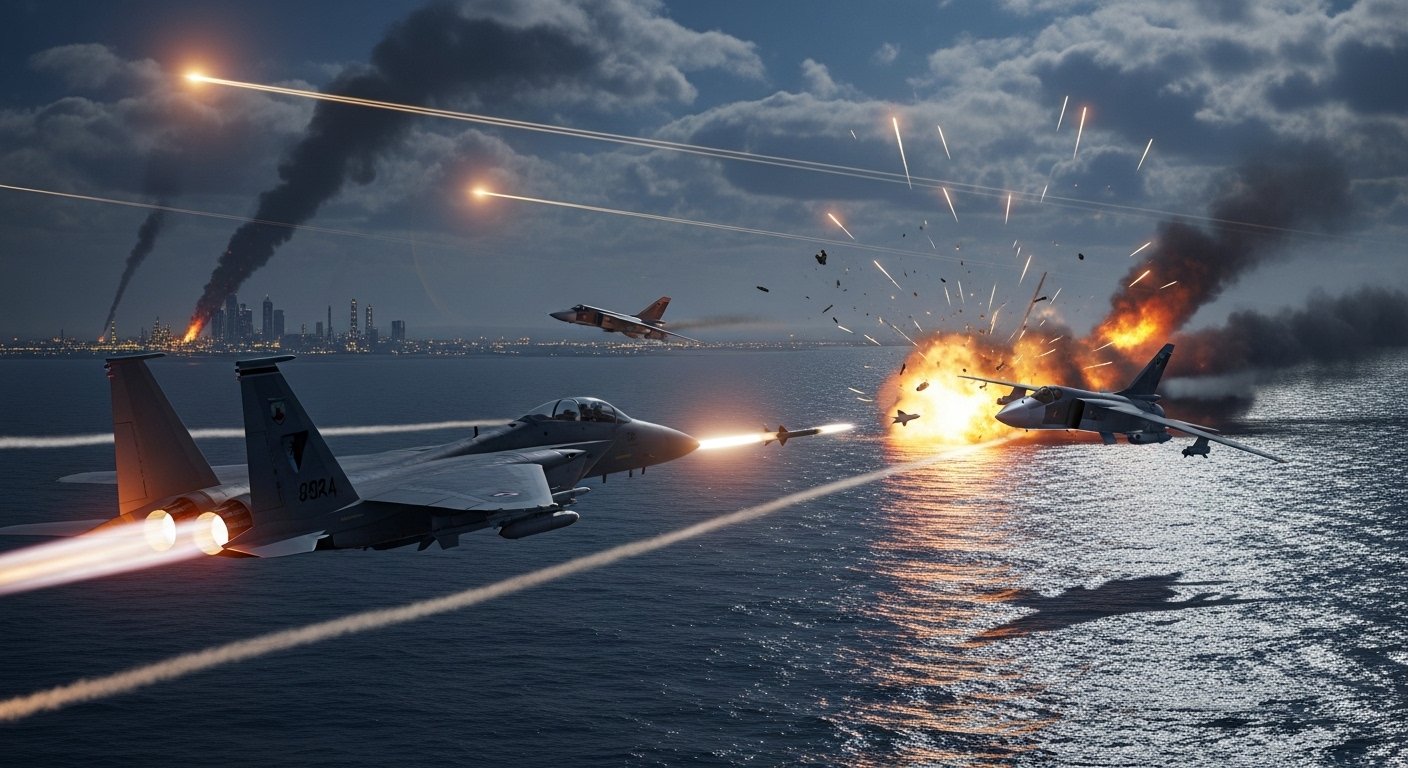
The Gulf Cooperation Council (GCC) states, which had long walked a diplomatic tightrope between Iran and the West, were pushed into the conflict more directly than anyone expected. Qatar, the country that had built a reputation for talking to everyone – Iran, the US, and regional rivals alike, became the first Gulf state to shoot down Iranian fighter jets when two Su‑24 bombers entered its airspace as part of Iran’s broader missile and drone campaign.
Qatar’s F‑15QA Ababils or Eurofighter Typhoons intercepted and destroyed the aircraft over the Gulf, a clean military operation that symbolized something far bigger: the end of Gulf neutrality. From that moment, the conflict was no longer just a US–Israel vs Iran war – it was a regional war involving Saudi Arabia, the UAE, Bahrain, Qatar, Kuwait, Oman, and Jordan, all of whom now faced Iranian missile and drone attacks on their soil or near their waters.
The Strait of Hormuz became a dead zone for commercial shipping, and the world’s energy markets entered a crisis that eclipsed the oil shocks of the 1970s and the 1990s.
Meanwhile, the Middle East’s proxy networks came into play. Hezbollah, Iran’s ally in Lebanon, opened a northern front by launching rocket and missile barrages into Israel, turning the war into a two‑front conflict for Jerusalem. The Israeli Defense Forces responded with heavy air strikes on Hezbollah’s command structure, storage facilities, and launch sites, while the Lebanese government, under pressure from the scale of the violence, took the historic step of banning Hezbollah’s military operations and sending police to hunt rocket‑launching cells in the Beirut suburbs.
This move did not mean the Lebanese army suddenly overpowered Hezbollah – it did not and still does not have that capability – but it did change the political framework of the war. Israel could now argue that it was fighting Hezbollah, not Lebanon, and that the Lebanese state itself had turned against Hezbollah’s cross‑border attacks. The war in Lebanon soon escalated beyond air strikes when Israeli ground forces crossed into southern Lebanon, advancing toward the Litani River, the symbolic line that had separated Israeli operations from deeper Lebanese territory since the 2006 war.
The orders given to Israeli commanders – to hold and advance, not just to probe or conduct limited raids – indicated that Israel was preparing for a sustained ground campaign, not a short‑term operation.
At the same time, a separate, but linked, crisis erupted on the Pakistan–Afghanistan border. Pakistan’s JF‑17 Thunder jets struck Bagram Air Base, the former US hub in Afghanistan, in an operation that Pakistan’s Information Minister Attaullah Tarar publicly confirmed.
The justification given was that Bagram had become a logistical and storage hub for the Tehrik‑i‑Taliban Pakistan (TTP), the militant group responsible for attacks inside Pakistan, as well as for Taliban fighters targeting Pakistani forces. The number of TTP attacks on Pakistan’s border areas, checkpoints, and security forces had risen sharply in the years after the Taliban’s return to power in 2021, and Pakistan’s military concluded that the Taliban government in Kabul was either unable or unwilling to stop TTP using Afghan territory as a base.
The Pakistan–Afghanistan border conflict, which involved dozens of cross‑border clashes, the displacement of 16,400 households, and the killing and wounding of civilians on both sides, became a second, largely under‑reported war – one that ran in parallel with the Gulf war. President Asif Ali Zardari’s red‑line speech in parliament – that no neighboring state could use its territory to attack Pakistan – set the political stage for this escalation and signaled that Pakistan was willing to cross into Afghan territory if necessary to secure its own stability.
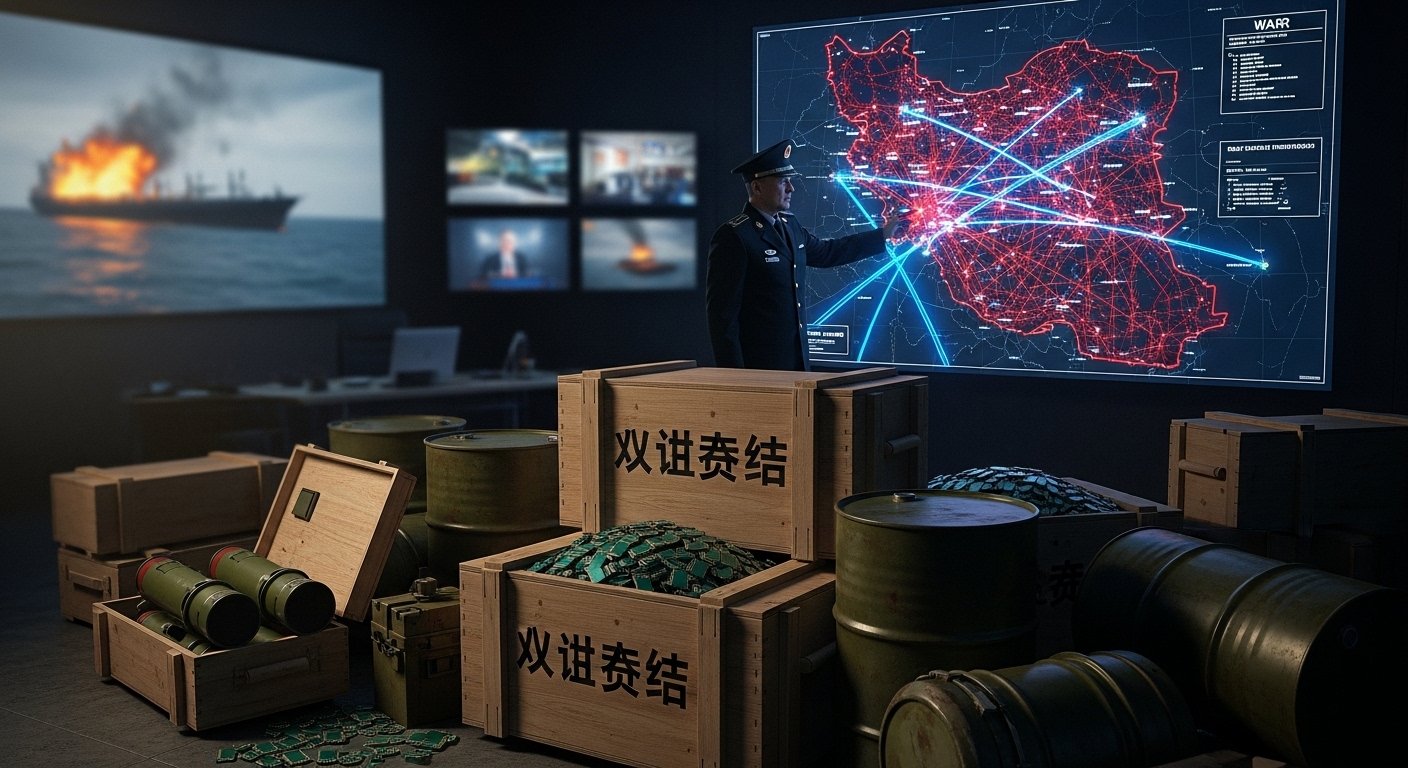
Underneath all of this, a war of attrition is unfolding – a “munitions war” played out in dollars and missile numbers rather than in headlines. Iran’s Shahed‑136 drones cost roughly $20,000 each to produce; the Patriot PAC‑3 missiles that intercept them cost over $2 million. This 100‑to‑1 cost ratio means that Iran can, in theory, bleed the US and its allies dry – forcing them to spend far more on defense than Iran spends on offense.
The US, however, has far greater resources and a much larger defense industrial base, meaning it can sustain the cost for much longer than Iran, especially if Congress continues to fund the war. The real question is how long public and political patience will last. If American voters see the war as a long, costly, and open‑ended entanglement, with high oil prices and economic strain at home, pressure will grow for the administration to seek a negotiated end, even if Iran has not been fully defeated. The same dynamic applies in the Gulf states — their leaders can sustain the war militarily, but ordinary Gulf citizens will feel the impact through higher fuel prices, job losses, and reduced government spending.
From a strategic point of view, there are three main scenarios for how the US and Israel attack Iran war could end. The first is a short, decisive war lasting perhaps three to six months, in which Iran’s command structure, missile stockpiles, and key infrastructure are destroyed or crippled, forcing the regime to surrender or collapse.
The second is a long, grinding war of attrition lasting one to three years, in which the fighting continues but the economic and political costs slowly force all sides toward a negotiated settlement. The third and most dangerous scenario is a nuclear escalation, in which Iran, facing conventional defeat, decides to cross the nuclear threshold and test or use a nuclear weapon — a move that would almost certainly trigger a massive US and Israeli response and potentially draw in other nuclear powers.
None of these scenarios is guaranteed, and the outcome will depend on military developments, economic pressures, political will, and the ability of any side to break the deadlock.
For the people of the region, the war is not just a question of strategy but of survival. In Pakistan, fuel prices are climbing toward Rs400 per litre, making basic transportation, agriculture, and power generation far more expensive. Ten million South Asian workers in the Gulf – mostly Pakistani and Indian — face an uncertain future as their jobs, safety, and remittances hang in the balance.
In Lebanon, tens of thousands of civilians have fled the south, repeating the displacement patterns of previous wars. In Iran, families are grieving the loss of children in Minab and worrying about the safety of their homes as strikes continue.
In Gaza, Iraq, Syria, and Yemen, the war’s ripple effects are already being felt in rising fuel prices, aid shortages, and political instability. The cost of the war is not just measured in missiles fired or drones destroyed, but in food bills, hospital expenses, school closures, and family savings.
The global markets have also been reshaped by the war. Oil prices have surged to levels not seen since the 1970s, while gold, cryptocurrencies, and safe‑haven assets have climbed as investors seek protection from the volatility. Stock markets in Europe, the Gulf, and Pakistan have swung wildly as analysts try to price the long‑term impact of the conflict.
Pakistan’s economy, already fragile before the war, is now under pressure from high oil imports, reduced remittances, LNG supply constraints, and IMF‑linked reform requirements, all occurring at the same time. The country’s ability to survive this multi‑dimensional crisis will depend on how long the war lasts, how high oil prices go, and whether the government can secure emergency financing and support from allies.
In the end, the question of why the US and Israel attacked Iran is not just a military or diplomatic one – it is also a moral and human one. The war may have started with a targeted strike on a single leader, but it has transformed into a regional catastrophe affecting tens of millions of people who have no voice in the decisions that led to it.
The war’s starting point was clear, but its end point is still uncertain. The only clarity so far is that the world’s energy markets, Middle East security, and the lives of ordinary people in Pakistan, India, the Gulf, Iran, and Israel have all been changed by the US and Israel attack Iran decision – and the war’s full consequences will unfold long after the last missile is fired.