LIVE
Wednesday, Mar 18, 2026
24/7 News

The World in 2026: Taliban’s Torture Decrees, Germany’s Deportation Bombshell, and Trump’s 60-Day Iran Gamble — Three Crises Rewriting Global Rules Simultaneously

History has a way of presenting its most consequential moments not in isolation but in clusters — simultaneous eruptions across different geographies that, when examined together, reveal the fault lines along which the existing international order is fracturing. The spring of 2026 is one of those clusters.

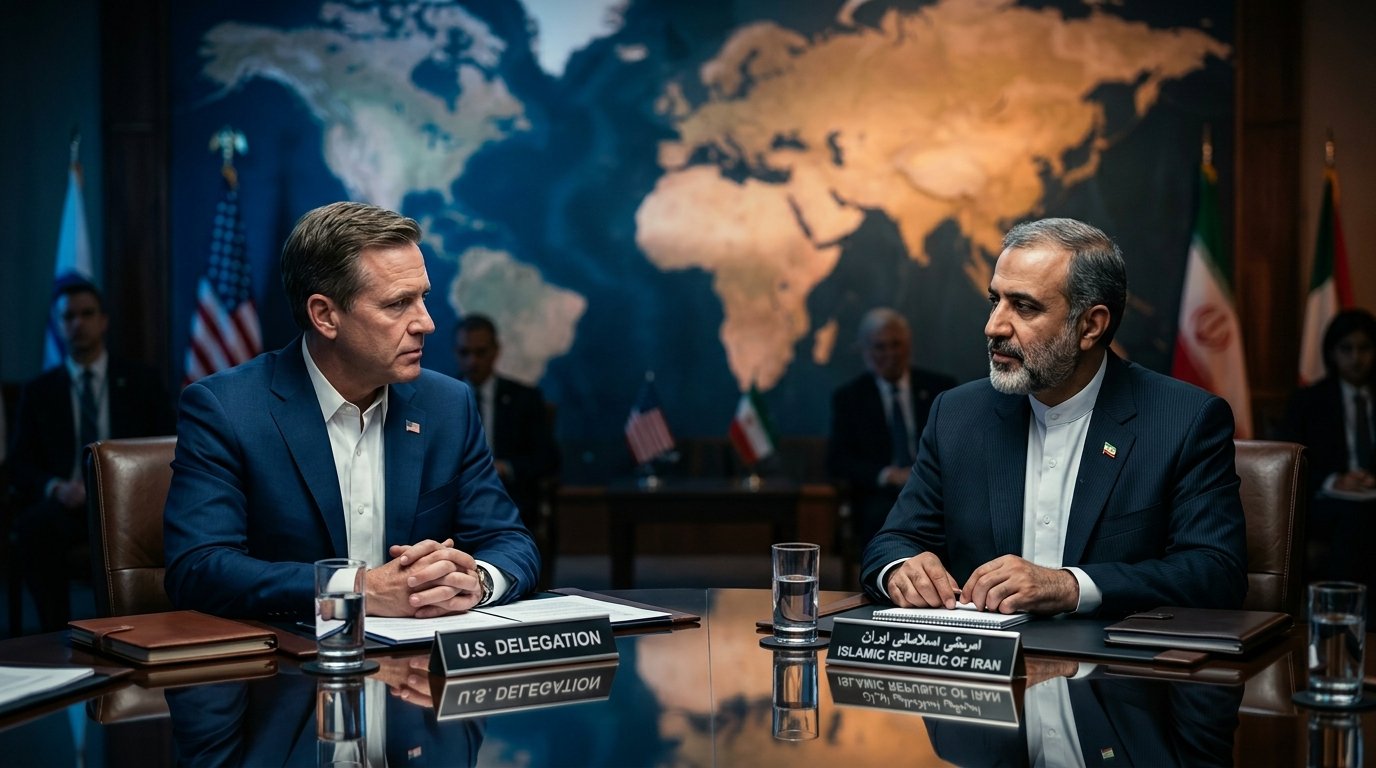
Three developments, separated by geography and immediate cause but connected by the deeper logic of a world where established rules are being discarded simultaneously by state and non-state actors alike, demand to be understood together. In Afghanistan, the Taliban has issued decrees that UN Human Rights Commissioner Volker Turk described in terms that left no room for diplomatic hedging — institutionalised wife-beating, expanded death penalties, and the criminalisation of any criticism of Akhundzada’s leadership. In Germany, Chancellor-in-waiting Friedrich Merz’s government has broken EU precedent by initiating direct deportation flights of convicted criminals to Kabul — flying people directly into the Taliban torture state that the UN is simultaneously documenting. And in Washington, Donald Trump is playing a 60-day game of chicken with the War Powers Act, betting that American airstrikes can collapse Iran’s regime before Congress forces a reckoning — while America’s own munitions arsenals, drained by Ukraine and Yemen, are running critically low.

Three crises. Three different actors. One common theme: the rules that governed international behaviour for the past generation are being rewritten in real time, and nobody is certain what replaces them.


1. Taliban’s 2026 Torture Decrees: When “Law” Becomes a Manual for Abuse

The Taliban government’s latest legal decrees — issued in early 2026 and immediately condemned by the United Nations — represent not merely an extension of previous Taliban governance but a formalisation of abuse that transforms family violence from a crime into a state-sanctioned practice.

UN Human Rights Commissioner Volker Turk’s warning about Akhundzada’s latest decree was unusually direct for a diplomatic official whose institutional role typically requires careful hedging. The decrees expand the death penalty to cover a range of offences that international human rights law does not consider capital crimes — blasphemy, “moral crimes,” and criticism of Taliban leadership among them. Public hangings and stonings, which had previously occurred without explicit formal legal sanction, now carry the authority of codified law.

The most domestically invasive element of the decrees is the explicit legalisation of “domestic corporal punishment” — a legal term whose practical meaning is that husbands flogging wives at home is now described as Sharia-compliant and therefore lawful. Children are explicitly included within the scope of sanctioned physical punishment. The decree does not merely permit what was previously occurring informally — it provides legal protection to perpetrators and removes any remaining legal avenue for victims to seek redress through the Taliban’s own court system.

The criminalisation of criticism of Taliban leadership takes the decrees into territory that echoes the most repressive surveillance states of the twentieth century. A social media post critical of Akhundzada, a private conversation that reaches the wrong ears, any expression of dissent from Taliban ideology — all of these now carry the possibility of treason charges whose maximum penalty is death. The Taliban’s message to Afghanistan’s 40 million people is unmistakable: compliance is mandatory, and the state will enforce it in your home as readily as it will in the public square.

The international community’s response has been limited in proportion to its leverage over a government that does not seek international recognition and does not depend on international financial flows for its operational funding. UN condemnation, human rights reports, and diplomatic statements have not altered Taliban behaviour in the four years since its return to power, and there is no particular reason to expect the 2026 decrees to produce a different response. The decrees will be documented, condemned, and implemented simultaneously.

For Pakistan’s western border communities, the Taliban’s formalisation of these practices has a specific and proximate relevance. The Tehrik-i-Taliban Pakistan — whose ideological affiliation with the Afghan Taliban’s governing philosophy is deep and sustained — is watching the Afghan Taliban’s decree-making with the attention of an organisation that considers Akhundzada’s government a model rather than a warning. The death penalty expansion, the domestic punishment sanction, and the dissent criminalisation are all elements of the TTP’s own preferred governance model that the Afghan Taliban has now codified into formal law. Pakistan’s Swat Valley and the border tribal communities live one political transition away from a comparable governance framework being imposed on them.


2. Germany’s Deportation Bombshell: The EU’s Migration Consensus Breaks in Berlin

Germany’s decision to operate direct deportation flights to Kabul — bypassing the third-country handoff arrangements that had been the only politically sustainable mechanism for EU states attempting to return Afghan nationals — represents a rupture in European migration politics whose implications extend well beyond the immediate question of where convicted criminals are sent.

The political logic behind the U-turn is straightforward to trace. The Alternative für Deutschland’s rise to 22 percent national polling reflects a German electorate that has moved decisively toward immigration restriction as a political priority. The daily stabbing headlines that German media covered through 2024 and 2025 — many involving perpetrators with Afghan backgrounds — created a political environment in which Merkel-era migration liberalism became electorally unsustainable for mainstream parties. Friedrich Merz, as Chancellor-in-waiting, understood that the AfD’s surge was not merely an extremist flash but a sustained realignment that the centre-right had to address substantively or continue losing voters to.

The direct Kabul flights are the most visible expression of that substantive response. Previous German deportation practice involved negotiating with third countries — typically Gulf states or other transit nations — to accept Afghan deportees who could then be processed onward. The arrangement was politically sustainable because it maintained a degree of distance from the question of what awaited deportees at their final destination. Direct Kabul flights eliminate that distance entirely: Germany is explicitly sending people to a country governed by a regime whose torture practices the UN has simultaneously documented in detail.

The legal complexity of this position is significant and acknowledged by its critics but dismissed by its proponents. The principle of non-refoulement — the international legal norm prohibiting return of persons to territories where they face persecution or serious harm — would appear to apply to deportations into Taliban-controlled Afghanistan with particular force given the specific documentation of Taliban governance that exists. Germany’s government has structured its deportation policy around the category of convicted criminals — arguing that their criminal conduct removes the protection that asylum seekers and refugees retain — rather than wholesale deportation of Afghan nationals regardless of their legal status.

The EU’s response to Germany’s action has been divided in ways that illuminate the fractures within the European migration consensus more broadly. AfD’s cheerleading in Germany is matched by enthusiasm in Austria, Hungary, and other member states whose governments have been pushing for exactly this kind of precedent-setting departure from non-refoulement caution. The Merkel-era liberals’ apoplexy reflects a genuine legal and moral objection that is simultaneously losing its political force as the electorates of multiple EU member states demonstrate that migration restriction has become a first-tier political priority that can no longer be managed through elite consensus without democratic mandate.

The practical consequence — convicted criminals being flown directly into Taliban-controlled Afghanistan — creates a specific and uncomfortable moral arithmetic. Germany is sending people whose crimes have been adjudicated through German legal processes into a governance environment whose practices the German government has simultaneously condemned through diplomatic channels. The cognitive dissonance of the position is obvious; its political sustainability within Germany’s current electorate is equally obvious.


3. Trump’s 60-Day Iranian Roulette: The War Powers Clock and America’s Arsenal Crisis

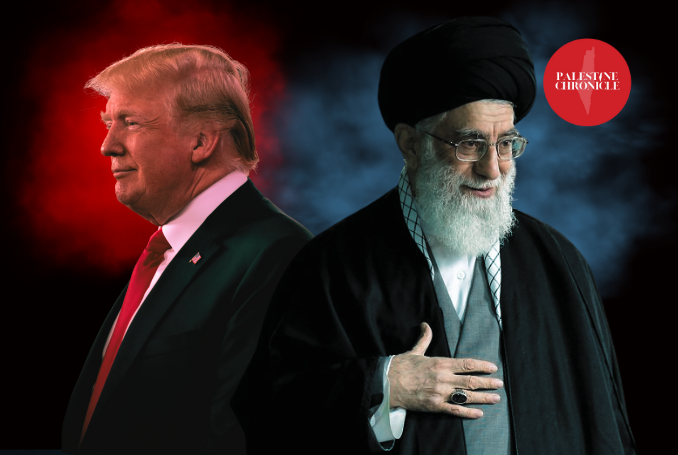
Donald Trump’s prosecution of Operation Epic Fury against Iran is being structured around a specific legal and political timeline — the 60-day War Powers Act clock — in ways that have implications not merely for the Iran campaign’s military strategy but for the adequacy of American military resources to sustain it.

The War Powers Resolution of 1973 requires the President to notify Congress within 48 hours of introducing US forces into hostilities and limits the duration of such operations to 60 days without Congressional authorisation. Trump’s administration, like most previous administrations, disputes the constitutionality of the 60-day limit while operating within its timeline as a practical political constraint. The 60-day clock creates a specific deadline pressure: the operation must achieve sufficient visible results before Congress can force a reckoning over continued operations without authorisation.

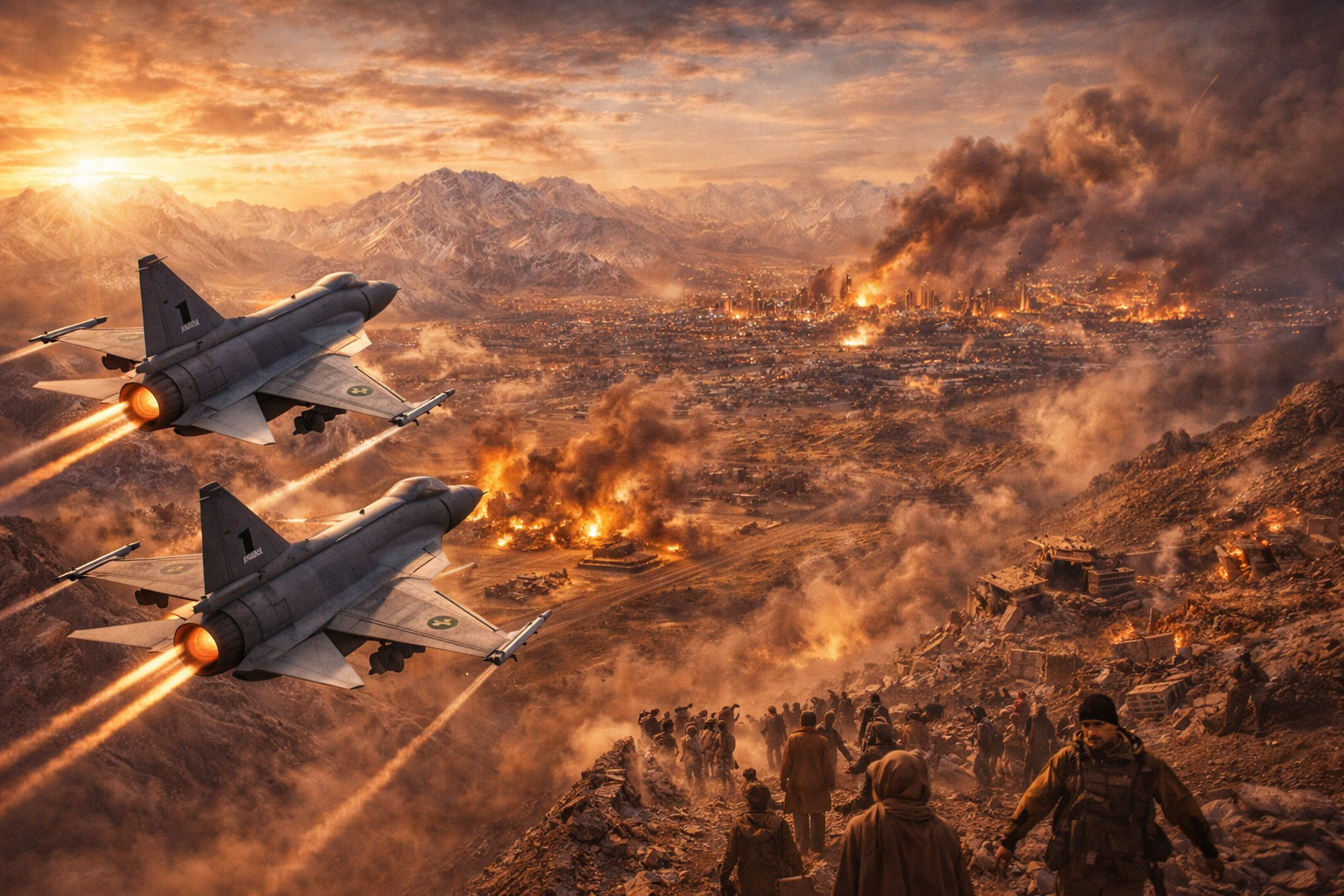
Trump’s stated strategy within this window involves a progression from precision decapitation strikes in the first week — targeting Khamenei’s successors and IRGC headquarters — through sustained B-52 carpet bombing of Iranian power grids, refineries, and command and control nodes in weeks two through four, to special forces operations hunting remaining IRGC leadership in weeks five through eight, combined with the bet that Iranian street protests — particularly among women’s rights activists whose revolutionary potential Trump has explicitly invoked — will produce the internal political collapse that military strikes cannot achieve alone.

The arsenal dimension of this timeline is the most analytically sobering aspect of the plan. America’s military readiness has been significantly depleted by three years of sustained support for Ukraine’s defence — over $100 billion in anti-tank weapons, Stinger missiles, Patriot interceptors, and artillery ammunition transferred to Kyiv between 2022 and 2025. The Yemen Houthi campaign’s consumption of approximately $500 million per month in interceptor missiles — the same $2 million Patriot PAC-3 missiles that Iran’s $20,000 Shahed drones are designed to exhaust — has added a second drain on the same inventory categories that the Iran campaign most requires.

The Taiwan deterrence mission has diverted Pacific munitions stocks toward a different operational priority, and the combined effect of these three simultaneous demands on American military inventory has left the Iran campaign with approximately 30 percent of the Patriot missile stocks that pre-Ukraine levels would have provided. The daily munitions burn rate of approximately $2 billion — the combined cost of offensive strike munitions and defensive interceptors — is running against a stockpile whose replenishment rate cannot match its consumption.

Iran’s military planners have been aware of this arsenal atrophy problem longer than most Western analysts have discussed it publicly. The Shahed-136 drone’s economics — $20,000 production cost versus $2 million interception cost — were designed specifically to exploit the asymmetry between Iran’s mass production capacity and America’s precision interceptor stockpile. If Iran can sustain Shahed production at a rate sufficient to maintain Patriot consumption beyond America’s replenishment capacity, the munitions arithmetic shifts in Iran’s favour regardless of the conventional military balance.


4. The Historical Warning: What Tsushima, Dien Bien Phu, and 2006 Lebanon Tell Us

The three crises of 2026 exist within a historical pattern that deserves explicit acknowledgement rather than being treated as unprecedented — the pattern of Western powers underestimating the preparation and resilience of non-Western adversaries at moments of apparent military superiority.

Russia’s humiliation at Tsushima in 1905 — a naval fleet that was technologically superior on paper, annihilated by a Japanese navy that had spent two decades preparing for exactly the confrontation it provoked — established that preparation, motivation, and home-terrain advantage can overcome apparent military superiority when the superior party has underestimated its opponent’s readiness. Japan did not win at Tsushima through luck. It won because it had planned for that specific battle for twenty years.

France’s defeat at Dien Bien Phu in 1954 — the fortress whose fall ended French Indochina — demonstrated that logistics genius, popular mobilisation, and the willingness to accept casualties that the colonial power was not prepared to match could overcome superior firepower. The bicycle porters who moved artillery through jungle trails that French planners had considered impassable were not improvised — they were the product of Vietnamese military planning whose duration and sophistication the French military had comprehensively failed to assess.

The 2006 Lebanon war — Hezbollah’s tunnel networks, anti-tank guided missiles, and preparation of the southern Lebanon terrain against Israeli Merkava tank operations — provided the most recent and most proximate demonstration of the same principle. Hezbollah had spent years preparing for exactly the Israeli ground operation that 2006 produced, and the preparation was sufficient to produce the tactical outcomes that surprised an Israeli military accustomed to conventional superiority producing conventional results.

Iran’s 2026 position echoes each of these precedents in ways that American military planners acknowledge privately even when public statements emphasise operational capability. The Zagros Mountains, which dominate western Iran’s geography, have been fortified over forty years of preparation for exactly the kind of American-led military campaign that Operation Epic Fury represents. Underground missile storage, dispersed command and control, and the Persian Gulf island infrastructure that Iran has developed for Hormuz operations all reflect the investment of a country that has been war-gaming this scenario since 1979. The fortifications are not improvised. They are the product of four decades of preparation for a confrontation that Iranian military planners have always considered probable.


5. The Arsenal Atrophy Crisis: America’s Munitions Problem in Context

The US military’s munitions inventory challenge is not a secret within defence policy circles, but its specific relevance to the Iran campaign’s 60-day window makes it more acute than general readiness assessments typically communicate.

Patriot PAC-3 missiles — the primary American tool for intercepting ballistic missiles and large drones — are produced at approximately 550 per year by Raytheon’s manufacturing facilities. The Yemen campaign’s consumption of $500 million per month in interceptors, combined with the Ukraine transfers, has drawn down inventories to the levels that the 30 percent remaining stock figure reflects. At current Iran campaign consumption rates — Iran’s simultaneous multi-theatre missile and drone operations are requiring interceptions that the 60-day window’s daily $2 billion burn rate reflects — the Patriot inventory question becomes operationally significant before the 60-day clock expires.

The Ukraine drain’s specific impact on the Iran campaign is particularly notable because the munitions categories most consumed in Ukraine — Patriot missiles, HIMARS rockets, artillery shells — overlap significantly with the categories most in demand for the Iran campaign. Two concurrent high-intensity operations drawing on the same inventory categories is precisely the scenario that American strategic planners had identified as the most dangerous readiness risk in their pre-conflict assessments.

The hypersonic dimension adds a qualitative vulnerability that the interceptor inventory discussion does not fully capture. Iran’s Fattah hypersonic missile — whose speed and manoeuvrability make existing Patriot intercept geometries less reliable than against ballistic missiles — represents a category of threat against which America’s current deployed interceptor capability is genuinely limited. The absence of deployed hypersonic defence capability means that Fattah missiles that survive Patriot engagement attempts represent a threat whose consequence management relies on damage limitation rather than interception.


6. Germany’s Deportation and the Taliban’s Torture State: An Uncomfortable Intersection

The simultaneous occurrence of Germany’s direct Kabul deportation flights and the Taliban’s 2026 torture decree creates a moral and legal intersection that European policymakers are navigating with varying degrees of explicit acknowledgement.

Sending convicted criminals to a country whose government has simultaneously codified wife-beating as legal, expanded the death penalty to cover criticising the Supreme Leader, and made public stoning the prescribed punishment for moral crimes creates a specific accountability question for German courts and the European human rights architecture that has historically applied non-refoulement as a binding legal principle.

The German government’s position — that convicted criminals’ deportation is legally distinguishable from the asylum and refugee protections that non-refoulement was primarily designed to protect — is legally defensible but morally uncomfortable in ways that its proponents have chosen not to fully engage. A person deported to Taliban-controlled Afghanistan for a criminal conviction committed in Germany does not cease to have human rights upon arrival in Kabul. The Taliban’s documented treatment of returnees — which has included detention, interrogation, and in some cases execution of persons identified as having Western connections — creates a factual record that the non-refoulement analysis must engage.

The EU’s fracture on this question reflects a broader tension in European legal culture between the universalist human rights framework that post-World War II European institutions were built on and the democratic pressures of electorates that have concluded migration management must take priority over the legal complexity of non-refoulement application. Germany’s direct Kabul flights will become the precedent that other EU member states cite when they pursue similar policies — the AfD’s de facto policy victory that Merz’s government has delivered without the AfD having won an election outright.


7. Pakistan’s Nightmare: Caught Between Taliban, Iran, and Gulf Disruption

The three 2026 crises examined in this article converge on Pakistan’s security and economic situation with a specificity that makes Pakistan’s position among the most acutely exposed of any country to the combined effects of this year’s simultaneous disruptions.

The Taliban’s torture decree is not an abstract human rights concern for Pakistan — it is a governance model that the TTP has explicitly endorsed and that Pakistan’s western border communities face as a possible future. The formal legalisation of domestic corporal punishment in Afghanistan is being watched in Pakistan’s tribal areas by organisations whose own preferred governance framework differs from Akhundzada’s only in the specific geography of its application. The Taliban’s decree is a training manual for Pakistan’s most dangerous domestic security threat.

Germany’s Afghan deportation policy adds a specific bilateral dimension. Pakistan hosts approximately three million Afghan refugees — the world’s largest refugee population outside the immediate conflict zone. German deportation policy that returns Afghan criminals to Kabul is separate from Pakistani refugee management, but the precedent that European states can return Afghans to Taliban governance rather than providing protection creates pressure on Pakistan’s own refugee management that Islamabad monitors carefully. If European states normalise returns to Taliban Afghanistan, Pakistan’s hosting of three million Afghans becomes a policy choice whose international political context changes significantly.

The Gulf War’s impact on Pakistan — oil at Rs400 per litre, ten million workers stranded, LNG supply disrupted, IMF programme under stress — is the economic crisis that the political and security crises are compounding. A Pakistan simultaneously managing border wars with Afghanistan, Iran spillover on its western frontier, TTP suicide bombings, and the economic shock of Gulf disruption is a Pakistan whose capacity to absorb additional shocks from the three 2026 crises examined here is genuinely limited.


8. India’s Watching Brief: Three Crises, Three Strategic Implications

India’s response to the three 2026 crises reflects the strategic autonomy framework that its foreign policy has maintained — watching carefully, calculating implications, and positioning without full alignment on any axis.

The Taliban’s torture decrees concern India primarily through their TTP implications — the Pakistan-Afghanistan border’s instability creates both strategic opportunity and genuine risk for India’s security environment. A Pakistan consumed by Taliban-inspired TTP insurgency and border war is a Pakistan less able to manage its eastern frontier, which has historically served India’s strategic interests. But a nuclear-armed Pakistan in genuine internal crisis is a Pakistan whose instability creates risks that Indian strategic planners do not consider manageable advantages.

Germany’s deportation policy has limited direct Indian implications but represents the kind of European precedent that affects India’s ability to manage its own diaspora’s legal situations in Europe. Indians deported from European countries — typically for visa violations and minor criminal matters rather than the serious criminal convictions that German policy targets — are affected by a European migration policy environment that Germany’s Kabul flights are moving in a more restrictive direction.

Trump’s Iran campaign and the arsenal depletion question have the most direct strategic implications for India. India’s Chabahar port project — the Iranian port infrastructure that provides India’s only land access to Afghanistan and Central Asia bypassing Pakistan — is located in a country whose government is being actively targeted for regime change by America’s ally. If the Trump campaign succeeds in producing regime change in Tehran, the transitional government’s position on existing infrastructure agreements including Chabahar is genuinely uncertain. If it fails, India’s continued engagement with Iran while Modi declares solidarity with Israel creates the diplomatic contradiction that India’s strategic autonomy doctrine manages but cannot eliminate.


9. The 60-Day Endgame Matrix: Three Possible Outcomes and What Each Means

Trump’s 60-day Iran gamble resolves in one of three scenarios whose implications extend across all three of the 2026 crises examined in this article.

A successful American decapitation strategy — producing Iranian regime collapse within the 60-day window — would validate the theory of change that Trump’s operation is built on and create a post-Islamic Republic Iran whose governance structure is genuinely uncertain. The ethnic and sectarian complexity of Iran — Persian, Azerbaijani, Kurdish, Arab, and Baloch populations with distinct political interests — suggests that regime collapse does not produce a unified successor state but rather a fragmentation process whose management would require international engagement on a scale that America’s depleted munitions inventory and the 60-day clock’s political pressures make difficult to resource adequately.

An Iranian resilience outcome — the regime surviving the initial airstrikes through the Zagros fortification, Shahed drone attrition overwhelming Patriot stocks, and the IRGC maintaining sufficient cohesion to prevent the street revolt that Trump is betting on — would leave America in the position of having expended significant military resources without achieving its stated objectives, with a 60-day Congressional clock expiring and an Iran whose military capability, while degraded, has demonstrated survival against America’s most advanced air campaign.

An Israeli nuclear trigger — the scenario in which Iran’s continued military capacity at day 45 produces an Israeli conclusion that conventional operations cannot achieve the nuclear programme’s destruction — is the worst-case outcome whose probability remains low but non-zero. The specific condition is an Israeli assessment that Iran is within days of nuclear weaponisation and that American conventional operations are not proceeding at a pace sufficient to prevent it. In that scenario, Israel’s nuclear arsenal — whose existence is publicly unconfirmed but universally assumed — becomes relevant in ways that no party to the conflict has publicly addressed.


10. The Rules Being Rewritten: What 2026’s Three Crises Reveal About the International Order

The three crises examined in this article share a common underlying dynamic that transcends their individual geographies and immediate causes: established international rules — the rules governing human rights protection, refugee non-refoulement, and the use of force — are being overridden simultaneously by state actors on multiple continents, and the international institutions whose authority those rules rest on lack the enforcement capacity to respond effectively.

The Taliban’s torture decrees override the international human rights framework that post-World War II institutions spent decades constructing. The specific provisions — legalising domestic violence, expanding capital punishment beyond international standards, criminalising political expression — violate multiple international conventions to which Afghanistan was a signatory before the Taliban government unilaterally abandoned international legal commitments. The UN’s condemnation is real; its enforcement capacity is non-existent.

Germany’s deportation flights override the non-refoulement principle whose universality European legal culture had treated as settled. The political pressure that produced the policy is democratic and legitimate in its origin. Its legal and moral implications — sending people into documented torture conditions — are uncomfortable in proportion to the principle’s importance. That a founding member of the EU’s liberal legal order is producing this precedent matters beyond Germany’s borders.

Trump’s War Powers Act manoeuvre overrides the Congressional war authorisation framework that the legislature has struggled to enforce against executive military action for five decades. The 60-day clock’s legal significance is real; its practical enforceability against a President willing to push its limits is limited by the same Congressional reluctance to force a constitutional confrontation that has defined War Powers jurisprudence since 1973.

Three different actors, three different rules overridden, one common dynamic: the international order’s normative framework is under simultaneous pressure from multiple directions, and the enforcement mechanisms that give those norms practical force are not keeping pace.


Conclusion

The spring of 2026 is presenting the world with three simultaneous demonstrations that the rules governing international behaviour are being rewritten by actors who have concluded — correctly, in the short term — that the cost of rule-breaking is manageable relative to the benefits it produces.

Akhundzada’s Taliban has concluded that formalising torture as law is preferable to the governance uncertainty of informal practice, and that the UN’s condemnation carries no enforcement consequence that changes this calculation. Merz’s Germany has concluded that deporting criminals directly to Kabul is politically necessary regardless of the non-refoulement implications, and that the EU’s migration consensus must accommodate this precedent or lose Germany’s political support for the broader project. Trump has concluded that the 60-day War Powers clock is a manageable constraint on a campaign whose objectives justify the arsenal depletion and the Congressional pressure that pursuing it produces.

Each calculation may prove correct in its immediate context. Each simultaneously contributes to a world in which the rules that the post-World War II international order took decades to establish are being eroded faster than they can be rebuilt.

For Pakistan — caught between a Taliban torture state to its north, Iranian missile spillover to its west, and Gulf economic disruption affecting ten million of its workers — the rewriting of global rules is not an abstract concern. It is the daily operational context in which its government must make decisions about security, economics, and diplomacy with inadequate resources and without the predictable international framework that functioning rules of order provide.

The world in 2026 is not merely unstable. It is undergoing a fundamental renegotiation of its governing principles — and nobody has yet established what the new terms will be.

Leave a Reply

Your email address will not be published. Required fields are marked *

News That Commands Truth — Without Filter

Independent journalism covering Pakistan and the world. Unfiltered reporting on politics, business, sports, and culture — delivered with clarity and purpose since 2024.

BREAKING LIVE EXCLUSIVE
f X in YT W
Contact Info
Email
info@sultannews.online
Editorial
editor@sultannews.online
Location
Karachi, Pakistan
Newsletter
© 2026 Sultan.News — All Rights Reserved. Karachi, Pakistan.