
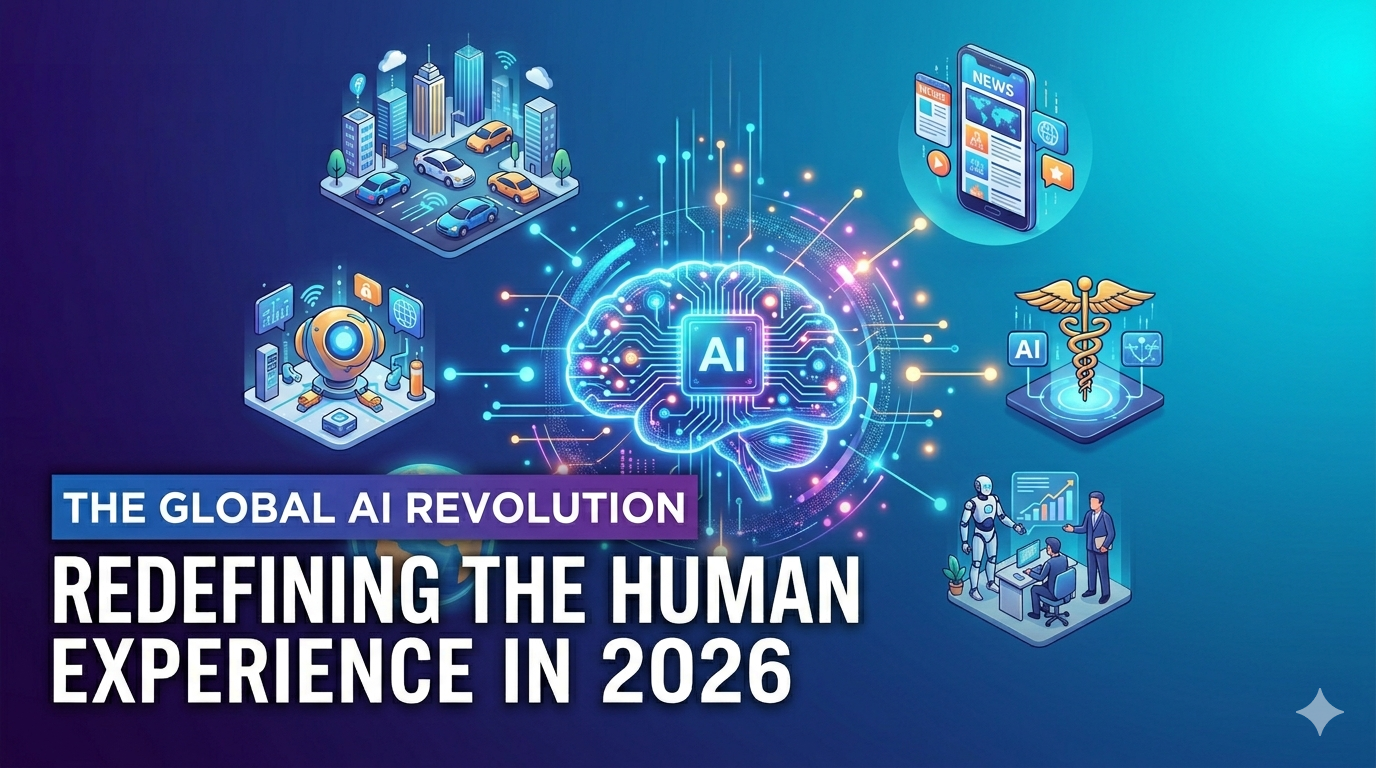
Introduction: The Dawn of a New Era
The world is no longer standing on the brink of a digital revolution; we are right in the center of it. Artificial Intelligence (AI), once a theme for science fiction movies, has become the backbone of modern civilization. From the way we consume news on platforms like Sultan News to the way global economies function, AI is the invisible hand guiding our decisions.
But what does this mean for the average person? Is AI a tool for empowerment, or is it a shadow looming over human relevance? This 2000-word deep dive explores the history, current applications, ethical dilemmas, and the future trajectory of AI.
Chapter 1: Understanding Artificial Intelligence
What is AI?
At its core, AI is the simulation of human intelligence processes by machines, especially computer systems. These processes include learning (the acquisition of information and rules for using it), reasoning (using rules to reach approximate or definite conclusions), and self-correction.
The Three Pillars of AI
- Narrow AI (ANI): This is what we use today. It is AI designed to perform a single task, such as facial recognition or an internet search.
- General AI (AGI): This refers to a machine that could successfully perform any intellectual task that a human being can. We are currently approaching the early stages of this.
- Super AI (ASI): A theoretical stage where AI surpasses human intelligence across all fields, including creativity and social skills.
Chapter 2: AI in the Media and News Industry
For a website like Sultan News, AI has changed the game.
Automated Journalism
Major news outlets now use AI to draft financial reports or sports recaps. This allows journalists to focus on investigative pieces while the “robots” handle the data-heavy, repetitive writing.
Personalization Algorithms
Have you noticed how your news feed seems to know exactly what you want to read? AI analyzes your browsing history, the time you spend on articles, and your click-through rates to curate a unique experience for every user. This “hyper-personalization” is the secret sauce behind the success of modern digital platforms.
Chapter 3: The Economic Impact and the Future of Work
One of the most discussed topics is whether AI will take our jobs.
The Shift in Professional Landscapes
While it is true that automation may replace certain manual and administrative tasks, history shows that technology creates more jobs than it destroys. In 2026, we see a massive demand for:
- Prompt Engineers: People who know how to communicate with AI.
- AI Ethicists: Professionals who ensure AI remains unbiased.
- Data Curators: Ensuring the “fuel” for AI (data) is clean and accurate.
Small Businesses and Digital Tools
For entrepreneurs, AI has leveled the playing field. Tools for generating logos, building websites via Elementor with AI assistance, and automating customer service through chatbots have allowed small teams to compete with massive corporations.
Chapter 4: AI in Healthcare – Saving Lives Through Data
Perhaps the most noble application of AI is in the medical field.
- Early Diagnosis: AI algorithms can scan X-rays and MRIs with higher accuracy than human doctors in some cases, catching diseases like cancer in Stage 1.
- Drug Discovery: Developing a new medicine used to take 10 years. AI can now simulate chemical reactions, potentially bringing life-saving drugs to market in months instead of years.
Chapter 5: Ethical Concerns and the “Dark Side”
We cannot talk about the benefits without addressing the risks.
- Deepfakes: The ability to create realistic video and audio of people saying things they never said is a threat to political stability and personal reputation.
- Bias in AI: If the data fed into an AI is biased, the output will be biased. This can lead to unfair treatment in hiring or law enforcement.
- Privacy: In an AI-driven world, your data is the most valuable currency. Protecting that data is becoming the greatest challenge of the 21st century.
Chapter 6: The Synergy of AI and Other Technologies
AI does not work in a vacuum. It is currently merging with:
- The Internet of Things (IoT): Smart homes that learn your habits.
- Blockchain: Ensuring that the data AI uses is secure and untampered.
- Quantum Computing: Which will provide the raw power needed for AI to solve “unsolvable” mathematical problems.
Chapter 7: How to Prepare for an AI-First Future
To stay relevant, individuals must adopt a “lifelong learning” mindset.
- Learn the Basics: You don’t need to be a coder, but you should understand how AI tools work.
- Focus on Soft Skills: Creativity, empathy, and critical thinking are things AI still struggles to replicate perfectly.
- Adopt AI Tools: Use AI to handle your “busy work” so you can focus on high-level strategy.
Conclusion: A Collaborative Future
As we look ahead, the relationship between humans and Artificial Intelligence should not be seen as a competition, but as a partnership. AI is an extension of human ingenuity. By using it responsibly, we can solve the world’s most pressing issues—from climate change to global poverty.
Sultan News will continue to track these changes, providing you with the insights needed to navigate this brave new world.