
LIVE
Wednesday, Mar 18, 2026
24/7 News

Wegovy Users Face 5x Higher Risk of Sudden Blindness, Major Study Warns


Twenty million people worldwide are currently using semaglutide — the active ingredient in Wegovy and Ozempic — to manage obesity and diabetes. Sales of these drugs reached $27 billion in 2025. They have been described as the most significant advance in weight management in a generation, and the clinical evidence for their effectiveness is genuinely compelling. For many patients, they have been life-changing in the most literal sense.

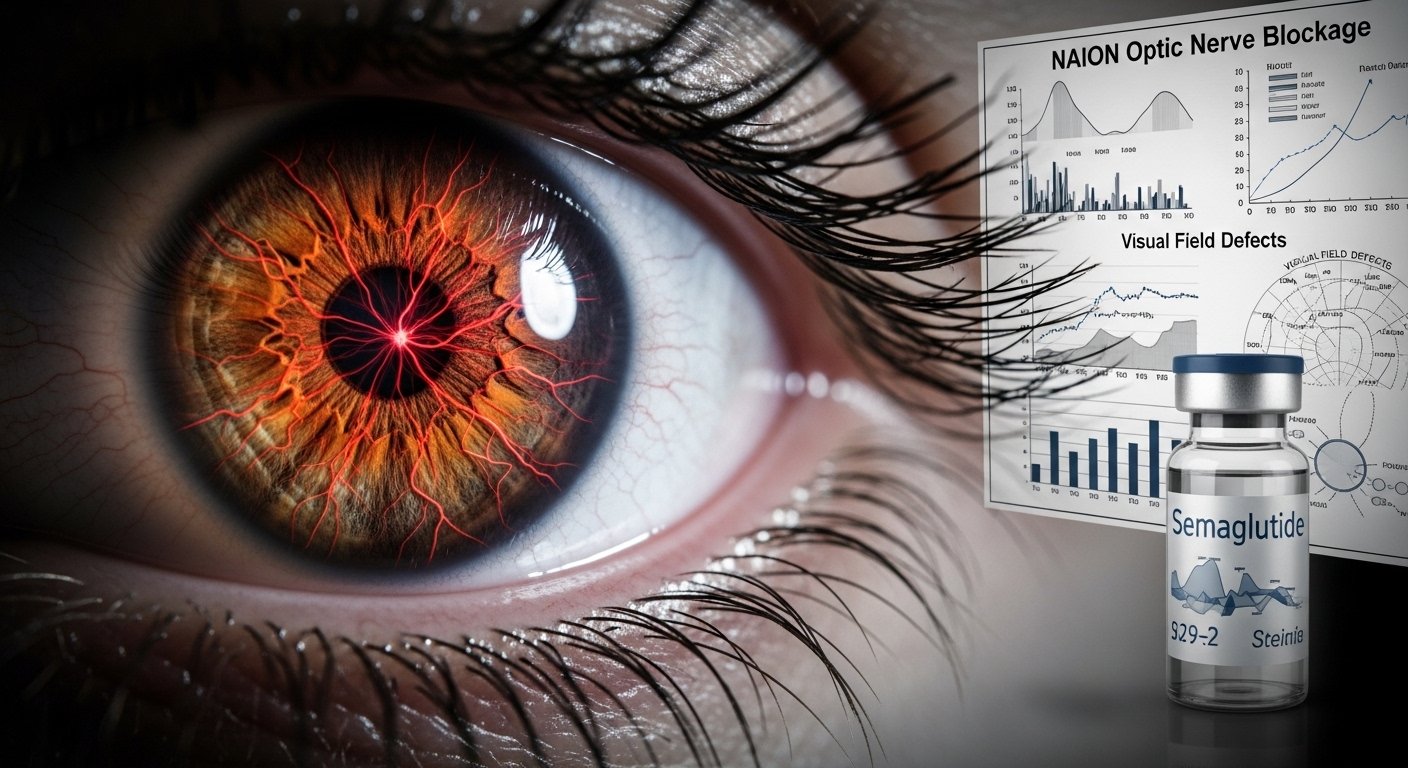
A new study published in the British Journal of Ophthalmology has introduced a warning that nobody in the GLP-1 boom wanted to hear, and that nobody who takes these medications can afford to ignore. Patients taking Wegovy — the higher-dose formulation of semaglutide used specifically for weight loss — are five times more likely to suffer a sudden, often permanent loss of vision in one eye than patients taking Ozempic, the lower-dose formulation used for diabetes management. The condition is called non-arteritic anterior ischemic optic neuropathy. Physicians call it an eye stroke. And once it happens, there is frequently nothing that can be done to reverse it.


1. What Is NAION — And Why Is It So Frightening?

Non-arteritic anterior ischemic optic neuropathy sounds technical, but its clinical presentation is terrifyingly simple to describe. The blood supply to the optic nerve is interrupted — not gradually, not with warning signs, but suddenly and without pain. A patient goes to sleep with normal vision and wakes up blind in one eye. Or they are going about their day when they notice that something has gone wrong with their vision, and by the time they reach an ophthalmologist, the window for intervention has already closed.

The optic nerve, unlike most tissues in the body, has extremely limited capacity for recovery once its blood supply has been compromised. The damage tends to be permanent. Some patients recover partial vision over weeks or months, but complete restoration of vision after NAION is rare. Most patients are left with a permanent scotoma — a dark patch or area of total blindness — in the affected eye, which in some cases covers the majority of the visual field.

In the general population, NAION is already a known condition, most commonly affecting older men with hypertension, diabetes, or sleep apnea — the same risk factors that compromise vascular health elsewhere in the body also compromise the delicate blood supply to the optic nerve. What the new research suggests is that Wegovy, when added to this pre-existing vulnerability, appears to amplify the risk substantially. Among semaglutide users overall, NAION affects approximately 1 in 10,000 patients — a rate that sounds reassuringly small until you remember that 20 million people are currently using these medications, which translates to approximately 2,000 cases in the current user population alone.


2. The Study: What Researchers Actually Found

The research was led by Dr. Edward Margolin, an ophthalmologist at the University of Toronto, who analysed FDA adverse event reports filed between 2017 and 2024 covering patients taking four different semaglutide and GLP-1 class medications: Ozempic, Wegovy, Rybelsus, and Mounjaro.

The methodology is important to understand before interpreting the findings. FDA adverse event reports are voluntary submissions — they capture cases that were reported to the agency, not a systematic surveillance of all users. This means the true frequency of NAION among semaglutide users may be different — either higher, if many cases go unreported, or lower, if the reporting rate for semaglutide-associated NAION is higher than for NAION in general. Dr. Margolin and his colleagues are explicit that the study establishes a signal requiring further investigation rather than a proven causal relationship. That distinction matters, and responsible interpretation of these findings requires holding it clearly.

With that caveat stated, the signal identified in the data is substantial. Wegovy patients showed a five-fold increase in NAION reports compared to Ozempic patients. Among Wegovy users, men showed a three-fold higher risk than women. Rybelsus — the daily oral tablet formulation of semaglutide — showed no elevated NAION signal. Mounjaro — a different GLP-1 class drug using tirzepatide rather than semaglutide — also showed no elevated signal.

The pattern that emerges from these comparisons points toward dose and delivery mechanism as the critical variables. Wegovy delivers 2.4 milligrams of semaglutide weekly. Ozempic delivers a maximum of 2 milligrams weekly. Rybelsus delivers 14 milligrams daily in tablet form, but oral absorption is significantly lower than injectable delivery, meaning the systemic exposure is substantially less than the dose number suggests. The drugs that produced the NAION signal are the injectable, higher-dose formulations. The drugs that produced no signal are the oral formulation and the different molecular entity altogether.


3. Why Higher Doses May Stress the Optic Nerve

The biological mechanism by which Wegovy might increase NAION risk is not definitively established, but researchers have identified several plausible pathways that are consistent with the observed pattern.

The most direct factor is the dose-dependent vascular strain that higher semaglutide concentrations may place on the optic nerve’s blood supply. The optic nerve is supplied by small arteries — the short posterior ciliary arteries — that are particularly sensitive to changes in blood pressure, blood volume, and blood viscosity. Any factor that transiently reduces perfusion pressure in these vessels, or that reduces the volume of blood available to supply them, can tip a borderline optic nerve into ischemic territory.

Rapid weight loss, which Wegovy produces more aggressively than Ozempic by virtue of its higher dose, introduces exactly these kinds of vascular stresses. Patients losing 15 to 20 percent of their body mass over relatively short periods experience significant reductions in circulating blood volume as fluid shifts occur throughout the body. The nausea and vomiting that are among the most common GLP-1 class side effects compound this dehydration, further reducing effective blood volume. Blood pressure fluctuations during rapid weight loss add another variable that the optic circulation must compensate for.

Dr. Margolin has described this constellation of factors as placing aggressive stress on the delicate optic circulation — a mechanism consistent with the known risk profile of NAION in the general population, where the same vascular vulnerability factors appear. What the research suggests is that Wegovy’s pharmacological profile creates conditions that are particularly likely to challenge this circulation in patients who already have some degree of underlying vulnerability.

The male-predominant risk pattern adds another dimension. Men over 40 who carry the traditional NAION risk factors — hypertension, sleep apnea, diabetes, vascular disease — appear to represent the patient population where the combination of pre-existing vascular vulnerability and Wegovy’s physiological effects is most dangerous. This is not a coincidence: it is consistent with a mechanism in which Wegovy exacerbates a pre-existing risk rather than creating one from nothing.


4. The Regulatory Response: From Safety Alerts to Label Changes

The research findings have moved through regulatory channels with unusual speed, reflecting both the scale of the patient population exposed to these medications and the severity of the potential harm involved.

The UK’s Medicines and Healthcare products Regulatory Agency issued a formal safety alert in February 2026, directing prescribers to monitor patients for visual symptoms and advising that any sudden change in vision in one eye should trigger immediate cessation of Wegovy and urgent ophthalmological assessment. The European Medicines Agency has updated the patient information leaflets for Wegovy across EU member states to include explicit warning language about NAION risk — a regulatory step that represents formal acknowledgment that the signal is sufficient to warrant direct patient communication.

The United States Food and Drug Administration is actively reviewing the data, with observers expecting some form of label update in the coming months. The question being debated within the FDA is whether the evidence warrants a black box warning — the most serious level of regulatory caution — or whether the current data supports only a standard label update with monitoring recommendations. The outcome of that determination will significantly shape how American prescribers and patients approach Wegovy going forward.

Novo Nordisk, the Danish pharmaceutical company that manufactures both Wegovy and Ozempic, has acknowledged the regulatory developments and stated that patient safety remains the company’s priority. The company has emphasised that no causal relationship between Wegovy and NAION has been established, and that clinical trials to more definitively characterise the risk are being planned. This response is standard pharmaceutical industry practice when a safety signal emerges from observational data — factually accurate in its emphasis on the absence of proven causality, while also reflecting obvious commercial interest in minimising the perceived scope of the risk.

The legal dimension is already developing. More than 50 lawsuits have been filed in the United States by patients or their families alleging that Novo Nordisk failed to adequately warn about NAION risk. These cases are currently in the discovery phase, which will require the company to produce internal communications that may reveal what the company knew about visual side effect signals and when it knew it.


5. Real Patients, Real Consequences

Behind the statistics and regulatory language are individual patients whose experiences illustrate what the NAION risk means in human terms.

John, a 45-year-old executive in Chicago, had lost 20 pounds on Wegovy and was satisfied with his progress when he woke one morning to find that his right eye had gone dark overnight. The NAION diagnosis came quickly. The vision loss was permanent. He describes the experience as a nightmare — a drug costing $50,000 per year had cost him something that money cannot replace.

Sarah, 38, from London, had taken Ozempic without incident for two years before switching to Wegovy for more aggressive weight loss. Three months after the switch, her vision deteriorated. The temporal relationship between the dose increase and the visual event was noted by her ophthalmologist, though as with all individual cases, causality cannot be established from a single patient’s experience.

Ophthalmologists who were already seeing NAION in clinical practice report a marked increase in cases since GLP-1 medications entered widespread use. Before 2022, the condition was relatively rare — seen perhaps a few times per year in a busy ophthalmology practice. In 2025 and 2026, some practitioners are reporting weekly cases in patients on GLP-1 medications. The observation is consistent with what the FDA adverse event data shows, though it too suffers from the limitations of non-systematic surveillance.

Reddit communities dedicated to Wegovy and Ozempic users have become informal repositories of visual complaint reports — patients describing blurred vision, dark spots, and sudden vision changes that their prescribing physicians were not always immediately connecting to their weight loss medication. The gap between patient experience and physician awareness represents a communication failure that better labelling and prescriber education are intended to address.


6. The Drugs That Did Not Show the Signal — And What That Tells Us

One of the most scientifically informative aspects of the new research is not what it found about Wegovy, but what it did not find about Rybelsus and Mounjaro.

Rybelsus is semaglutide in tablet form — the same active molecule as Wegovy and Ozempic, taken orally rather than by injection. Its absence from the NAION signal is instructive because it isolates the delivery mechanism and effective systemic exposure as variables that matter for the risk. Oral semaglutide is absorbed significantly less efficiently than injected semaglutide, meaning the peak blood concentrations achieved with the 14-milligram daily tablet are substantially lower than those achieved with even the lower-dose injectable. If semaglutide itself were the direct cause of NAION through a molecular mechanism, tablet users would be expected to show some elevation in risk. The absence of that elevation points toward the combination of high injectable dose and rapid vascular effects as the relevant mechanism rather than semaglutide’s molecular action per se.

Mounjaro’s absence from the signal is equally informative in a different way. Tirzepatide, Mounjaro’s active ingredient, acts on both GLP-1 receptors and GIP receptors — a dual mechanism that produces weight loss through partly different pathways than semaglutide alone. The fact that equivalent weight loss achieved through a different mechanism does not produce the same NAION signal suggests that the risk may be specific to how semaglutide at high injectable doses affects optic nerve perfusion, rather than being a general consequence of rapid weight loss itself.

These distinctions matter enormously for prescribing decisions, because they suggest that patients who need aggressive pharmacological weight management may be able to achieve it through Mounjaro or lower-dose Ozempic with substantially less optic nerve risk than Wegovy carries. The emerging evidence is already prompting some endocrinologists to reconsider their default choice of medication for patients with the traditional NAION risk factors.


7. Who Is Most at Risk — A Practical Guide for Patients

Not every Wegovy user faces equivalent risk, and understanding which patient profiles carry the highest NAION probability is essential for rational prescribing and informed patient decision-making.

The risk profile that emerges from the research and from clinical experience of NAION in the general population points consistently toward the same cluster of characteristics. Men over 40 with pre-existing vascular risk factors — hypertension, sleep apnea, diabetes, cardiovascular disease, or a history of vascular events — represent the highest-risk group. The male sex difference is substantial: men show three times the NAION risk of women among Wegovy users, a disparity likely reflecting both testosterone’s effects on vascular physiology and the higher prevalence of sleep apnea in men, which is independently associated with optic nerve vulnerability.

Patients experiencing rapid weight loss — defined as more than two pounds per week on a sustained basis — face additional risk from the dehydration and blood volume reduction that aggressive weight loss produces. This means that the patients achieving the most dramatic short-term results from Wegovy may paradoxically be at greater NAION risk than those whose weight loss proceeds more gradually.

Age is a relevant factor because NAION risk in the general population increases with age, as does the prevalence of the underlying vascular vulnerabilities that predispose to the condition. A 45-year-old hypertensive man with sleep apnea faces a fundamentally different risk-benefit calculation on Wegovy than a 32-year-old healthy woman with the same BMI.

The practical implication for prescribers is that baseline ophthalmological assessment before initiating Wegovy — examining the optic disc morphology that predisposes to NAION — and closer monitoring of patients in the high-risk demographic is warranted. This represents a change in prescribing practice that most endocrinologists were not systematically implementing before this research was published.


8. Pakistan’s Specific Situation: A Grey Market Without Safeguards

The NAION risk takes on a particular dimension in Pakistan, where Wegovy and Ozempic have developed a substantial grey market driven by demand from affluent patients seeking the weight loss results they have seen documented internationally, and supplied through informal pharmacy networks that operate outside the regulatory oversight applying to these medications in their countries of origin.

Karachi endocrinologists working with wealthy patients report that Wegovy is available at approximately Rs50,000 per month through private channels — a price that places it well beyond reach for most Pakistanis but that has created a meaningful market among the urban elite. The clinical protocols that accompany legitimate Wegovy prescribing in the UK and United States — baseline eye examination, monitoring of weight loss rate, management of the cardiovascular risk factors that predispose to NAION — are not systematically applied in the grey market context, where the transaction is essentially a purchase rather than a clinical consultation.

The underreporting problem is acute. NAION diagnosis requires specific ophthalmological assessment that distinguishes it from other causes of sudden vision loss. Private laboratories and general physicians seeing patients who report sudden vision changes may not connect the event to the patient’s Wegovy use if they are not aware of the association, and may not conduct the imaging required for definitive diagnosis. Cases that go unrecognised as NAION are cases that do not enter any surveillance system, making it impossible to estimate the true frequency of the complication in the Pakistani user population.

The regulatory framework for addressing this is underdeveloped. The Drug Regulatory Authority of Pakistan has not yet issued guidance equivalent to the MHRA safety alert, and Pakistani prescribers and patients relying on locally available information may not be aware of the updated EU label warnings or the British Journal of Ophthalmology study findings.


9. What Doctors Are Changing in Their Prescribing Practice

The research has produced a rapid but uneven shift in how endocrinologists and obesity medicine specialists are approaching semaglutide prescribing decisions.

Dr. Rita Eagle, an endocrinologist whose practice includes significant numbers of patients on GLP-1 medications, has stated that she now pauses Wegovy for patients with the established NAION risk profile and considers switching them to Ozempic or Mounjaro as alternatives that achieve metabolic benefit without the higher optic nerve risk. This represents a meaningful clinical recalibration — not an abandonment of GLP-1 therapy, but a more differentiated approach to which formulation is appropriate for which patient.

The ophthalmology community is developing a parallel response, with specialists in practices seeing increased NAION presentations developing standardised intake questions about GLP-1 use that were not previously part of routine assessment. The recognition that Wegovy users represent a new at-risk population for NAION — one that was not present in clinical practice before 2022 — is driving changes in how visual symptoms in this patient group are investigated and documented.

The practical patient checklist that has emerged from the research is straightforward in its elements. Any Wegovy user who experiences sudden blurry vision, a dark spot in one eye, or any abrupt change in visual function in one eye should stop the medication immediately and seek emergency ophthalmological assessment. Speed matters because although NAION damage is often permanent, assessment is needed to rule out other conditions that may be treatable if caught early. The precautionary step of a baseline eye examination before starting Wegovy, and annual monitoring for patients in the high-risk demographic, represents the minimum standard of care that the new evidence supports.


10. The Bigger Picture: Benefits, Risks, and How to Weigh Them

Wegovy’s weight loss effectiveness is real and well-documented. Obesity is itself a major cause of cardiovascular disease, diabetes, sleep apnea, joint disease, cancer risk, and premature death — the same conditions, in many cases, that also predispose to NAION. The question of whether the benefits of Wegovy outweigh its risks is therefore not a simple calculation, and the new research does not resolve it in either direction.

For most patients, the NAION risk of approximately 1 in 10,000 remains low in absolute terms relative to the documented cardiovascular and metabolic benefits of significant weight loss. The SELECT trial demonstrated that semaglutide reduced major cardiovascular events by 20 percent in overweight patients with established cardiovascular disease — a benefit that, for the right patient population, clearly outweighs a 1 in 10,000 vision risk.

The calculation changes substantially for patients in the high-risk NAION demographic. An older man with hypertension, sleep apnea, and vascular risk factors who is considering Wegovy is combining a baseline NAION vulnerability with a medication that the new research suggests amplifies that vulnerability five-fold. For this patient specifically, the availability of Mounjaro as an alternative achieving comparable metabolic benefits without the apparent optic risk makes the risk-benefit calculation for Wegovy considerably less favourable.

The most important immediate implication of the research is not that patients should stop their medication without medical consultation — abrupt discontinuation of Wegovy carries its own risks and should be done under physician supervision. It is that patients and their prescribers need to have an explicit conversation about NAION risk that was not previously standard practice, and that the monitoring and prescribing protocols surrounding these medications need to evolve in response to emerging evidence about their safety profile.


Conclusion

Wegovy has genuinely transformed the treatment of obesity for millions of patients, and that transformation has saved and extended lives. The research published in the British Journal of Ophthalmology does not change that fundamental reality. What it does is add a significant and previously underappreciated risk to the clinical picture — one that requires prescribers to think more carefully about which patients are appropriate for Wegovy specifically, as opposed to the broader GLP-1 class.

A five-fold increase in NAION risk compared to Ozempic, in a condition that causes sudden and often permanent vision loss, is not a risk that can be dismissed as theoretical or negligible. For the patient who wakes up blind in one eye after months of successful weight loss, the statistical rarity of the event is no consolation. The regulatory responses in the UK and Europe — safety alerts, label updates, ongoing FDA review — reflect an appropriate institutional response to a signal of this severity.

The path forward is not abandonment of an effective medication class. It is better risk stratification: identifying the patients for whom Wegovy’s optic risk is most concerning, offering them alternative GLP-1 formulations that achieve equivalent metabolic benefit without the same signal, and ensuring that all Wegovy users understand the visual symptoms that warrant immediate medical attention.

Eyesight is not a side effect that can be corrected with a dose adjustment. The research demands that medicine treat it accordingly.

Leave a Reply

Your email address will not be published. Required fields are marked *

News That Commands Truth — Without Filter

Independent journalism covering Pakistan and the world. Unfiltered reporting on politics, business, sports, and culture — delivered with clarity and purpose since 2024.

BREAKING LIVE EXCLUSIVE
f X in YT W
Contact Info
Email
info@sultannews.online
Editorial
editor@sultannews.online
Location
Karachi, Pakistan
Newsletter
© 2026 Sultan.News — All Rights Reserved. Karachi, Pakistan.