LIVE
Wednesday, Mar 18, 2026
24/7 News

Iranian strikes reported on Qatar and Saudi energy sites as US jets crash under ‘friendly fire’ in Kuwait

Every war eventually finds its most effective weapon — not necessarily the most powerful or the most sophisticated, but the one whose application produces the greatest leverage relative to its cost. Iran found its most effective weapon on Sunday night, and it was not a ballistic missile aimed at a military base or a drone swarm targeting an air defence battery. It was a coordinated strike on the infrastructure through which the world’s energy supply flows — the refineries and liquefied natural gas facilities that translate crude oil and natural gas into the fuel that keeps economies functioning.

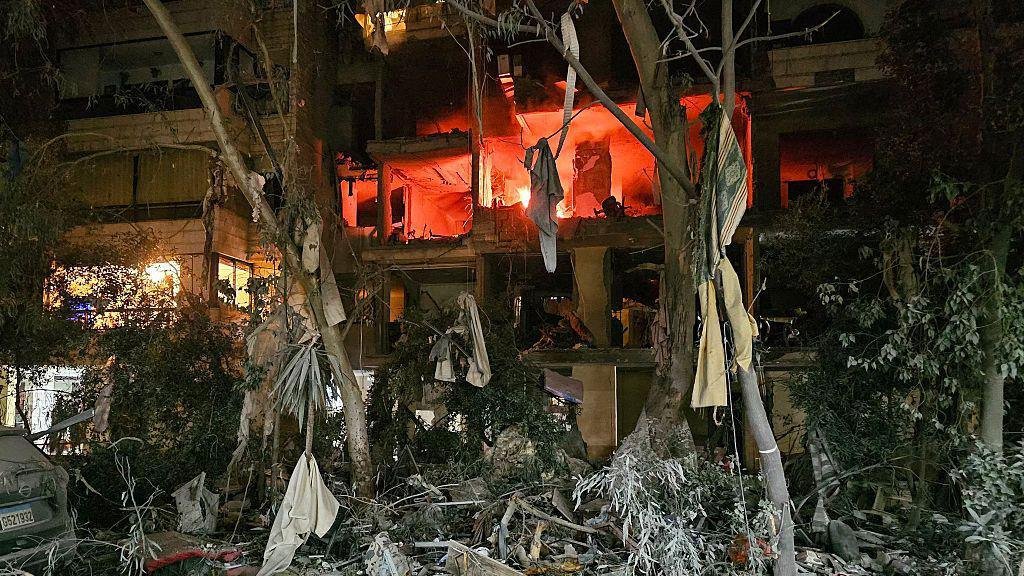
Iranian missiles breached Qatari airspace late Sunday, with most intercepted by Qatar’s air defences but some reaching close enough to the Ras Laffan LNG complex — the world’s largest single natural gas processing facility, responsible for approximately 25 percent of global LNG supply — to force an emergency production shutdown and safety assessment. Simultaneously, drones struck Saudi Arabia’s Eastern Province, targeting the Ras Tanura refinery complex with smoke plumes visible to Gulf residents and air defences scrambling to respond. Kuwait’s skies became a scene of dangerous confusion as Patriot batteries, operating under the extreme pressure of a crowded air environment filled with American F-35s, Israeli F-15s, Saudi Typhoons, and Iranian drones simultaneously, shot down multiple American aircraft in what the Pentagon has confirmed as a suspected friendly fire incident.

The pilots survived. The jets did not. And the global economy woke up Monday morning with oil 8 percent higher and a fundamentally new understanding of what Iran’s war strategy was actually designed to achieve.


1. What Happened on Sunday Night: The Coordinated Energy Strike

The timing of Sunday night’s strikes — following weeks of conventional military exchanges in which Iran had targeted military bases and attempted to close the Strait of Hormuz — signalled a deliberate strategic escalation toward what analysts are now calling Iran’s energy terrorism doctrine. The choice to simultaneously target the world’s largest LNG exporter and one of its most important crude oil processing facilities in a single coordinated operation was not improvised. It was the execution of a pre-planned strategy designed to maximise economic disruption relative to the military resources expended.

Qatar’s air defences engaged the incoming missiles with the efficiency that the country’s investment in advanced interception systems — F-15QA Ababils, Eurofighter Typhoons, and Patriot batteries — has been building toward. The majority of incoming missiles were intercepted before reaching their targets. But the proximity of those that were not intercepted to the Ras Laffan complex was sufficient to trigger the emergency production shutdown protocols that Qatar Petroleum’s safety management requires whenever the threat environment reaches a defined threshold. The facility was not destroyed. Its production was paused. The distinction is significant for the facility’s long-term operational status but irrelevant to the immediate market impact — the world’s largest LNG supplier went offline, and global natural gas markets responded accordingly.

Saudi Arabia’s Eastern Province, which hosts the concentration of oil processing and export infrastructure that makes it the most economically valuable piece of real estate in the world by some measures, sustained drone attacks that produced smoke plumes visible from significant distances. Aramco’s official communications described production as largely intact — a formulation that confirms some damage while minimising its scope, consistent with the communications management that the company applies to every security incident affecting its facilities. Air defences engaged and destroyed the majority of incoming threats. The operational reality was that Ras Tanura continued producing, but at reduced capacity and under security conditions that make normal operations impossible.


2. The Friendly Fire Disaster: What Happened Over Kuwait

The Kuwait incident represents a different category of military setback from the infrastructure strikes — not an Iranian military success but an own-goal produced by the operational complexity of managing multiple allied air forces in the same contested airspace simultaneously.

The skies over the Persian Gulf on Sunday night contained American F-35s conducting strike operations against Iranian territory, Israeli F-15s targeting Hezbollah logistics infrastructure in Syria and Iraq, Saudi Typhoons flying combat air patrol missions over Gulf shipping lanes, Qatari interceptors responding to the incoming missile attack on Ras Laffan, and Iranian drones and ballistic missiles transiting multiple flight paths toward their targets. The Identification Friend or Foe systems that modern air defence depends on for distinguishing hostile from friendly aircraft require the reliable transmission and reception of electronic signatures that all friendly aircraft are supposed to emit and all air defence systems are supposed to recognise.

Under the volume and speed of Sunday night’s threat environment, Kuwaiti Patriot batteries — operating under the extreme pressure of what their crews assessed as an incoming attack — misidentified American F-35 signatures as hostile contacts and engaged them. Multiple aircraft were destroyed. All pilots ejected successfully and survived, with some sustaining injuries during ejection or landing. The Pentagon’s characterisation of the incident as suspected friendly fire reflects the preliminary nature of the investigation rather than any genuine ambiguity about what happened.

The friendly fire incident’s military significance extends beyond the loss of aircraft. It demonstrates the operational risk of managing coalition air forces in a contested environment without the degree of command and control integration that prevents exactly this kind of tragic error. The American and GCC air forces operating in the Gulf are allies with compatible equipment and overlapping doctrine, but they are not the kind of fully integrated force whose deconfliction procedures are refined through years of joint operations. Sunday night exposed that gap in the most expensive possible way.


3. Iran’s Energy Terror Doctrine: Why This Strategy Is More Effective Than Nukes

The strategic logic behind Iran’s targeting of Gulf energy infrastructure reveals an assessment of the conflict’s dynamics that is, from Tehran’s perspective, more sophisticated than the missile-versus-missile exchange that had defined the preceding weeks.

Iran’s decision-makers, working through the IRGC hardliner framework that has controlled operational planning since Khamenei’s death, understood that the conventional military exchange was trending against them. Air superiority over Iranian territory was essentially American and Israeli. Missile stocks were depleting at a rate that the remaining inventory could not sustain indefinitely. The GCC’s transition from victim to active combat participant had closed diplomatic spaces and added defensive and offensive capabilities arrayed against Iran. The path to a conventional military outcome favourable to Tehran was closing.

Energy infrastructure targeting offered a different strategic logic. Qatar’s Ras Laffan produces approximately 25 percent of the world’s LNG supply — the fuel that heats European homes, generates Asian electricity, and whose disruption creates economic pressure on American allies across the globe. Saudi Arabia’s Ras Tanura processes 12 percent of global crude oil production. The Strait of Hormuz, already declared closed, transits 20 percent of global daily oil consumption. Attacking these three chokepoints simultaneously does not require Iran to win the military exchange — it requires Iran to impose economic costs on the global system severe enough that the political pressure on the United States and its allies to find a negotiated exit exceeds the pressure to continue military operations.

The cost asymmetry that defines Iran’s drone strategy applies with even greater force to energy infrastructure targeting. A Shahed-136 drone that costs $20,000 to produce and evades interception to cause a week of production disruption at a facility like Ras Tanura generates approximately $10 billion in global economic losses — a leverage ratio that no military investment can match. The 100-to-1 cost advantage that Shahed drones hold over Patriot interceptors becomes a 500,000-to-1 economic leverage ratio when the target is energy infrastructure rather than a military installation.


4. The Global Energy Mathematics: What Sunday Night’s Strikes Actually Mean

The cumulative impact of the Gulf War 2026’s energy infrastructure attacks has produced a supply situation that the global oil and gas market’s normal adjustment mechanisms cannot adequately address at the required speed and scale.

Qatar’s 77 million tonnes per year of LNG production — representing approximately 25 percent of global LNG supply — has been intermittently disrupted throughout the conflict and was formally paused following Sunday night’s proximity strikes. The LNG market’s adjustment mechanisms are limited by the physical infrastructure required to source alternative supply: LNG must be liquefied, loaded onto specialised tankers, transported to receiving terminals, regasified, and distributed through pipeline networks. This process requires weeks at minimum and months in cases where receiving terminal capacity or pipeline infrastructure must be expanded. European nations that have spent the years since 2022 building LNG import infrastructure to replace Russian pipeline gas cannot pivot away from Qatari supply disruption on the timelines that Sunday night’s strikes have imposed.

Saudi Arabia’s Ras Tanura complex, operating at reduced capacity following the drone strikes, represents a constraint on crude oil supply that Saudi spare capacity was supposed to be able to compensate for — but Saudi spare capacity is itself inaccessible when the processing infrastructure required to handle additional production is the facility that has been struck. The circular problem of having capacity to produce but damaged infrastructure to process has prevented the supply response that elevated prices would normally trigger.

The Hormuz zero-barrels situation compounds both of these infrastructure constraints. Even if Ras Tanura were operating at full capacity and Ras Laffan were producing its full 77 million tonnes annually, neither facility could export through a strait that is formally closed and physically mined. The supply is trapped behind the blockade, accumulating in storage tanks that are approaching capacity and forcing production cuts that will take months to reverse even after Hormuz reopens.

The oil price trajectory — $75 pre-conflict, $95 after the opening strikes, $103 after Ras Tanura, heading toward $150-200 as the full picture of Sunday night’s damage is absorbed — is not a market speculation phenomenon. It is the arithmetic consequence of the world’s most important energy supply routes being simultaneously closed, damaged, and threatened.


5. Pakistan’s Cascading Crisis: Each Shock Arriving Before the Previous One Is Absorbed

Pakistan’s exposure to Sunday night’s developments is not new in kind — it is the continuation and acceleration of a crisis that has been building since the Gulf conflict’s opening strikes. What Sunday night changes is the magnitude and the timeline, pushing the scenarios that Pakistan’s economic planners had been modelling as worst cases into the near-term projection category.

Petrol at Rs400 per litre was a worst-case projection two weeks ago. It is now a near-term arithmetic outcome of oil prices heading toward $150 combined with the rupee’s continuing pressure from the foreign exchange consequences of disrupted remittances and expanded import costs. The price at which Pakistani consumers will be filling their tanks in April is not a forecast subject to significant uncertainty — it is a calculation based on inputs that Sunday night’s strikes have largely determined.

The load-shedding dimension is the development that most directly affects Pakistani households’ daily experience of the crisis. Qatar’s LNG supplies approximately 15 percent of Pakistan’s gas requirements, channelled into the gas-fired power generation that keeps the grid functional during peak demand periods. With Ras Laffan paused and alternative LNG sources priced at levels that Pakistan’s foreign exchange position cannot sustain, the power generation capacity that was already operating under load-shedding conditions faces additional fuel supply constraints. Twenty-hour load-shedding — the figure circulating in Pakistan’s energy sector — would represent a humanitarian crisis for hospitals, water treatment facilities, food storage infrastructure, and the millions of households and businesses that depend on consistent power for basic functions.

The remittance dimension continues deteriorating. The 10 million Pakistani workers in Gulf cities are navigating a situation in which their employers’ businesses are disrupted by the conflict’s economic consequences, flights connecting them to Pakistan are being cancelled by airlines assessing the Gulf security environment, and the banking and transfer infrastructure through which remittances flow is operating under conditions that create both delay and uncertainty. The $30 billion annual remittance flow that represents Pakistan’s most important source of foreign exchange is being disrupted at precisely the moment when Pakistan’s import bill is expanding most rapidly — a scissors crisis whose fiscal consequences are arriving faster than any policy response can address them.


6. The GCC Response: Saudi Arabia and Qatar Move From Defence to Offence

Sunday night’s attacks on Ras Tanura and Ras Laffan accelerated the transformation of the Gulf Cooperation Council’s military posture from defensive management of Iranian attacks to active offensive participation that had been signalled by Qatar’s Su-24 shootdown but not yet fully operationalised.

Saudi Arabia’s response to the Ras Tanura strikes moved beyond the scrambling of F-15SA squadrons that its air defence protocols required. The Kingdom’s decision-makers, processing the damage reports and the economic implications of compromised Aramco production, began coordination with American military command for offensive operations against the Iranian targets directly responsible for the refinery attacks — IRGC drone launch sites, logistics infrastructure, and command facilities involved in the energy infrastructure campaign.

Qatar’s air defences moved to the hair-trigger posture that the Supreme Command of Armed Forces described in its post-incident communications — a state of readiness in which engagement decisions are made faster and with lower confirmation thresholds than standard protocols require. The risk of additional friendly fire incidents increases in this posture, but Qatar’s military leadership concluded that the risk of allowing additional Iranian strikes on Ras Laffan exceeded the risk of interception errors.

UAE’s THAAD batteries, which had been tracking contacts throughout the conflict’s preceding phase, adopted a tracking and engagement posture that covered the full range of the Gulf’s airspace more comprehensively than the previous weeks’ defensive operations had required. The combination of Saudi F-15s, Qatari Typhoons, UAE THAAD, and American carrier air power creates an air defence and offensive capability against Iranian territory that the IRGC’s remaining air assets cannot match.

The GCC’s collective message — that striking their oil produces direct consequences for Tehran’s energy and military infrastructure — represents the completion of the transition from neutrality to full combat participation that Qatar’s Su-24 shootdown began. Iran is no longer fighting the United States and Israel. It is fighting the United States, Israel, and the combined military forces of the Gulf’s wealthiest states, whose defence budgets and equipment quality reflect decades of investment in exactly the kind of contested Gulf air environment that Sunday night produced.


7. The Friendly Fire Problem: Managing Coalition Air Operations in Contested Space

The Kuwait friendly fire incident is not an isolated tragedy — it is a symptom of a structural problem in coalition air operations that Sunday night’s experience has made impossible to ignore and that the conflict’s continuation will repeatedly stress.

Modern air combat depends on the reliable function of Identification Friend or Foe systems — electronic transponders that all friendly aircraft emit and all air defence systems are programmed to recognise. The systems work reliably in the conditions they were designed for: clear electronic environments with manageable numbers of contacts, established deconfliction procedures, and the time to process and verify contact identifications before engagement decisions are required.

Sunday night’s Gulf airspace was not those conditions. Multiple allied air forces operating on overlapping frequencies and flight paths, Iranian drones and ballistic missiles transiting the same airspace in multiple directions simultaneously, Patriot batteries in Kuwait receiving engagement commands under maximum threat pressure, and the signal processing limitations of systems under electronic warfare stress — these conditions produced the misidentification that destroyed American aircraft and injured their pilots.

The solution requires the kind of integrated coalition air operations command that NATO has developed across decades of joint training, shared communication protocols, and the political agreements that allow one nation’s air controllers to have authority over another nation’s aircraft in defined circumstances. The Gulf coalition does not have this infrastructure at the level Sunday night required, and building it takes years rather than weeks. The conflict’s continuation under current conditions creates ongoing risk of additional friendly fire incidents that the alliance’s political cohesion — already managing different national military objectives and different risk tolerances across its members — may struggle to absorb.


8. India’s Parallel Crisis: Three Million Workers and an Oil Import Bill That Is Breaking the Rupee

India’s exposure to the Gulf conflict’s Sunday night escalation mirrors Pakistan’s in structure while differing in scale — a larger economy with larger foreign exchange reserves and more diversified energy supply relationships, but facing the same fundamental combination of disrupted remittances, elevated oil import costs, and LNG supply reduction that is straining Pakistan’s economic stability.

India’s three million Gulf expatriate workers face the same combination of flight cancellations, employer business disruption, and remittance infrastructure stress that Pakistan’s ten million workers are navigating. The Indian rupee’s response to oil price moves above $100 has historically been pronounced — India’s oil import bill represents a significant share of its current account, and every $10 per barrel increase in crude adds approximately $15 billion to the annual import cost that must be financed through a combination of foreign exchange reserves and current account adjustment.

India’s LNG import infrastructure, which has expanded significantly over the past decade to reduce dependence on piped natural gas, is directly exposed to Qatari supply disruption through the long-term contracts that Indian utilities have signed with Qatar Petroleum. Alternative LNG sources — American, Australian, and East African suppliers — are available in principle but require contract renegotiation and tanker diversion that takes weeks to arrange. The power cuts that reduced LNG supply produces — affecting Indian industry, households, and the increasingly electricity-dependent digital economy that the country has been building — are the domestic political consequence that Indian policymakers are managing against the backdrop of the broader economic pressure.

The Reserve Bank of India’s currency intervention to stabilise the rupee — reported in the conflict’s preceding weeks — is being tested by the magnitude of Sunday night’s oil price move. The scale of intervention required to prevent the rupee from depreciating to recession-inducing levels against the current oil price backdrop may exceed comfortable reserve utilisation, creating a constraint on monetary policy flexibility at precisely the moment when economic conditions are demanding the most policy space.


9. The Strategic Endgame: Four Scenarios and Their Probabilities

The Gulf War 2026’s trajectory toward resolution runs through four scenarios whose relative probabilities Sunday night’s events have shifted.

An economic truce — a negotiated ceasefire driven by the global economic pain that oil above $150 is producing — has become more likely rather than less following Sunday night’s strikes, for the counterintuitive reason that Iran’s energy infrastructure targeting has made the conflict’s economic costs visible to every government and every population in the world simultaneously. When petrol prices in Europe, Asia, and the Americas are rising sharply because of a Middle Eastern conflict, the political pressure on governments to find an exit — any exit — intensifies across a much broader constituency than the conflict’s direct parties. This scenario requires a face-saving formula that allows Iran to claim it deterred the worst outcomes while accepting constraints on its nuclear programme.

A Gulf coalition crushing Iran scenario — American air power combined with GCC military participation finishing the IRGC’s operational capacity while Iran’s missile stocks deplete — has been the trajectory that the American strategy has been designed to produce. Sunday night’s events have accelerated the GCC’s transition to active combat participation, which adds military weight to this scenario’s probability. The constraint is the munitions economics and the Congressional budget pressure that the attrition calculation creates.

Iran’s strangulation victory scenario — the global economy experiencing sufficient pain from sustained Hormuz closure and energy infrastructure disruption that international pressure forces a settlement on terms Iran can accept — has been elevated by Sunday night. The scenario does not require Iran to win the military exchange. It requires the economic consequences of the conflict to become politically unsustainable for the American coalition faster than Iran’s conventional military capacity degrades. The $10 billion per week global economic impact of sustained Ras Tanura and Ras Laffan disruption creates the pressure point this scenario requires.

The wider war scenario — Russian and Chinese direct military involvement transforming the bilateral Iran conflict into a genuine great power confrontation — remains the lowest probability outcome, constrained by the economic costs both Russia and China face from sustained Gulf disruption and the sanctions consequences that direct military involvement would trigger.


10. What the Next 48 Hours Determine

The conflict’s immediate trajectory will be significantly shaped by the decisions made in the 48 hours following Sunday night’s strikes — decisions being made simultaneously in Washington, Riyadh, Doha, Tehran, and Beijing under conditions of enormous pressure and incomplete information.

Iran’s likely operational priorities include additional refinery drone strikes targeting the Abqaiq processing facility — Saudi Arabia’s most critical oil infrastructure, whose disruption would remove approximately 5-7 percent of global supply from the market at a moment when the market has no capacity to absorb additional losses. Hormuz blockade enforcement through IRGC speedboat operations and additional mine-laying would apply operational pressure to the naval forces attempting to maintain freedom of navigation. Hezbollah rocket salvos into Tel Aviv keep multiple Israeli systems under pressure simultaneously.

The American response options range from the maximum pressure measures — freezing all Iranian assets globally and escalating B-52 carpet bombing of IRGC bases — to the more measured continuation of precision strike operations that preserve the option for diplomatic engagement. Trump’s public communications have signalled escalatory intent while his actual military operations have maintained the precision strike framework that limits civilian casualties and preserves international coalition support.

The 48 hours that follow Sunday night will tell analysts more about which endgame scenario is actually being pursued than all the statements and counter-statements that the conflict’s parties have issued since its opening strikes.


Conclusion

Iran’s Sunday night strikes on Ras Tanura and Ras Laffan represent the most strategically sophisticated operation Tehran has conducted in the Gulf War 2026 — not because they achieved decisive military results, but because they identified and attacked the specific economic vulnerabilities that create political pressure for negotiated resolution on both sides of the conflict simultaneously.

The energy terror doctrine that Sunday night’s operations expressed is brutally rational from Tehran’s perspective. Iran cannot win the air war. It cannot prevent the depletion of its missile stocks. It cannot reverse the GCC’s transition to active combat participation. What it can do is impose economic costs on the global system at a rate that makes continuation of the conflict more painful for everyone — including the American consumers and European households who did not choose this war but are paying for it at the petrol pump.

For Pakistan, India, and the ten-plus million South Asian workers whose livelihoods depend on Gulf stability, Sunday night’s strikes represent not just another escalation but the moment when the conflict’s economic consequences moved from severe to potentially catastrophic. Rs400 petrol, twenty-hour load-shedding, remittance collapse, and the prospect of millions of returning workers arriving into an economy already under maximum strain — these are not projections. They are the arithmetic consequences of decisions made in Tehran, Washington, and Riyadh that Pakistan’s government did not make and cannot reverse.

The global economy’s wallet has been hit. The pain is immediate, measurable, and spreading. And the conflict that produced it shows no clear sign of the diplomatic resolution that would allow the energy infrastructure the world depends on to resume functioning.

Oil is heading toward $200. The world is sweating bullets. And Iran, for all its military losses, has found the weapon that hurts most.

Leave a Reply

Your email address will not be published. Required fields are marked *

News That Commands Truth — Without Filter

Independent journalism covering Pakistan and the world. Unfiltered reporting on politics, business, sports, and culture — delivered with clarity and purpose since 2024.

BREAKING LIVE EXCLUSIVE
f X in YT W
Contact Info
Email
info@sultannews.online
Editorial
editor@sultannews.online
Location
Karachi, Pakistan
Newsletter
© 2026 Sultan.News — All Rights Reserved. Karachi, Pakistan.